Key takeaways
- Tests sixteen drives at once, saving considerable time over single-port solutions
- LED indicators provide immediate visual confirmation without software
- Restrictive single-region plug limits international usability
A flash drive tester matters more than most buyers realize. USB sticks are sold on capacity claims, and the gap between what a manufacturer advertises and what you actually get can be significant. Fake or inflated drives are a persistent problem, particularly at lower price points and in bulk purchases. A proper tester lets you verify capacity and speed before you trust a drive with important data.
But a tester is only half the equation. You also need drives worth testing — ones with honest specs, reliable controllers, and connectors that match your devices. The products below span both sides of that workflow: the hardware that validates your drives, and the drives themselves that consistently hold up under owner scrutiny and published benchmarks.
Our top picks




As an Amazon Associate we earn from qualifying purchases at no extra cost to you. Ratings are shown as listed on Amazon.
Quick Picks
| Product | Best for | Price |
|---|---|---|
| SUNGOOYUE 16 Port Duplicator Tester | Bulk verification | $83.29 |
| Lexar D40E 128GB | Cross-device transfers | $29.99 |
| SANDISK 128GB Ultra Flair | Brand reliability on a budget | $25.91 |
| Aiibe 128GB USB Drive | Cheap high-capacity storage | $17.99 |
| MAKACTUA 5 Pack 8GB | Distributing small files | $20.99 |
| Lexar D40E 64GB | Type-C + Type-A on a budget | $22.99 |
| Lexar D40E 256GB | Large multi-device files | $49.99 |
| SANDISK 64GB Ultra Flair | Boot drives and basic storage | $18.60 |
How We Picked
We narrowed this list on four criteria: capacity integrity as reported by owners, connector compatibility with modern devices, price per gigabyte relative to published specs, and brand or seller reputation for consistency across batches. Drives with mixed owner feedback on actual usable space were excluded. A flash drive tester is only as useful as the drives you feed into it, so reliability mattered more than raw speed in this roundup.
The 8 Best Flash Drive Tester Picks in 2026
SUNGOOYUE 16 Port USB Hub Duplicator Tester
This is the only dedicated flash drive tester in the list, and it serves a specific role well. IT departments, resellers, and anyone who buys drives in volume can plug up to sixteen units simultaneously and watch LED indicators confirm write status. Data transfer and card reading work across multiple port types, including hard disks and memory cards.
- Tests sixteen drives at once, saving considerable time over single-port solutions
- LED indicators provide immediate visual confirmation without software
- Restrictive single-region plug limits international usability
Skip this if you only need to validate one or two personal drives; a software-based approach costs less.
Lexar D40E 128GB Dual USB 3.2 Gen 1 Type-C
The D40E line solves a recurring friction point: moving files between a phone and a laptop without an adapter. The dual connector is compact enough to stay plugged into a device without snagging, and the Champagne Silver finish reads professional in shared workspaces.
- Type-C and Type-A connectors cover virtually every port on modern hardware
- 128GB is enough for most everyday document and media workflows
- Price sits above cheaper single-connector 128GB options
If you never touch a Type-C port, a conventional USB 3.0 drive will save you money.
SANDISK 128GB Ultra Flair USB 3.0
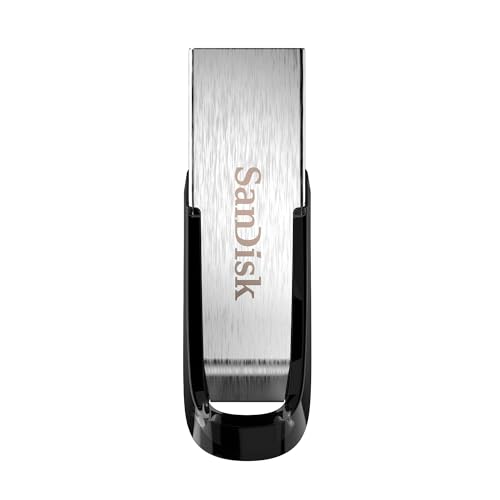
SanDisk has built a reputation for honest capacity reporting, and the Ultra Flair continues that pattern. The metal casing adds durability for drives that live in pockets or keychains. At this price, it undercuts most dual-connector competitors while matching their usable storage.
- Consistent owner reporting of full 128GB usable space
- Metal housing resists the plastic flex common in cheaper drives
- Single Type-A connector means no direct phone compatibility
Phone-first users should look at the Lexar dual drives instead.
Aiibe 128GB USB 2.0 Flash Drive
For anyone who needs raw storage at the lowest price per gigabyte, this drive delivers 128GB under eighteen dollars. That figure is hard to match elsewhere in the list without stepping up to USB 3.0 options. Owners generally report honest capacity, making it a reasonable subject for flash drive tester validation before bulk deployment.
- Lowest cost per gigabyte among the 128GB options here
- Compact thumb form factor fits easily on keychains
- USB 2.0 speed means large file transfers take significantly longer
Anyone moving video files or working with frequent large transfers will find the speed bottleneck frustrating.
MAKACTUA 5 Pack 8GB USB 2.0 Flash Drives
This pack targets a different use case entirely: distributing small files to multiple recipients. Five drives at under twenty-one dollars total works out to roughly four dollars each, and the multiple colors help with labeling or organization. For testing workflows, they make an inexpensive set of known-good targets for calibrating a flash drive tester.
- Color variety simplifies assigning drives to specific people or tasks
- Extremely low per-unit cost for bulk distribution
- Eight gigabytes fills up quickly with anything beyond documents
Skip this pack if your actual storage need exceeds a few hundred megabytes per drive.
Lexar D40E 64GB Dual USB 3.2 Gen 1 Type-C
The same design philosophy as the 128GB model, scaled down for lighter use. It suits buyers who want dual-connector convenience but do not need the full 128GB. The price premium over a single-connector 64GB drive is small, and the build quality matches its larger sibling.
- Dual connector versatility at a lower entry price than the 128GB variant
- Lightweight and unobtrusive on phones and tablets
- Only 64GB usable space may feel limiting for media-heavy tasks
If you anticipate needing more than sixty gigabytes within a year, the 128GB version costs marginally more per gigabyte.
Lexar D40E 256GB Dual USB 3.2 Gen 1 Type-C
The capacity flagship of the D40E line. At 256GB, this drive comfortably holds full media projects, OS installers, or large document archives while retaining the dual-connector advantage. It is the most expensive flash drive in this roundup but justifies the cost when you genuinely need that storage in a pocketable form.
- Highest capacity in the list with no connector compromise
- Dual interface still works seamlessly with phones and laptops
- Notable price premium over similarly sized single-connector drives
Anyone who values maximum storage over connector flexibility will find cheaper options elsewhere.
SANDISK 64GB Ultra Flair USB 3.0
A stripped-down, reliable drive for straightforward tasks: creating bootable installers, carrying documents between machines, or serving as a backup target. SanDisk’s metal casing and consistent capacity reporting make it a safe choice, and at under nineteen dollars it undercuts most 64GB competitors from lesser-known brands.
- Dependable brand with strong owner satisfaction on capacity accuracy
- Metal build outlasts plastic housings in daily carry scenarios
- No Type-C connector limits direct phone use
If phone compatibility matters, the Lexar D40E 64GB adds that feature for four more dollars.
Buying Guide
Capacity Accuracy and How to Verify It
Published capacity and usable capacity differ due to formatting overhead, but the gap should be predictable and small. When you buy a flash drive tester or validate drives with software, expect roughly seven to ten percent less than the advertised figure. Drives showing significantly more than that deficit likely contain inflated controller reporting or counterfeit chips. Owner feedback threads often surface batch inconsistencies, so check recent reviews before bulk purchases.
Connector Type Decides Practical Usability
A drive that does not plug into your primary device is a drive that sits unused. Type-C has become standard on phones, tablets, and most new laptops. Dual-connector drives eliminate the adapter friction entirely. Single Type-A drives remain fine for desktop-only workflows and tend to cost less, but the price gap has narrowed enough that versatility often wins out.
USB Generation and Real-World Transfer Speed
USB 2.0 peaks around forty-eight megabytes per second theoretically, with real-world throughput well below that. USB 3.0 and 3.2 Gen 1 reach five gigabits per second, meaning large file transfers finish in seconds rather than minutes. For drives under 64GB holding small documents, the speed difference barely registers. For 128GB and above, or for any drive that will carry media files, 3.0-class connectivity is a meaningful quality-of-life improvement.
Our Verdict
The SUNGOOYUE 16 Port Duplicator Tester is the top pick for anyone who validates drives in volume — resellers, IT teams, and educators buying in bulk. For the drives themselves, the SANDISK 128GB Ultra Flair offers the best balance of honest capacity, build quality, and price among single-connector options. The budget pick is the Aiibe 128GB at $17.99, ideal when storage volume matters more than transfer speed. If phone-to-laptop transfer is your primary workflow, no single-connector drive matches the Lexar D40E 128GB regardless of price.
FAQ
What does a flash drive tester actually check?
A dedicated tester verifies whether the drive reports its true capacity and whether the flash chips write and retain data correctly across the full addressable range. It catches drives that firmware-fake their size, which is a common scam in unbranded products.
Is USB 2.0 still worth buying in 2026?
For eight-gigabyte drives used as giveaway items or boot media for small utilities, USB 2.0 remains functional and cost-effective. For anything above sixty-four gigabytes or used for regular file transfers, the speed penalty makes USB 3.0 the better value despite a modest price increase.
Can I test a dual-connector drive without buying dedicated hardware?
Yes. Free utilities like H2testw or F3 write a test file across the entire drive and verify read-back, catching counterfeit capacity. A hardware flash drive tester simply does this faster and in parallel across multiple units.
Do metal-cased flash drives last longer than plastic ones?
The casing itself does not affect flash chip lifespan, but metal housings resist physical stress better during daily carry. For drives that stay in a drawer, plastic is fine. For pocket or keychain carry, the marginal cost difference is small enough to justify metal construction.