Key takeaways
- Pro: Magnetized base allows elevated mounting away from metal chassis interference.
- Pro: Reliable AX3000 dual-band speeds at an accessible $28.82 price point.
- Con: Lacks access to the uncongested 6GHz frequency band.
Setting up a refined gaming room or home studio often presents a tricky spatial dilemma: how to achieve rock-solid, low-latency network performance without trailing an unsightly blue Ethernet cable across high-end hardwood floors or under plush area rugs. While a hardwired connection has long been the gold standard for online gaming, modern residential interior design favors a clean, decluttered footprint. Long cable runs look disorganized, create tripping hazards, and force you to drill holes through walls or baseboards just to maintain a steady ping.
Investing in the best pcie wifi card for gaming offers an elegant structural solution. Unlike bulky external USB dongles that stick out awkwardly from front I/O ports or draw down bus bandwidth, internal PCIe cards slot directly into your desktop motherboard’s expansion slots. Drawing direct 3.3V system power, these cards leverage high-gain external antennas and advanced multi-band protocols to deliver wired-equivalent stability. In 2026, upgraded network cards allow you to position your gaming PC anywhere in the home without sacrificing interior aesthetic harmony or competitive network speeds.
As an Amazon Associate we earn from qualifying purchases at no extra cost to you. Product prices and availability are accurate as of the date shown and are subject to change.





Quick Picks
Compare our top-tested internal Wi-Fi expansion cards to find the ideal match for your desktop footprint and router setup.
| Product | Best for | Price |
|---|---|---|
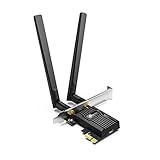
| TP-Link WiFi 6 PCIe WiFi Card for PC, AX3000 Dual Band with Magnetized Base | Best Overall Value & Desktop Flexible Placement | $28.82 |
| TP-Link WiFi 6 PCIe WiFi Card for Desktop PC- AX3000 Dual Band Network Card | Best Direct Chassis Mount | $28.99 |
| MSI Herald-BE WI-FI 7 MAX | Best Future-Proof Wi-Fi 7 Performance | $52.4 |
| GIGABYTE WiFi 6E GC-WBAX210 | Best Mid-Range Tri-Band Connectivity | $36.99 |
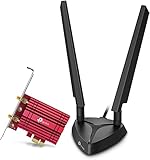
| TP-Link WiFi 6E Intel AX210 AXE5400 PCIe WiFi Card for PC – Magnetic Base | Best High-Bandwidth 6GHz Base Unit | $49.99 |
| BZIZU WiFi 6 PCIe Card – Intel AX200 | Best Ultra-Budget Wi-Fi 6 Upgrade | $19.98 |
| TP-Link AC1200 PCIe WiFi Card for Desktop PC | Best SFF & Low-Profile Retrofit | $22.99 |
| TP-Link WiFi 6E Tri Band Intel AX210 AXE5400 PCIe WiFi Card for Desktop PC | Best Rear-I/O Clean 6E Integration | $42.99 |
How We Picked
When evaluating network expansion cards from a home design and tech editor perspective, hardware specifications are only half the equation. We examined spatial layout options, cable routing efficiency, and physical installation flexibility alongside raw wireless protocols. Internal PCIe cards draw low operational power (typically 3 to 5 watts) directly from PCIe x1 or x4 slots, eliminating external power bricks. We analyzed bracket dimensions, ensuring compatibility with standard 4.7-inch ATX expansion slots as well as 3.1-inch low-profile small-form-factor (SFF) desktop cases. Furthermore, we assessed antenna design: magnetized bases with 3- to 4-foot extension leads allow users to position antennas atop wooden shelving or metal towers, clearing radio obstacles caused by dense furniture panels and thick plaster walls.
The 8 Best Picks
TP-Link WiFi 6 PCIe WiFi Card for PC, AX3000 Dual Band with Magnetized Base
This AX3000 dual-band card is designed for gamers who need flexible antenna placement to clear rear chassis interference or heavy wooden desk backings. Equipped with a magnetized external antenna base and a 3.3-foot RF extension cable, you can elevate the dual antennas atop your metal PC tower or bookshelf for an unobstructed signal line to your wireless router. Operating on 2.4GHz and 5GHz bands, it delivers low packet loss for multiplayer gaming while keeping your desk space organized.
- Pro: Magnetized base allows elevated mounting away from metal chassis interference.
- Pro: Reliable AX3000 dual-band speeds at an accessible $28.82 price point.
- Con: Lacks access to the uncongested 6GHz frequency band.
When to skip: Skip if you own a 6E router and require dedicated 6GHz channel access.
TP-Link WiFi 6 PCIe WiFi Card for Desktop PC- AX3000 Dual Band Network Card
Targeted at builders who favor a minimalist aesthetic, this AX3000 dual-band card eliminates extra wires on top of your desk. The dual antennas attach directly to the rear I/O expansion bracket, hiding all network hardware neatly behind your computer case. Plugging into a standard PCIe x1 slot, it provides strong 2.4GHz and 5GHz coverage with integrated Bluetooth support for wireless gaming controllers, keeping your gaming setup visually seamless and free of external cords.
- Pro: Zero desk clutter with direct rear bracket antenna mounting.
- Pro: Excellent dual-band AX3000 performance for under $29.
- Con: Direct rear mounting can reduce signal strength if pushed tight against walls.
When to skip: Skip if your computer sits inside an enclosed wooden desk cavity.
MSI Herald-BE WI-FI 7 MAX
Built for enthusiast gaming setups pushing high-bandwidth wireless standards, the MSI Herald-BE WI-FI 7 MAX introduces 802.11BE capabilities to desktop PCs. Featuring Bluetooth 5.4 and Multi-Link Operation (MLO) technology, this card connects across multiple bands simultaneously to drastically reduce gaming latency and buffer spikes. Its sleek external antenna unit sits cleanly on modern furniture surfaces while ensuring your setup is ready for next-generation multi-gigabit wireless routers.
- Pro: Cutting-edge Wi-Fi 7 with Multi-Link Operation for exceptionally low latency.
- Pro: Upgraded Bluetooth 5.4 support for low-energy, high-fidelity wireless audio.
- Con: Premium price of $52.4 requires a Wi-Fi 7 router to fully utilize.
When to skip: Skip if your home network operates on standard Wi-Fi 5 or Wi-Fi 6 hardware.
GIGABYTE WiFi 6E GC-WBAX210
Designed for gaming setups in congested environments like apartment complexes, the GIGABYTE GC-WBAX210 features a 2×2 802.11ax Tri-Band architecture covering 2.4GHz, 5GHz, and 6GHz bands. Priced at $36.99, it includes an adjustable external antenna stand connected by an extension cord, allowing you to position the antenna array away from copper wiring or heavy desk legs. Integrated Bluetooth 5.2 simplifies connecting wireless mice, keyboards, and gamepads.
- Pro: Unlocks clean 6GHz spectrum for under $37.
- Pro: Movable external antenna stand helps bypass thick furniture barriers.
- Con: Antenna base footprint takes up minor physical desk space.
When to skip: Skip if you prefer entirely hidden rear-mounted antennas.
TP-Link WiFi 6E Intel AX210 AXE5400 PCIe WiFi Card for PC – Magnetic Base
This high-end AXE5400 card utilizes the proven Intel AX210 chipset to deliver enterprise-grade stability and Tri-Band Wi-Fi 6E connectivity. The 6GHz support bypasses legacy household device traffic, giving your gaming PC uninterrupted bandwidth. It features a heavy-duty magnetized base with multi-angle antenna tilting, allowing you to attach the base firmly to your steel PC case panel or a metal desk frame for ideal spatial reception.
- Pro: Intel AX210 core delivers exceptional Tri-Band stability and high throughput.
- Pro: Robust magnetic base tilts easily to align with router line-of-sight.
- Con: Higher price of $49.99 compared to dual-band alternatives.
When to skip: Skip if you are on a tight budget and do not intend to upgrade to 6GHz Wi-Fi.
BZIZU WiFi 6 PCIe Card – Intel AX200
For budget-conscious builders seeking reliable performance, the BZIZU WiFi 6 card provides an Intel AX200 core delivering up to 3000Mbps dual-band throughput at just $19.98. It installs into any standard PCIe slot and uses direct rear-mounted antennas, making it an invisible, space-saving upgrade for home office PCs or secondary gaming rigs. Integrated Bluetooth 5.2 ensures seamless pairing with peripheral gaming devices.
- Pro: Outstanding budget value under $20 powered by a genuine Intel AX200 chip.
- Pro: Ultra-compact rear installation keeps desk surroundings completely clear.
- Con: No external antenna cord for overcoming tricky room obstructions.
When to skip: Skip if your desktop computer is placed inside a steel cabinet or under a heavy oak desk.
TP-Link AC1200 PCIe WiFi Card for Desktop PC
Tailored for retrofitting older desktop systems or small-form-factor (SFF) office PCs, the TP-Link AC1200 is an economical dual-band network card. At $22.99, it provides dual-band Wi-Fi 5 (802.11ac) connectivity across 2.4GHz and 5GHz channels. Included low-profile and full-height brackets make it easy to adapt to slim 3.1-inch media center cases, offering steady wireless performance without taking up excess internal case real estate.
- Pro: Low-profile bracket included for slim living room and HTPC enclosures.
- Pro: Budget-friendly replacement for outdated legacy network cards.
- Con: Older Wi-Fi 5 protocol lacks modern Wi-Fi 6 latency optimizations.
When to skip: Skip if you play competitive online games requiring ultra-low ping.
TP-Link WiFi 6E Tri Band Intel AX210 AXE5400 PCIe WiFi Card for Desktop PC
Combining the fast throughput of the Intel AX210 chipset with a direct rear-I/O bracket setup, this AXE5400 card is perfect for clean-desk enthusiasts. By offering Tri-Band Wi-Fi 6E (2.4GHz, 5GHz, and 6GHz) without an external desk base, it delivers high-frequency 6GHz gaming performance while keeping all wires and hardware concealed behind your PC tower for $42.99.
- Pro: Full AXE5400 Tri-Band capability with dedicated 6GHz channel access.
- Pro: Direct rear mounting keeps your desk free of visible antenna modules.
- Con: Requires clear space behind the computer case for optimal signal strength.
When to skip: Skip if your PC tower rests directly flush against a solid wall.
Buying Guide
Form Factor and Desktop Spatial Integration
When selecting an internal network card, consider how your PC tower integrates with your desk and room layout. Full-height expansion brackets measure approximately 4.7 inches high, fitting standard ATX cases. Small-form-factor (SFF) or slim HTPC cases require a 3.1-inch low-profile bracket. Beyond bracket size, decide between fixed rear antennas and external magnetic bases. Fixed antennas keep your wooden desk clean and wire-free, but metal PC cases and rear wall placement can block radio signals. External bases with 3- to 4-foot cables allow you to place antennas on a shelf or desk top, clearing physical obstructions for better latency.
Frequency Bands: 2.4GHz vs. 5GHz vs. 6GHz vs. Wi-Fi 7
Understanding wireless frequency characteristics helps tailor your setup to your home’s architectural construction:
- 2.4GHz: Offers long range and passes easily through thick drywall and timber framing, but suffers from low bandwidth and high household interference.
- 5GHz: Provides higher speeds and lower latency for gaming across medium distances, though signal strength drops through solid masonry walls.
- 6GHz (Wi-Fi 6E): Opens wide, uncrowded channels specifically for high-speed devices, ideal for low-ping gaming in apartments or crowded homes.
- Wi-Fi 7 (802.11BE): Uses Multi-Link Operation (MLO) to transmit data across multiple bands simultaneously, minimizing jitter and dropouts.
Installation Requirements and Power Draw
Internal PCIe network cards draw minimal power (3 to 5 watts) directly from a motherboard PCIe x1 or x4 slot, requiring no secondary power cables from your power supply. However, to enable onboard Bluetooth capabilities for wireless controllers and headsets, almost all PCIe cards require connecting an included thin 9-pin USB header cable from the card to an open USB 2.0 header on your motherboard. Ensure your motherboard has an available internal USB header before finalizing your build layout.
Our Verdict
For most desktop gamers seeking the perfect balance of latency reduction, flexible placement, and price, the TP-Link WiFi 6 PCIe WiFi Card for PC (AX3000 with Magnetized Base) at $28.82 stands out as the best overall choice. If you own a modern Tri-Band router, upgrading to the TP-Link WiFi 6E Intel AX210 AXE5400 with Magnetic Base ($49.99) unlocks pristine 6GHz spectrum. Gamers planning forward for Next-Gen hardware should consider the MSI Herald-BE WI-FI 7 MAX ($52.4), while those on a tight budget will find incredible value in the BZIZU WiFi 6 PCIe Card ($19.98).
FAQ
Is a PCIe WiFi card better for gaming than a USB WiFi adapter?
Yes. PCIe cards connect directly to the motherboard’s PCI Express bus, offering higher bandwidth, lower processing overhead, and superior thermal dissipation compared to compact USB dongles. This results in stable ping rates and less thermal throttling during extended gaming sessions.
How do magnetic antenna bases help with room layout and signal strength?
Computer cases made of steel or aluminum can act as signal shields. A magnetic base with a extension cable lets you elevate antennas away from the PC chassis and heavy desk backs, placing them in direct line-of-sight of your wireless router for cleaner reception.
Do I need an extra cable for Bluetooth to work on a PCIe WiFi card?
Yes. While Wi-Fi data passes through the PCIe slot, the Bluetooth module on the card requires an included internal USB 2.0 header cable. This cable runs neatly behind your motherboard tray into a 9-pin USB header on the board.
Is Wi-Fi 6E or Wi-Fi 7 necessary for online gaming?
While standard Wi-Fi 6 on 5GHz provides great performance, Wi-Fi 6E (6GHz) and Wi-Fi 7 add dedicated spectrum free from household appliances and smart TV traffic. This non-congested airtime significantly reduces random lag spikes during competitive gameplay.