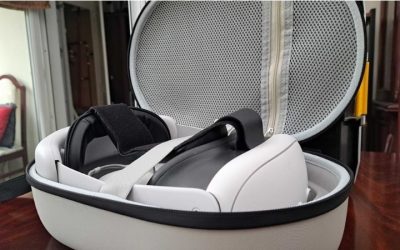
The best VR lens cleaning kits do not necessarily contain a bottle of cleaner. For Meta Quest and PlayStation VR2 owners, the safest general-purpose purchase is a supply of clean, dry optical microfiber cloths: both ecosystems direct users toward dry lens-specific cloths rather than routine chemical cleaning. MagicFiber’s six-pack is the straightforward starting point, while LensPen’s VR Kit offers a convenient accessory bundle for buyers willing to verify each tool against their specific headset’s care instructions. Choose a cleaning pen only when your headset maker permits that contact method. A marketed “VR-compatible” label does not override the headset’s own lens-care rules.
Quick verdict
Best overall for routine headset optics: MagicFiber Microfiber Cleaning Cloth, 6 Pack. Best VR-specific carry kit: LensPen VR Kit, but treat the cloth as the universally useful component and do not assume every bundled tool is approved for every headset. Best cloth pack explicitly marked in stock by its maker: K&F Concept 5-Pack Microfiber Lens Cleaning Cloths; B&H also marked the NiSi 5-Pack in stock. Best premium cloth alternative with an unverified checkout: Koala Kloth Japanese-woven microfiber, purchased as the cloth-only option. Best dual-pen bundle for a manufacturer-approved pen workflow: Geekria 2 Pack Clean VR Lens Cleaning Pen. Best pocket-size dedicated pen: LensPen AR / VR. For a household with multiple headsets, MagicFiber’s 13 Pack offers a larger supply of separate clean cloths. All product listings below were checked October 30, 2026; an Add to cart or retailer link is not a completed checkout or a warehouse stock guarantee.
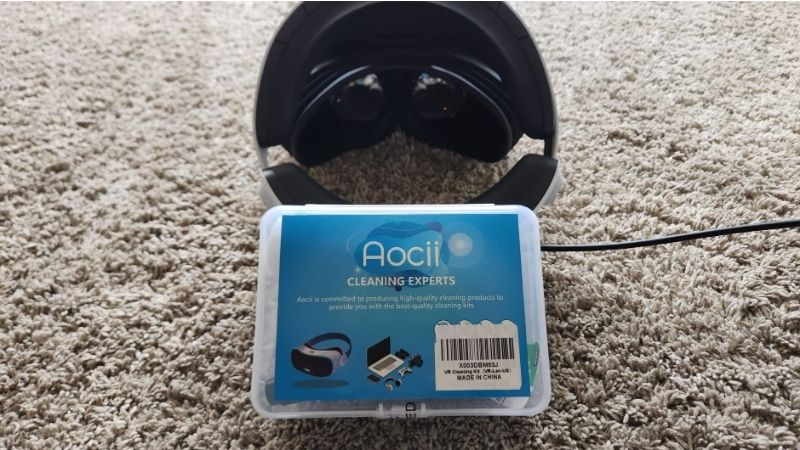
Important: the dry-cloth recommendation is stronger than a manufacturer’s claim that a cleaning pen, carbon pad, fog treatment, eyeglass spray, or moist wipe is broadly VR-compatible. Sony specifically instructs PS VR2 owners to use only a soft dry cloth intended for lenses. Quest 3S guidance also specifies dry optical microfiber, with no alcohol or abrasive solutions. Apple Vision Pro has its own care instructions and included polishing cloth; its published spray guidance is not transferable to Quest or PS VR2. When in doubt, keep liquids, anti-fog coatings, disposable wipes, and cleaning-pen tips away from built-in headset lenses.
Comparison table
| Product and best use | Verified contents or format | US price checked Oct. 30, 2026 | Seller listing status checked Oct. 30, 2026 | Headset-lens caveat |
|---|---|---|---|---|
| MagicFiber Microfiber Cleaning Cloth, 6 Pack — best overall | Six reusable dry microfiber cloths, standard 6 x 7 in size | $9.98 on MagicFiber brand site | Brand links to Amazon; destination checkout and stock unverified | Use clean and completely dry; no cleaning chemicals needed |
| K&F Concept 5-Pack Microfiber Lens Cleaning Cloths — in-stock dry pack | Five individually wrapped 15 × 15 cm optical microfiber cloths; SKU.1692 | $12.99 at K&F Concept; shipping separately quoted | Official listing explicitly states In Stock; Add to Cart; checkout unverified | Use dry; maker lists camera and glasses use, headset OEM directions take priority |
| NiSi Cleaning Microfiber Cloth, 5-Pack — in-stock retailer option | Five optical cleaning microfiber cloths, manufacturer model NISI-NS-MC5P | $16.99 at B&H Photo Video | B&H listing states In Stock and Add to Cart; checkout unverified | A dry-cloth alternative; no independent VR abrasion comparison |
| LensPen VR Kit — best specialty travel kit | VR-oriented multi-tool kit including AR/VR pen, FogKlear, MicroKlear and zip pouch | $22.95 at LensPen | Official store displayed Add to cart; checkout unverified | Follow headset guidance; fog treatment and pen contact not universally authorized |
| Koala Kloth Japanese-woven microfiber — premium cloth option | Reusable Japanese-woven microfiber; brand illustrates multi-cloth packs | Price not verified for exact selected pack | Brand directs to Amazon; specific variant/stock unverified | Choose cloth-only; do not apply Koala liquid to Quest or PS VR2 lenses |
| Geekria 2 Pack Clean VR Lens Cleaning Pen — dual pen | Two compact pen-style optical cleaning tools, according to product title and included-items listing | $11.99 at Geekria | Official seller displayed Add to Cart; checkout unverified | Carbon tip/brush are manufacturer-marketed, not OEM-authorized for every headset |
| LensPen AR / VR — pocket cleaner | Single manufacturer-described VR/AR dry optical cleaning pen | $13.95 at LensPen | Official store displayed Add to cart; checkout unverified | Not a replacement for mandatory soft dry cloth where OEM specifies cloth only |
| MagicFiber Microfiber Cleaning Cloth, 13 Pack — shared setups | Thirteen cloths, larger replenishment quantity than the 6 pack | $18.99 on MagicFiber brand site | Brand links to Amazon; destination checkout and stock unverified | Separate clean cloths per user; do not treat as proof of sanitization |
How we selected these VR lens cleaning options
We started with the part that matters most: the headset manufacturer’s lens-care instructions. PlayStation’s US support documentation instructs PS VR2 owners to wipe lenses only with a soft, dry lens-cleaning cloth, and not with paper towels or general tissues. The Meta Quest 3S cleaning instructions shown by EE and additional headset-care guidance likewise favor dry optical microfiber and warn against alcohol or abrasive cleaning solutions. These are operating constraints, not optional preferences. A large kit with extra liquid earns no advantage if those extras should stay away from the headset’s optics.
We then checked named products against their manufacturers or official sellers, rather than assembling generic marketplace listings with uncertain brand names. MagicFiber publishes separate six- and thirteen-cloth packs and their listed US prices. LensPen identifies a dedicated VR Kit and an AR / VR pen with official prices and ordering controls. Geekria lists a two-pen product with an itemized description. Koala identifies its washable Japanese-woven cloth and a purchase path, but the brand page did not independently verify the exact cloth-pack price or checkout stock. K&F Concept explicitly listed SKU.1692 In Stock; B&H independently identified the NiSi 5-pack as In Stock. The table therefore labels both verified and unverified fields instead of presenting every listing as in-stock.
No controlled VR-headset abrasion tests, optical coating lifetime comparisons, or independent before-and-after haze measurements were located for this exact set. We therefore do not claim that one brand mathematically scratches less, lasts twice as long, or restores optical resolution. Selection is based on the completeness and reliability of product descriptions, compatibility with published care rules, availability signals, practical use cases, and explicit limitations. We also excluded the Insignia Deluxe Cleaning Kit (model NS-Q2CK) from current buy-now picks because Best Buy labels it no longer available in new condition, despite its positive historical customer reviews.
Why there are more cloth choices than liquid-cleaning kits
The query is about cleaning kits, but the correct kit for a Quest owner may simply be multiple individually protected cloths. Dry microfiber can remove ordinary fingerprints and loose smudges without introducing a spray bottle, residue, or wet wipe into a confined optical housing. Keeping several cloths also helps with a common failure mode: a good cloth becomes an abrasive liability if it picks up grit from a desk, backpack, or the headset’s outer shell. A packaged spare is more useful than a complicated ten-piece set when only one tool is acceptable on the lens.
Conversely, some VR-branded kits contain clever accessories that may be useful for removable eyeglasses, external surfaces, or other optical devices. That does not establish permission to apply anti-fog chemicals or a carbon polishing pad to each headset’s built-in lenses. For broad multi-platform households, choose the common denominator—clean, soft, dry optical microfiber—and treat other tools as conditional additions, not obligatory steps.
The best VR lens cleaning kits compared
MagicFiber Microfiber Cleaning Cloth, 6 Pack: best overall for everyday VR
MagicFiber’s six-pack is the strongest first purchase for a player who wants to keep Quest 2, Quest 3, Quest 3S, or PS VR2 optics clean without taking risks on unnecessary chemicals. The manufacturer sells the six-cloth format and publishes a $9.98 listed price, with a link to an Amazon purchase page. The original cloth format is 6 by 7 inches, enough surface area to fold and expose a fresh cleaning section while holding the cloth by an edge. Its manufacturer states that the cloths are lint-free, washable, reusable, and intended for delicate lenses and screens; those are product claims, not independent test results.
What makes six cloths better than one expensive solution is the ability to reserve a clean piece for the headset optics and use separate pieces elsewhere. Put a fresh lens cloth in a clean pouch and keep the others for replacements, family headsets, or prescription inserts if their maker permits dry wiping. Never use the piece that just cleaned a dusty outer shell on the inner optical surfaces. Inspect for sand or other particles before wiping; if gritty contamination will not lift gently, stop rather than press harder. There is no measured optical-performance advantage over another properly clean, soft microfiber cloth.
The main limitation is simplicity. This is a multipack, not a blower-and-pen kit, and the brand’s website sends buyers to Amazon rather than confirming final checkout. For most headset owners, that simplicity is an advantage. Choose this pack if you need a low-risk recurring cleaning routine and already have a safe storage place for a folded cloth. Skip additional cleaning gadgets unless a specific, approved cleaning problem calls for them.
K&F Concept 5-Pack Microfiber Lens Cleaning Cloths: best directly in-stock pack
The K&F Concept SKU.1692 pack is one of the clearest shopping options in this category: the manufacturer lists five 15-by-15-centimeter microfiber cloths, individually vacuum wrapped, at $12.99, with an explicit In Stock label and Add to Cart or Buy Now controls. Each cloth is about six inches square, small enough to keep near a VR travel case and large enough to fold for a fresh wiping surface. Individually protected packaging is not a guarantee that a cloth is sterile, but it can reduce the chance that a spare picks up ordinary dust before its first use.
This is an especially strong alternative when your priority is a verified manufacturer-store ordering path rather than a brand link that merely forwards to Amazon. It is not a VR-specific coating certification: K&F describes the cloths for cameras, eyeglasses, filters and electronics, so the headset maker’s dry-cloth requirements still determine how they should be used. K&F quoted $9.90 standard shipping on the checked page, making the delivered cost potentially higher than the $12.99 item price for a small order. Verify your destination and total before choosing it over a locally available cloth pack.
NiSi Cleaning Microfiber Cloth, 5-Pack: best in-stock US retail alternative
B&H Photo Video lists the NiSi Cleaning Microfiber Cloth (5-Pack), manufacturer model NISI-NS-MC5P, at $16.99 and explicitly marks it In Stock with Add to Cart. The retailer describes five microfiber cloths intended to remove dust, smudges and fingerprints from optical lenses and filters. The kit is not advertised as a disinfectant, nor does B&H provide verified test data showing it protects Quest or PS VR2 coatings better than other suitable clean microfiber. It is simply a clearly specified, available dry-optics pack from a US photography retailer.
NiSi makes sense if you prefer a conventional US retailer with an explicit inventory status and want to avoid buying a cleaner containing unnecessary liquids. It is less compelling on price alone than MagicFiber’s published six-pack list price, but comparing those figures is not a delivered-cost calculation because the two websites have different checkout and shipping states. Treat each NiSi cloth as a clean optical tool, reserve it for headset lenses, and stop wiping if gritty particles persist. Recheck the exact B&H SKU and its in-stock status before payment, because that status can change.
LensPen VR Kit: best organized travel bundle for mixed optics
LensPen sells a dedicated VR Kit for $22.95 through its official store and displays Add to cart. The brand describes a compact zippered travel pouch and a set of VR-oriented tools, including its AR / VR cleaning technology, an AR / VR FogKlear dry anti-fog cloth and an AR / VR MicroKlear cloth intended for headset housings. The packaging makes practical sense for players traveling with their headset, prescription eyewear, and accessories, because small cleaning items otherwise end up loose among charging cables and controllers.
However, it is vital to distinguish what LensPen advertises from what a headset manufacturer approves. A dry anti-fog cloth is not automatically equivalent to a plain, untreated lens cloth; its treatment may be inappropriate for built-in optics. Likewise, a carbon-based cleaning tip is a distinct contact method from the dry microfiber recommended by Sony for PS VR2. Keep FogKlear, liquid products and pen-tip applications off the headset lenses unless the exact device maker explicitly permits them. The MicroKlear cloth can be considered for surfaces consistent with its own instructions, but do not assume that “for headset housing” proves suitability for every optical coating.
This is the best specialty kit for someone who wants a dedicated case and owns other supported optical accessories, not the most defensible default method for cleaning PS VR2 lenses. The $22.95 figure is a published product-page price, not a promise about tax or current destination-specific shipping. If you only need to wipe Quest lenses once a week, the MagicFiber six-pack is the more focused purchase. If organization and multi-device care are your real problem, the LensPen kit has a clearer reason to exist.
Koala Kloth Japanese-woven microfiber: best premium dry-cloth alternative
Koala’s cloth-only offering is an attractive alternative for people who prioritize a washable cloth rather than a new cleaning chemistry. The company identifies Koala Kloth, labeled K-Cloth in retail packaging, as Japanese-woven microfiber. Its public product materials show a multi-cloth presentation and direct shoppers to the official Amazon storefront, but the checked manufacturer pages do not provide a verified price or confirmed US checkout inventory for the exact cloth configuration. That limitation matters: choose the cloth variant before comparing costs, and do not transfer the price of the brand’s spray bundle onto a cloth-only SKU.
Use a clean Koala cloth dry on the headset optics, as permitted by your headset’s rules. The brand’s normal eyeglass-care method recommends a spray followed by cloth wiping; that is not a recommendation to apply spray to Quest or PS VR2 lenses. This distinction also helps households that use prescription lens inserts. Some removable inserts have separate cleaning instructions from the headset’s underlying optics, so treat the two surfaces as different products even when they sit close together. If the insert maker approves liquid cleaning, remove the insert and follow that maker’s directions rather than spraying near headset electronics.
Koala may appeal if you want a reusable cloth with clearly described material and a brand that documents cloth maintenance. A cloth is not scratch-proof: any grit caught in its fibers can still abrade a delicate surface. Wash and fully dry the cloth according to the company’s recommendations, avoid fabric softener, and replace a piece that can no longer be cleaned properly. The unverified exact price and purchase status prevent us from awarding Koala a clear value victory over MagicFiber.
Geekria 2 Pack Clean VR Lens Cleaning Pen: best two-pen format, with limits
Geekria lists a 2 Pack Clean VR Lens Cleaning Pen for $11.99 and displayed Add to Cart at its official US-facing shop. The model’s listing names Quest 2, Quest 3, Quest Pro and PS VR2 among its intended applications, and describes a retractable soft brush paired with a dry carbon cleaning element. For a household with two devices or a user who wants one tool at a desk and another in a carry case, a two-pack is a distinct convenience. Its small size may also be useful when working around removable optical accessories on which their own maker authorizes pen cleaning.
The risk is easy to overlook: Geekria’s compatibility statement is seller marketing, while the headset maker controls acceptable care methods for its lenses. The same listing contains a copy inconsistency: its title and package field specify two pens, but one lower description line refers to one retractable lens cleaning pen. Confirm the delivered quantity on the selected SKU before ordering; the listing cannot settle that inconsistency by itself. More importantly, do not use the carbon tip or brush on built-in Quest or PS VR2 optics as a default just because the product is advertised as compatible.
If your manufacturer expressly approves a pen-style approach for the particular optical component, clear loose grit before contact, avoid pressure, and use the cleaning head only as directed by that tool’s own instructions. If no such approval exists, buy a cloth pack instead. Geekria’s dual-pen product is worth noting for its format and verified $11.99 shop listing, but it is not a safer universal replacement for plain microfiber. Checkout completion and destination-specific stock have not been independently verified.
LensPen AR / VR: best compact single-tool option for approved uses
The LensPen AR / VR costs $13.95 on its official US-facing product page and showed Add to cart at the time checked. LensPen specifically markets the pen for AR and VR optics and identifies a dry cleaning technology intended for fingerprints and grease. Compared with the full LensPen VR Kit, the single tool occupies less space, and the buyer does not pay for the travel pouch or anti-fog accessory. That makes it the more rational LensPen purchase if you already own suitable clean cloths and only need a secondary optical accessory for a device whose manual allows it.
Do not confuse “no liquid” with “automatically approved.” Dry carbon-based contact and microfiber wiping are different processes; lens coatings, removable inserts, and headset optical assemblies can have different manufacturer guidance. Sony’s PS VR2 instructions call for a dry lens cloth, not a pen. Quest 3S care guidance similarly prioritizes dry optical microfiber. We therefore cannot describe the LensPen AR / VR as an unconditional pick for cleaning those built-in lenses. Its seller page establishes a real product and intended category, but it does not supersede official platform restrictions.
The main buying reason is portability for a verified use case. For example, someone managing several optical accessories alongside a headset may value a small brush-and-tip tool where specifically permitted. Someone with only a Quest 3S and its standard lenses gains less. The official $13.95 listing does not include a verified shipment to every US ZIP code, and no independent comparison was found proving it removes more smudges than a fresh microfiber cloth without creating coating risk.
MagicFiber Microfiber Cleaning Cloth, 13 Pack: best for shared headsets
The 13-pack uses the same MagicFiber family as the six-pack but gives a larger stash for households, schools, small game rooms or anyone who repeatedly misplaces a clean cloth. The brand lists the 13-pack at $18.99 and links through to Amazon. It is not a different material technology from the smaller pack, and we do not present it as if a larger package produces superior optical results. The advantage is operational: keep a separately stored, clean cloth for each headset or person and rotate out any cloth that has picked up debris.
This option can be economical in shared environments, but avoid the common mistake of equating clean optics with a disinfected headset. A dry microfiber cloth removes visible smudges; it is not a verified sanitizing protocol for face pads, straps, controllers or frequently touched surfaces. Manage hygiene separately, using platform-approved instructions for each material. In particular, do not transfer an alcohol wipe from a hard plastic housing to the headset lenses. Label or segregate cleaning cloths if multiple users share equipment.
Choose the 13-pack when you genuinely need the supply. For a single headset and occasional cleaning, the six-pack already provides generous spare capacity without unused inventory. Both listed prices were read from MagicFiber’s own page, not from a live Amazon checkout, so a shopper should recheck the exact pack, shipping and stock. There is no basis to call the 13-pack “in stock” from the brand link alone.
Buying guide: what matters more than the number of tools
Follow your headset’s optical-care rules first
Start by identifying what you are cleaning: the built-in display lenses that sit in front of your eyes, removable prescription inserts, the headset’s external cameras, or the face interface. These parts can have different materials and different instructions. For PS VR2, PlayStation recommends a soft, dry cloth made specifically for lenses. For Quest 3S, the available device-care instructions specify a dry optical microfiber cloth, with no alcohol or abrasive cleaners. Apple Vision Pro guidance makes a distinction between its optical displays, front glass, polishing cloth and separate ZEISS inserts. An instruction for eyeglasses or a camera lens is not sufficient authority for headset lenses.
Be especially skeptical of kit wording such as “works with every VR headset,” “anti-fog safe,” or “universal optical cleaner.” A carbon tip may remove oil on one compatible optical surface but still be an unapproved choice for another. An alcohol-free solution may still be a liquid prohibited for a certain headset, and wipes sold for eyeglasses may contain agents that the VR maker does not recommend. The safest multipurpose item remains fresh, dry lens-grade microfiber.
Choose cloth quantity and storage before buying chemicals
A single excellent cloth is inadequate if it gets dirty between sessions. A six-pack lets you dedicate one cloth to the inner lenses and store untouched replacements in a sealed pouch or clean bag. Keep the cloth away from lint-producing clothes, grit-covered surfaces, and the inside of a dusty backpack. Consider a larger pack for a shared gaming room, but do not claim each cloth disinfects a headset. A zippered travel case is helpful only if it keeps the clean cloth separate from used or contaminated accessories.
If you wear glasses inside VR, distinguish cleaning your personal eyeglasses from cleaning the headset optics. A ZEISS, Koala, or other eyeglass solution may be appropriate for the glasses according to their lens manufacturer, yet remain unsuitable for the headset. Clean glasses away from the device and allow any approved cleaning procedure to finish before wearing them with VR. Prescription inserts may be removable and may have manufacturer-specific care instructions, which should be followed separately.
Treat pricing and stock labels as seller-specific snapshots
Prices and ordering controls observed on October 30, 2026 are snapshots, not guaranteed delivered prices. LensPen VR Kit and AR / VR showed Add to cart on their official pages; Geekria did too. MagicFiber and Koala displayed manufacturer links to Amazon, which do not confirm the state of an individual US Amazon shopping cart. Koala’s exact cloth-pack price was not verified. ZEISS’s own $29.99 Lens Cleaning Kit page was also checked, but it explicitly warned that purchasing was temporarily unavailable due to maintenance, so it was not presented as a buy-now pick.
For a responsible purchase decision, reselect the exact quantity, check any destination-specific limits, and confirm delivery before payment. Do not infer a stock count from a quantity field on a page. A model tagged unavailable should not become a “best overall” recommendation simply because its historical reviews are positive. Best Buy’s Insignia Deluxe Cleaning Kit, model NS-Q2CK, is an example: its listing exists and displays reviews, but it says the product is no longer available in new condition.
What an independent test would need to prove
Manufacturers make reasonable claims about fiber softness, lint levels, cleaning performance and portability. Those claims do not substitute for controlled abrasion testing on an actual Quest or PS VR2 lens surface. To prove that one kit produces less wear, a laboratory would need repeated contact tests on comparable optical coatings with matched pressure, equal particulate contamination, and before-and-after inspection. This article does not have that evidence and does not disguise normal shopping research as hands-on experience. A cautious care method backed by a headset manufacturer is more defensible than an unsupported ranking of “scratch resistance.”
How to clean VR headset lenses without damaging them
- Turn off or disconnect the headset as its manufacturer instructs. Place it on a stable, clean surface, keep it away from direct sunlight, and make sure your hands are clean and dry.
- Inspect the optical surfaces under normal room light. If you see sand, hard grit, cracked optics, or stubborn contamination, do not rub aggressively. Follow the device maker’s service guidance instead of trying to polish damage away.
- Use only a fresh, clean, completely dry optical microfiber cloth for the built-in lenses unless the exact headset manual explicitly permits another method. Keep liquids, alcohol, wet wipes, and anti-fog chemicals away from lenses when not specifically authorized.
- With very light pressure, wipe the lens using a clean section of the cloth. If a visible speck appears to drag, stop. Do not scrape with a fingernail or use a paper tissue to force a clean result.
- Inspect again. If the view is still blurry but no residue remains, check headset fit, eye alignment, prescription inserts, and the game’s rendering settings before repeating the cleaning process.
- Fold the used cloth away from the clean side and store it separately. Replace or wash it according to the cloth maker’s instructions and never return a damp cloth to the headset.
Avoid trying to repair a scratch with toothpaste, household polish, abrasive compounds or solvent. They can worsen optical damage and may affect coatings or warranties. The inner optical lenses are not the same as removable eyeglasses. If a permanent scratch, haze, or coating problem remains visible after a careful dry wipe, ask the headset maker about support rather than pursuing a harsher home treatment.
Frequently asked questions
Can I use eyeglass cleaning spray on Quest 3 or Quest 3S lenses?
Do not assume so. Quest 3S care instructions favor a dry optical microfiber cloth and warn against alcohol and abrasive cleaning solutions. An eyeglass spray being safe on ordinary prescription lenses does not establish that it is appropriate for the headset’s built-in optics. Use the headset manufacturer’s current care guidance for your exact model and keep liquids off the lens unless the maker expressly allows them.
Is LensPen safe for PS VR2?
LensPen markets an AR / VR product and VR Kit, but PlayStation specifically directs PS VR2 owners to wipe the lenses only with a soft, dry lens cloth. A marketing compatibility statement is not equivalent to Sony authorizing a carbon-tipped pen or fog treatment. For the PS VR2 built-in lenses, follow Sony’s dry-cloth instructions. Keep other accessories for separately approved purposes.
What is the difference between cleaning and disinfection?
Cleaning removes smudges and debris from a surface. Disinfection aims to reduce certain microorganisms under a defined method. A dry microfiber cloth should not be marketed as disinfecting your headset. Shared VR equipment may need separately cleaned face interfaces, headbands and controllers according to each manufacturer’s material-specific recommendations. Never assume a disinfecting wipe appropriate for the hard exterior is safe for the internal optical lenses.
Do I need a blower, brush, or carbon cleaning tip?
Not for routine lens smudges if your headset maker calls for a dry microfiber cloth. Specialized tools may have value for other optics or devices with explicit approval, but they can create unnecessary contact or introduce dust if used incorrectly. If a hard particle is stuck to your VR lens, do not increase force; check official support guidance and consider professional help.
How often should I clean VR headset lenses?
Clean when fingerprints or visible debris are affecting the view, not automatically after every short session. Unnecessary rubbing adds contact without benefit, especially if the cloth has been left exposed. To reduce cleaning frequency, handle the headset by its frame, avoid touching the lenses, and keep it in a clean case out of direct sunlight when unused.
Can I use a microfiber cloth more than once?
Yes, if it remains clean and its maker supports reuse. MagicFiber identifies washable, reusable cloths, and Koala describes care for its microfiber. Check the cloth for visible dirt and wash it according to the applicable product instructions, without fabric softener when prohibited. Let it dry fully before using it on electronics. Replace a cloth that retains grit, residue or hardened fibers.
Why are the lenses still blurry after cleaning?
Blurriness is not always dirt. Poor headset positioning, incorrect eye alignment, eyeglass prescription mismatch, a smudged removable insert, or display settings can all affect perceived sharpness. Reposition the headset and check the exact hardware’s adjustment controls before attempting another cleaning pass. Persistent cloudiness, scratches or suspected coating damage call for manufacturer support rather than stronger chemicals.
Is a bigger cleaning kit worth paying for?
Only if its additional components solve a real and permitted job. The LensPen VR Kit may justify its travel pouch and multiple optical accessories for a mixed-device user; for a Quest-only household following dry-cloth care, several clean microfiber cloths can be both simpler and safer. Purchase the smallest kit that matches approved care rather than paying for sprays and wipes you should not use on your headset lenses.
Final thoughts
For most Quest and PS VR2 owners, start with the MagicFiber six-pack and keep one cloth reserved exclusively for clean headset lenses. If you want a directly confirmed in-stock listing, the K&F Concept five-pack and B&H NiSi five-pack have the clearest dated inventory labels in this comparison. Choose the Koala Kloth cloth-only option if you prefer that brand’s reusable microfiber and can confirm its current pack price. The LensPen VR Kit, Geekria two-pack and LensPen AR / VR have identifiable products and legitimate ordering pages, but their non-cloth cleaning methods remain conditional on the exact headset manufacturer’s guidance. Add a larger MagicFiber 13-pack only when several people or devices make clean spares genuinely useful. Before ordering, confirm the selected seller’s final availability and shipping; before touching the lens, follow the headset manual. A careful dry-cloth routine is more valuable than a larger, more aggressive cleaning kit.