Key takeaways
- Pro: Reliable iOS connection reported across a wide range of vehicles
- Pro: Works with multiple third-party OBDII apps, not locked to one interface
- Con: Does not read ABS, airbag, or transmission-specific codes on its own
What's inside
A check-engine light pops on, and suddenly you are staring at a dashboard warning with no idea whether the car is safe to drive or whether the repair shop is about to charge you a diagnostic fee for two minutes with a scanner. The best iPhone OBD2 scanner solves that moment — it pairs with your phone, pulls the exact fault code, and tells you whether this is a loose gas cap or something that needs a mechanic immediately.
Not every scanner delivers on that promise. Cheap units sometimes drop Bluetooth connections, fail to clear codes after a repair, or lock basic functions behind a subscription you did not expect. The better options in this category pair a stable wireless adapter with a capable app, give you clear plain-English interpretations of codes, and stay within a price that makes sense when the car next to you might need the same tool. Below, we compare eight models side by side using published specs, current prices, and what owners consistently praise or complain about.
As an Amazon Associate we earn from qualifying purchases at no extra cost to you. Product prices and availability are accurate as of the date shown and are subject to change.




Quick Picks
| Product | Best for | Price |
|---|---|---|
| Veepeak OBDCheck BLE | Best overall value | $31.98 |
| OBD2 Scanner Diagnostic Tool (Bluetooth 5.4) | Best budget pick | $29.99 |
| ANCEL AD310 Classic | Best for standalone use | $29.99 |
| OBDLink MX+ | Best for professional-grade features | $139.95 |
| BlueDriver (ABS/SRS/TPMS) | Best for no-subscription diagnostics | $94.95 |
| Veepeak OBDCheck BLE+ | Best for enhanced protocol support | $41.98 |
| BlueDriver (ABS/SRS/TPMS) | Best for full-system premium coverage | $139.95 |
| Panlong OBD2 Scanner | Best for lowest entry price | $25.99 |
How We Picked
We narrowed this list using four criteria: connection reliability with iOS (the single most common complaint across budget adapters is dropped pairings), app quality and whether it requires a subscription for basic reads, protocol coverage (some cheap scanners only handle older OBDII modes and miss manufacturer-specific codes), and owner-reported longevity across multiple vehicle makes. Price was weighed against feature depth — a $30 scanner that works consistently beats a $140 unit that requires extra apps or firmware updates you never complete.
The 8 Best Iphone Obd2 Scanner in 2026
Veepeak OBDCheck BLE
This is the scanner most people in this category should buy if they want a no-nonsense adapter that just works. Owners consistently report stable Bluetooth pairing with iPhone across model years, and the companion app delivers code reads and clears without a paywall for core functions. It integrates with third-party apps like Torque and OBD Fusion, which expands what you can see beyond generic codes.
- Pro: Reliable iOS connection reported across a wide range of vehicles
- Pro: Works with multiple third-party OBDII apps, not locked to one interface
- Con: Does not read ABS, airbag, or transmission-specific codes on its own
Skip it if you need to diagnose beyond engine and emissions systems. For check-engine-light troubleshooting, it punches well above its price.
OBD2 Scanner Diagnostic Tool (Bluetooth 5.4)
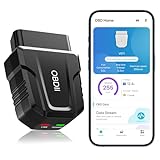
At $29.99, this scanner undercuts most competitors while offering Bluetooth 5.4, which means a more stable connection over greater distance than older adapters. The app interface is functional if not polished, and owners note it handles standard OBDII reads and clears without issue on most post-1996 vehicles.
- Pro: Bluetooth 5.4 provides stronger and more consistent pairing than many similarly priced units
- Pro: Among the lowest prices for a wireless iPhone-compatible scanner
- Con: App quality and English-language polish lag behind more established brands
Worth skipping if you already own a Veepeak or BlueDriver and want a better app experience. For a second-car backup or first-time buyer on a tight budget, it delivers the basics at a low entry point.
ANCEL AD310 Classic
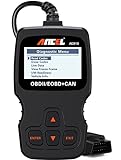
This is not a Bluetooth scanner — it is a standalone handheld unit with its own screen. That makes it the choice for anyone who does not want to fiddle with phone apps, firmware updates, or Bluetooth pairing quirks. Plug it in, read the code, clear it. Simple and reliable for basic engine diagnostics on any 1996 or newer OBDII vehicle.
- Pro: No phone, no app, no subscription — works immediately out of the box
- Pro: Backlit display with live data stream useful for verifying sensor behavior
- Con: Cannot be used as an iPhone OBD2 scanner; no wireless or app integration
Skip it if the goal is specifically a scanner that pairs with your phone. If you want zero setup friction for occasional code reads, it is the most hassle-free option here.
OBDLink MX+
The MX+ targets the user who wants manufacturer-level access — enhanced codes, bi-directional testing, and support for proprietary systems that generic OBDII mode reads will miss. It pairs with a dedicated app and integrates with platforms like FORScan for deeper European and Asian vehicle diagnostics. Owner feedback highlights its connection stability and protocol breadth.
- Pro: Reads enhanced manufacturer-specific codes across many systems including ABS and SRS
- Pro: Extremely stable Bluetooth connection with minimal dropouts reported
- Con: Requires a separate app or platform integration for full functionality, and the price is high
Skip it if you only need check-engine-light reads. Buy it if you diagnose multiple makes, want coding-level access, or are a serious DIYer who has outgrown basic code readers.
BlueDriver (ABS/SRS/TPMS)
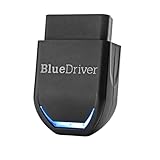
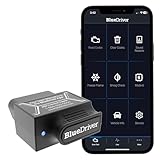
BlueDriver’s reputation rests on its plain-English repair reports — it does not just give you a code number, it explains probable causes, frequency of occurrence, and which repairs fixed the issue for other users. It covers ABS, SRS, TPMS, and emissions beyond the engine. No subscription required for these core features, which sets it apart from competitors that gate advanced functions behind monthly fees.
- Pro: Repair reports based on actual fix data from millions of scans, not generic descriptions
- Pro: Multi-system coverage (ABS, SRS, TPMS) without any recurring cost
- Con: The unit itself is bulkier than the slim adapters from Veepeak or Panlong
Skip it if you want the smallest possible dongle or only care about engine codes. For anyone who wants diagnostic confidence without calling a shop first, BlueDriver justifies its mid-range price with genuinely useful context around what each code means.
Veepeak OBDCheck BLE+
The BLE+ upgrade adds support for additional OBDII protocols and manufacturer-specific modes that the standard BLE model cannot reach. Owners report it connecting to vehicles where the cheaper version dropped out or returned incomplete data. The form factor remains compact, and it still pairs with the same ecosystem of third-party apps.
- Pro: Broader protocol support than the standard BLE, useful for older or non-standard vehicles
- Pro: Same trusted Veepeak iOS connection quality with added diagnostic depth
- Con: At $41.98 it sits in a awkward middle ground — closer to BlueDriver’s coverage gap than to the standard BLE
Skip it if your vehicles are all post-2008 and the standard BLE handles them fine. Choose the BLE+ when you have an older car or a model known for partial protocol compliance.
BlueDriver (ABS/SRS/TPMS) — Premium Bundle
The higher-priced BlueDriver listing at $139.95 typically corresponds to a bundled configuration or a specific retail package that includes additional accessories or an extended warranty tier. The core scanner functionality is identical to the $94.95 version. Owners who buy the premium bundle report no difference in diagnostic capability.
- Pro: Same repair-report intelligence and multi-system coverage that makes BlueDriver stand out
- Pro: Additional accessories or protection included justify the premium for some buyers
- Con: Paying $45 more for identical diagnostic performance is hard to rationalize
Skip it unless the bundle contents specifically matter to you. For pure scanning power, the $94.95 version is the better deal.
Panlong OBD2 Scanner
The cheapest option on this list at $25.99, the Panlong handles basic engine code reads and clears with iPhone compatibility. It is a reasonable starting point for someone who wants to try OBDII diagnostics before committing to a pricier unit. Owner feedback is mixed — many report it working fine, while a notable minority mention connection inconsistencies or app limitations.
- Pro: Lowest price for a functioning wireless iPhone OBD2 scanner
- Pro: Adequate for simple read-and-clear tasks on common vehicles
- Con: Connection stability and app support are less consistent than established brands
Skip it if you need a scanner you can rely on without troubleshooting the tool itself. It works, but you get what you pay for in terms of polish and consistency.
Buying Guide
Connection Standard and iOS Pairing
Bluetooth 5.0 or higher provides noticeably better pairing stability than older 4.x adapters, especially in cars with metal interiors that can interfere with the signal. When choosing a best iPhone OBD2 scanner, check whether the unit uses a proprietary app or supports the broader OBDII app ecosystem. Proprietary apps often look cleaner but lock you into one developer’s updates; third-party compatibility gives you more data options but adds setup steps.
Protocol Coverage Beyond Basic OBDII
All OBDII scanners read engine and emissions codes by regulation. Fewer can reach ABS modules, airbag systems, transmission control, or manufacturer-specific enhanced codes. If your car has a fault in a non-engine system, a basic $25 scanner will return a generic communication error rather than useful data. Decide upfront whether you need multi-system access — it can double or triple the price of the adapter.
App Quality and Subscription Model
Some scanners are hardware-only and leave you to find a capable app separately. Others bundle an app that requires a monthly fee for features like code repair suggestions or multi-system reads. Read the fine print before buying. A $95 scanner that never asks for a subscription is better value over three years than a $30 scanner plus a $10/month app fee.
Our Verdict
The Veepeak OBDCheck BLE is our top pick for most iPhone users. It balances reliable pairing, broad app compatibility, and a price under $35 that leaves no reason to buy something else for basic diagnostics. For the absolute lowest entry point, the Panlong OBD2 Scanner at $25.99 works if you accept slightly less consistency. However, if you own multiple vehicles from different manufacturers or want code context without calling a mechanic, the BlueDriver at $94.95 becomes the better long-term investment because its repair-report data saves you diagnostic fees that exceed the price difference within the first few uses.
FAQ
Do all OBD2 scanners work with iPhone?
No. Many cheap Bluetooth OBD2 adapters were built for Android and use profiles that iOS does not support. Look specifically for models labeled “iOS compatible” or ones that work with certified third-party apps available on the App Store.
Can I clear a check-engine light without fixing the problem?
Yes — most scanners let you reset the code, and the light will go off. But if the underlying fault persists, the light will return after a few drive cycles. Clearing without repairing only hides the issue temporarily.
Is a subscription ever required for basic code reads?
The models listed above do not require a subscription for core engine code reading and clearing. Some premium diagnostic platforms charge for advanced features like bi-directional tests or module coding, but basic OBDII functions are free across all eight scanners here.
What is the difference between Bluetooth and Wi-Fi OBD2 adapters?
Bluetooth adapters pair directly with your phone and typically draw less power from the car’s port. Wi-Fi adapters create a local network your phone connects to, which can be easier to set up with tablets but may add connection latency. For iPhone use, most owners prefer Bluetooth for simpler pairing.