Key takeaways
- If the distance is approximately 105mm (4.13 inches), you need a 120mm fan.
- If the distance is approximately 125mm (4.92 inches), you need a 140mm fan.
- If the distance is approximately 71.5mm (2.81 inches), you need an 80mm fan.
What's inside
The Short Answer
For the vast majority of desktop computers, the sweet spot is two to three case fans. A standard setup consisting of one or two intake fans at the front and one exhaust fan at the rear provides optimal airflow, keeping your components cool without generating excess noise or drawing unnecessary power. This basic configuration can lower internal temperatures by up to 15 degrees Celsius compared to a case with no fans at all.
However, if you are building a high-performance gaming rig, a dedicated media editing workstation, or housing your system inside a closed home office cabinet, you will likely need four to six case fans. Adding more than six fans yields diminishing returns, as the marginal temperature drop is minimal while the noise level and dust accumulation increase significantly.
As an Amazon Associate we earn from qualifying purchases at no extra cost to you. Product prices and availability are accurate as of the date shown and are subject to change.


Standard Sizes
Computer case fans are measured by their outer frame dimensions. While 120mm is the industry standard, other sizes serve specific space and airflow requirements. Below is a comprehensive size guide with real measurements in both imperial and metric units to help you determine what will fit your chassis or custom furniture integration.
| Nominal Fan Size | Dimensions (Inches) | Dimensions (Centimeters) | Standard Thickness | Best Used For |
|---|---|---|---|---|
| 80mm | 3.15 x 3.15 in | 8.0 x 8.0 cm | 15mm to 25mm | Compact Home Theater PCs (HTPCs), small form factor (SFF) cases, and legacy office desktops. |
| 120mm | 4.72 x 4.72 in | 12.0 x 12.0 cm | 25mm (Standard) / 15mm (Slim) | The universal standard. Fits almost all modern mid-tower and full-tower cases, liquid cooling radiators, and custom cabinet ventilation. |
| 140mm | 5.51 x 5.51 in | 14.0 x 14.0 cm | 25mm | High-airflow setups. Moves more air at lower speeds (RPM), making them quieter than 120mm alternatives. |
| 200mm | 7.87 x 7.87 in | 20.0 x 20.0 cm | 30mm | Massive full-tower cases or custom home theater furniture integration requiring maximum air volume at ultra-low noise levels. |
How to Measure Your Space
Before purchasing any cooling hardware, you must verify the physical limitations of your computer case or the furniture cabinet where your system resides. Follow these steps to measure your space accurately:
- Check the Mounting Brackets: Open your computer case side panel and locate the ventilated mounting areas (typically at the front, rear, top, and sometimes bottom). Look for sets of four pre-drilled screw holes forming a square.
- Measure Screw-Hole Spacing: Do not measure diagonally. Measure horizontally or vertically from the center of one screw hole to the center of the adjacent one.
- If the distance is approximately 105mm (4.13 inches), you need a 120mm fan.
- If the distance is approximately 125mm (4.92 inches), you need a 140mm fan.
- If the distance is approximately 71.5mm (2.81 inches), you need an 80mm fan.
- Assess Depth and Clearance: Measure the distance from the mounting surface inward toward your motherboard, RAM, and graphics card. Standard fans are 25mm (about 1 inch) thick. Ensure there is at least 30mm of clearance so the spinning blades do not contact cables or component heatsinks. If space is tight, look for “slim” profiles measuring 15mm in thickness.
- Review Cabinet Ventilation Space: If you are mounting fans directly into a wooden media console or desk cabinet, measure the total depth of the wood panel. You will need a hole saw matching the nominal diameter of the fan (e.g., a 4.5-inch hole saw for a 120mm fan) and enough interior clearance to mount a protective wire grille.
By Room or Use Case
The number of fans you need depends heavily on where the computer is located and how you use it. Managing heat effectively is essential for system longevity, especially as modern hardware demands increase.
The Quiet Home Office
If your computer is primarily used for remote work, document editing, and web browsing, your priority is silence. A noisy computer fan can be highly distracting in a quiet room. For this environment, two high-quality 120mm fans are ideal: one front intake and one rear exhaust.
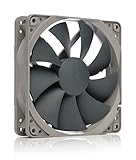
In this scenario, opt for premium, focus-optimized fans designed for low-noise output. Single high-efficiency units, such as the Noctua NF-P12 redux-1700, retail in the $15 to $18 price range and operate at whisper-quiet levels (under 20 dB) while providing excellent static pressure. Keeping the fan count low minimizes dust buildup, meaning you will spend less time cleaning out your workspace.
The Dedicated Gaming Setup
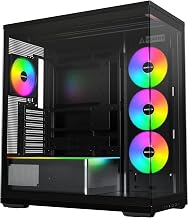
Gaming PCs feature high-end graphics cards and processors that can easily pull 300 to 600 watts of power, converting almost all of it into heat. To prevent thermal throttling, you need a robust airflow system consisting of four to six 120mm or 140mm fans.
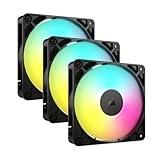
A typical high-airflow layout uses three front intake fans and two exhaust fans (one at the rear, one at the top-rear). To keep your setup visually cohesive and budget-friendly, consider multi-packs. Budget-conscious builders can find basic triple-packs like the Thermalright TL-C12C-S X3 for around $11 to $14, offering Addressable RGB (ARGB) lighting and decent airflow. For cleaner cable management, premium options like the Corsair RS120 ARGB triple-pack (priced around $30 to $36) feature daisy-chain connections, allowing you to link multiple fans together using a single cable header.
The Media Console or Closed Cabinet
Placing a computer, gaming console, or receiver inside a closed wooden entertainment center is a recipe for overheating. Without ventilation, the air inside the cabinet can quickly surpass 40°C (104°F). For furniture integration, you need two to four fans dedicated entirely to cabinet ventilation.
Install one or two intake fans low on the back or side of the cabinet to pull cool air from the room, and one or two exhaust fans high up on the opposite side to expel hot air. Because furniture lacks the specialized mounting brackets of a PC case, you will need to utilize external USB-powered fans or standard 120mm fans wired to a dedicated 12V power adapter. Running these fans at a modest 1000 to 1200 RPM ensures your media center remains completely silent while protecting your expensive electronics.
Compact & Small Form Factor (SFF) Builds
SFF cases (typically under 20 liters in volume) are designed to sit directly on top of your desk, taking up minimal real estate. Because space is highly limited, you can usually only fit one or two fans, often relying on slim 120mm or 80mm models. In these tight quarters, thermal management relies on “positive pressure” or direct exhaust. Every square inch of space must be carefully calculated, and using high-quality single fans is preferred over cheap multi-packs to maximize reliability in high-heat zones.
Common Sizing Mistakes
- Ignoring Fan Thickness: Many builders assume that if a case supports a 120mm fan, any 120mm fan will work. However, thick radiators or bulky motherboard heatsinks can block standard 25mm-thick fans. Always measure the clearance depth before buying.
- Creating a Negative Pressure Vacuum: If you have more exhaust fans than intake fans, your case will pull air through every un-filtered crack and seam, leading to rapid dust accumulation. Always aim for a balanced or slightly positive pressure setup (more intake than exhaust).
- Overpopulating the Case: Installing eight, nine, or ten fans might look impressive, but it creates turbulent air currents that can actually trap heat inside the case. It also increases the power draw on your motherboard headers and adds unnecessary noise.
- Mixing Mismatched Fan Speeds: Combining a high-speed 2000 RPM fan with a low-speed 1000 RPM fan in a push-pull configuration on a liquid cooling radiator can cause motor strain, leading to premature fan failure. Keep your radiator fans identical.
FAQ
Can I mix 120mm and 140mm fans in the same case?
Yes, absolutely. Many modern cases support both sizes. A common and highly effective configuration is to use two 140mm fans at the front for quiet, high-volume intake, and one 120mm fan at the rear for direct exhaust where space is tighter.
What is the difference between PWM and 3-pin fans?
PWM (Pulse Width Modulation) fans use a 4-pin connector that allows your motherboard to precisely control the fan speed based on real-time component temperatures. 3-pin fans run at a constant speed unless controlled by voltage adjustments, which are less precise. PWM fans are highly recommended for home offices where you want the system to be silent during light tasks and only spin up when heavy work begins.
How much should I expect to spend on a good set of case fans?
Prices vary widely based on features and brand reputation. Basic, unlit 5-packs (such as the Thermalright TL-C12C X5) offer incredible value at around $18 to $22, making them perfect for budget builds. Premium single fans engineered for silent operation and long-term durability generally cost $15 to $25 each, while high-end ARGB triple-packs with advanced daisy-chaining technology range from $30 to $50.
How often should I clean my case fans?
In a typical home environment, you should clean your computer case and fans every six to twelve months. If you have pets or keep your computer on the carpet, you should inspect them every three to four months. Wiping the blades down with a microfiber cloth and using compressed air to clear the motors will keep them running quietly and prevent premature bearing wear.