Key takeaways
- Eliminates Ground Loops and Static: Completely isolates the audio signal from internal PC motherboard electromagnetic interference, delivering a pitch-black, silent background noise floor.
- Drives High-Impedance Studio Cans: Provides robust power output (100mW to 300mW+) capable of driving 80-ohm to 300-ohm audiophile headphones that onboard audio cannot power properly.
- Immediate Hardware Accessibility: Dedicated volume dials, bass/treble tone controls, and instant mic mute switches prevent you from disrupting gameplay to open audio control panels.
- Multi-Platform Versatility: Most units offer plug-and-play USB-C, optical, and coaxial connections compatible across PC, Mac, PlayStation 5, and Nintendo Switch setups.
What's inside
The Short Answer
A USB DAC (Digital-to-Analog Converter) is worth buying for gaming only if you use wired analog headphones and experience low volume, background static, or electrical interference from your computer setup. If you already rely on a wireless gaming headset, budget USB headphones, or a modern high-end motherboard with clean audio output, adding an external DAC will deliver little to no practical benefit to your gaming experience.
What You Actually Get
In 2026, most gaming PCs and consoles come equipped with integrated audio chips. However, these internal components sit inches away from power hungry graphics cards and processors drawing 300 to 500 watts of power. This proximity frequently creates electromagnetic interference (EMI), which manifests as a high-pitched buzz, background hiss, or GPU coil whine echoing through your wired headset. A USB DAC moves the entire digital-to-analog conversion process outside of your PC chassis, creating an isolated, noise-free signal path.
As an Amazon Associate we earn from qualifying purchases at no extra cost to you. Product prices and availability are accurate as of the date shown and are subject to change.

Beyond cleaning up background noise, an external gaming DAC provides three tangible physical upgrades to your desk setup:
1. Dedicated Amplification Power: Standard 3.5mm headphone jacks on standard laptops and budget motherboards typically output a modest 10mW to 30mW of power. Dedicated desktop gaming DACs deliver substantially more power—often ranging from 100mW to 300mW at 32 ohms. This extra headroom allows demanding studio headphones (such as 80-ohm to 250-ohm models) to achieve full dynamic range, producing punchier bass impacts and clearer positional footsteps without distortion.
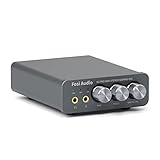
2. Tactile Desktop Controls: Instead of alt-tabbing out of a fast-paced match to adjust Windows audio sliders or equalizer profiles, desktop units place physical controls at your fingertips. Mid-tier options like the Fosi Audio K5 Pro Gaming DAC ($79.99) feature a solid aluminum body measuring 4.25 x 3.74 x 1.22 inches and weighing 0.73 lbs, offering hardware knobs for master volume, treble, and bass adjustment, along with direct microphone gain control.
3. Channel Separation and Spatial Processing: While standard stereo output handles left-right audio, purpose-built units like the VENTION 7.1 Gaming DAC External USB Sound Card ($49.99)—a lightweight 0.15 lb dongle running at 24-bit/192kHz resolution—incorporate onboard hardware toggle buttons for 7.1 virtual surround sound processing. This helps widen the virtual soundstage for immersive single-player titles without putting rendering strain on your system’s CPU.
Pros
- Eliminates Ground Loops and Static: Completely isolates the audio signal from internal PC motherboard electromagnetic interference, delivering a pitch-black, silent background noise floor.
- Drives High-Impedance Studio Cans: Provides robust power output (100mW to 300mW+) capable of driving 80-ohm to 300-ohm audiophile headphones that onboard audio cannot power properly.
- Immediate Hardware Accessibility: Dedicated volume dials, bass/treble tone controls, and instant mic mute switches prevent you from disrupting gameplay to open audio control panels.
- Multi-Platform Versatility: Most units offer plug-and-play USB-C, optical, and coaxial connections compatible across PC, Mac, PlayStation 5, and Nintendo Switch setups.
Cons
- Desk Space and Cable Management: Desktop DAC/Amp units require physical surface area and add extra cables (USB power/data, headphone leads, mic lines) across your desk environment.
- Incompatible with Wireless/USB Headsets: Delivers zero functional value if your primary audio device relies on 2.4GHz wireless dongles, Bluetooth, or built-in USB-A connectors.
- Diminishing Returns on Budget Earbuds: Plugging an inexpensive $15 pair of basic earbuds into a $80 DAC will not magically transform their sonic performance or soundstage expansion.
- Potential Console Limitations: Certain gaming consoles do not support UAC2 (USB Audio Class 2) drivers or optical output, requiring specific driver modes (UAC1) or additional HDMI audio extractors.
Who Should Buy It
You should invest in a USB gaming DAC if you fall into one of these specific hardware scenarios:
First, you use high-quality wired studio headphones (such as Sennheiser HD560S, Beyerdynamic DT 770 Pro, or Audio-Technica ATH-M50x) that require extra voltage output to achieve proper loudness and bass impact. Second, your current PC setup suffers from persistent buzzing or electric static when your graphics card is under heavy gaming load. Third, you want physical desk controls for quick balance tweaks, microphone gain adjustments, and master volume control without altering software settings inside Windows.
Who Should Skip It
You can safely save your money and skip buying a USB DAC if you rely exclusively on wireless gaming headsets (like the SteelSeries Arctis Nova series or Logitech G PRO X Wireless), as these headsets contain their own integrated DACs inside the earcups. You should also skip an external DAC if you recently purchased a mid-to-high-end motherboard equipped with isolated audio PCB traces and premium codecs (such as Realtek ALC1220 or ALC4080), which already deliver pristine noise floor levels well below audible thresholds.
Cheaper Alternatives
If you need to fix dirty onboard audio or boost volume without spending $50 to $100 on a dedicated gaming amplifier box, consider these cost-effective routes:
| Option | Cost | Trade-off |
|---|---|---|
| USB-C to 3.5mm Headphone Jack Dongle | $9 – $15 | Clean sound conversion in a tiny footprint, but limited output power (31mW @ 32Ω) and lacks physical knobs or mic EQ controls. |
| Compact USB Audio Dongle (e.g., VENTION 7.1) | $20 – $50 | Adds virtual surround sound features and basic button controls, but offers lower power reserves than desktop-powered units. |
| Software Spatial Audio Suites (Dolby Atmos / DTS) | $15 (one-time) | Simulates 3D positional spatial audio on your existing hardware, but cannot resolve hardware static or drive high-impedance headphones. |
| 3.5mm Ground Loop Noise Isolator | $10 – $12 | Inexpensive inline filter that removes persistent electrical hums, though it can slightly roll off deep sub-bass frequencies. |
FAQ
Does a USB DAC introduce audio latency during fast-paced competitive gaming?
No. Modern external USB DACs operating over USB 2.0 or USB-C interfaces process audio data with sub-1 millisecond processing latency. This is completely imperceptible to human hearing and significantly faster than any Bluetooth or standard 2.4GHz wireless audio connection.
Will a USB DAC work natively on PlayStation 5 or Nintendo Switch?
Yes, provided the DAC supports UAC1 (USB Audio Class 1) mode or driverless plug-and-play operation. While PCs easily accept UAC2 devices, consoles like the PS5 require UAC1 compatibility to recognize the USB sound card properly without installing third-party drivers.
Do I need a USB DAC if my headset already connects via USB?
No. Any gaming headset that connects directly via a USB cable already contains a tiny internal DAC and amplifier chip built into its inline cable or earcup assembly. Plugging a USB headset into an external analog DAC is physically impossible without using custom passive adapters, which are not recommended.
Can a gaming USB DAC improve my microphone clarity?
Yes, if the DAC includes a dedicated 3.5mm microphone input with an integrated analog-to-digital converter (ADC). Units with dedicated mic gain controls isolate your voice signal from internal PC motherboard ground hum, reducing background hiss for your teammates in Discord or game chat.