Our Top Picks
 JUNHETEK Retro Handheld Game Console 4.0-inch IPS 64GB4.0 Inches5.5 x 3.2 x 1 inches0.55 poundsCheck on Amazon
A Linux-based pocket handheld from the Anbernic RG35XX or Miyoo Mini families suits players who mainly want 8-bit, 16-bit and PlayStation 1 classics in a small, simple device, an Android handheld from the Retroid Pocket or AYN Odin lines suits players who want PSP, Dreamcast, GameCube and some Switch-era emulation plus Android apps, and a handheld PC such as the Steam Deck suits players who want one device for emulation and their PC library. The right device depends on how demanding your favourite systems are, how much tinkering you will accept, and what screen shape suits the games you play.
Know what emulation handhelds can and cannot do
Emulation handhelds run software that imitates older consoles. The hardware you need scales with the age and power of the console being imitated. Early systems like the NES, Game Boy, Mega Drive and Super Nintendo run on almost anything. PlayStation 1 and many arcade titles run well on low-cost chips. PSP, Nintendo 64, Dreamcast and Saturn need more power. GameCube, Wii, PlayStation 2 and some Switch titles need a modern Android chip or a handheld PC, and results vary game by game.

R36MAX 2 Retro Handheld Console, 4.5" IPS HD Portable Gaming Emulator, Detachable Grip, 20000+ Classic Arcade Games, Open Source Linux & 4000mAh Battery (Black-128G)
Chosen because it specifies 4.5" IPS HD Portable Gaming Emulator and Detachable Grip.
View on AmazonJUNHETEK Retro Handheld Game Console 4.0-inch IPS 64GB Black | 30+ Emulators, 4000mAh Battery, Open Source, Dual Analog Sticks, Portable Gaming
Chosen because it specifies 30+ Emulators and 4000mAh Battery.
View on Amazon
RS36 Retro Handheld Game Console,20,000+ Classic Games, 64GB,4.0“ | 12 Emulators,4000mAh Battery Portable Pocket Video Games,Transparent Black
Chosen because it specifies 000+ Classic Games and 64GB.
View on Amazon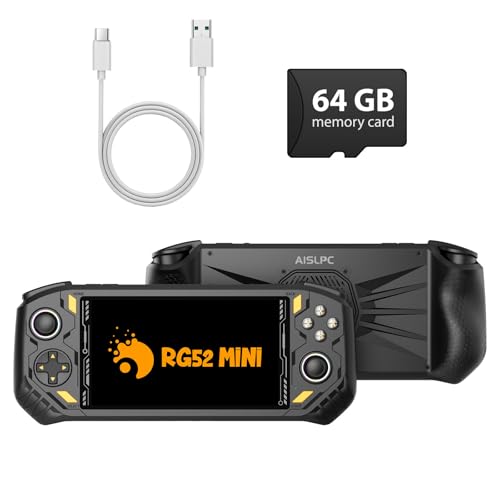
RG52MINI Retro Handheld Game Console, 5.5 Inch IPS Screen, Portable Dual System, 64GB Support 30+ Emulator&22000+ Classic Games, WiFi Networked Fighting, HDMI TV Output, 5000mAh Battery(Black 64GB)
Chosen because it specifies 5.5 Inch IPS Screen and Portable Dual System.
View on AmazonR36MAX 2 Retro Handheld Console, 4.5" IPS HD Portable Gaming Emulator, Detachable Grip, 20000+ Classic Arcade Games, Open Source Linux & 4000mAh Battery (Black-128G)
Chosen because it specifies 4.5" IPS HD Portable Gaming Emulator and Detachable Grip.
View on AmazonJUNHETEK Retro Handheld Game Console 4.0-inch IPS 64GB Black | 30+ Emulators, 4000mAh Battery, Open Source, Dual Analog Sticks, Portable Gaming
Chosen because it specifies 30+ Emulators and 4000mAh Battery.
View on AmazonRG52MINI Retro Handheld Game Console, 5.5 Inch IPS Screen, Portable Dual System, 64GB Support 30+ Emulator&22000+ Classic Games, WiFi Networked Fighting, HDMI TV Output, 5000mAh Battery(Black 64GB)
Chosen because it specifies 5.5 Inch IPS Screen and Portable Dual System.
View on AmazonReviewers consistently stress that performance depends on the emulator, the settings and the specific game, not just the device. Treat any compatibility list as a guide, and expect to adjust settings for heavier titles.
A note on game files: you should only use game images and BIOS files you have the legal right to use, such as backups of games you own where your local law allows it. Devices sold with preloaded game libraries raise legal and quality concerns, so favour those sold without them.
At a glance
| Device class | Best for | Typical strengths | Limits |
|---|---|---|---|
| Anbernic RG35XX and similar Linux handhelds | Classic 8/16-bit and PS1 on a budget | Small, light, simple custom firmware, long battery life for the class | Struggles with heavier systems |
| Miyoo Mini family | Pocket-sized retro play | Very compact, easy menu, community firmware | Small screen, limited power |
| Retroid Pocket line (Android) | PSP, Dreamcast, GameCube and beyond | Android flexibility, strong chips in recent models, good controls | Needs setup; compatibility varies by emulator and game |
| AYN Odin line (Android) | Players who want a larger screen and more power | Android handhelds with strong controls and displays | Larger and pricier than pocket devices |
| Steam Deck and other handheld PCs | Emulation plus PC gaming | Runs full PC emulators and a game library | Larger, heavier, shorter battery life than pocket handhelds |
Linux pocket handhelds: Anbernic RG35XX and Miyoo Mini
These small devices are the easiest way into retro gaming. They boot quickly into a menu, include controls for classic systems, and run well on community firmware such as muOS or OnionOS, depending on the model. They generally cover NES, SNES, Game Boy family, Mega Drive, many arcade titles and PS1 games comfortably. Their screens are usually 3.5 to 4 inches, and many use 4:3 panels that match the shape of older games.
The limits are clear: they are not built for PSP, Dreamcast or later systems at full speed, and some have fewer buttons or no analog sticks. If your library is mostly classic 2D games and PS1, this is the sensible, economical class.
Android handhelds: Retroid Pocket and AYN Odin
Android handhelds use mobile chips and run emulators from the Android app ecosystem. The Retroid Pocket line is popular for its balance of size, controls and performance, and AYN’s Odin handhelds target players who want a larger screen and strong hardware. Reviewers report that recent models in these families handle PSP, Dreamcast, many GameCube titles and some PlayStation 2 and Switch games, with results that vary by title.
The trade-offs are setup time and variability. You install and configure emulators yourself, and some games need per-game tweaks. Battery life is shorter than on pocket Linux devices when running demanding emulators. Because specific model names and specifications change often, read the maker’s current page for processor, RAM, screen and battery before you buy.
Look for a screen shape that suits your library: a 4:3 or square-ish screen suits older games without borders, while 16:9 suits PSP and widescreen titles. Check for analog sticks, triggers and, if you play PSP and PlayStation titles, enough shoulder buttons.
Handheld PCs
If you already play PC games, a Steam Deck, ROG Ally or Legion Go can double as an emulator. They run PC emulators with strong results, including for demanding systems, and they play a PC library besides. They are larger, heavier and have shorter battery life than pocket devices, and they cost more. They suit players who want one device instead of two.
Pick X if…
| If you want… | Pick | Why |
|---|---|---|
| Classic 8/16-bit and PS1 on a limited outlay | Anbernic RG35XX or Miyoo Mini class | Simple, light, enough power |
| PSP, Dreamcast and GameCube | Retroid Pocket or AYN Odin class | Mobile chips handle heavier systems |
| A large screen and strong controls | AYN Odin class | Bigger handheld with performance focus |
| Emulation plus PC library | Steam Deck or similar | Full PC emulators, game stores |
| A pocketable device for travel | Miyoo Mini class | Very small footprint |
Budget tiers by hardware class
Budget: Linux pocket handhelds, which cover the classic libraries well.
Mid-range: Android handhelds with mid-tier mobile chips, which cover PSP, Dreamcast and many GameCube titles.
Premium: flagship Android handhelds and handheld PCs for the most demanding emulation and for PC games.
Alternatives
- A phone with a clip-on controller: Android phones run many emulators, and a controller grip adds buttons. It is cheap if you already own a phone but is less comfortable for long sessions.
- Official retro mini consoles and classic collections: these provide legal, curated libraries with no setup.
- A small PC or mini console at home: better for GameCube, Wii and PlayStation 2 if you do not need portability.
Fit and compatibility notes
- Match screen shape to your games: 4:3 for classic consoles, 16:9 for PSP and later.
- Check controls: analog sticks and triggers matter for PS1 and N64 games.
- Use a quality microSD card. Slow cards cause load times and stutter.
- Check which operating system and firmware are supported, because community firmware can change over time.
- Look for a TV output or HDMI route if you want to play on a larger screen.
- Read maker pages for battery capacity, charging method and storage options before choosing.
How to match a device to your library
Start by listing the consoles you actually want to play. If the list stops at the Super Nintendo, Mega Drive, Game Boy Advance and PlayStation 1, a pocket Linux device covers everything and spending more buys little. If the list includes PSP, Dreamcast or Nintendo 64 with enhanced resolution, aim for a mid-tier Android handheld. If you want GameCube, Wii or PlayStation 2 and are willing to tweak settings game by game, look at the upper Android tier or a handheld PC.
Next consider ergonomics. Clamshell and vertical designs slip into a pocket, while horizontal designs with grips are more comfortable for long sessions. Thumbstick placement, D-pad feel and shoulder buttons matter more over time than a spec sheet suggests, so read several independent reviews that discuss comfort. Finally, weigh software support: devices with active communities receive firmware updates, shader presets and guides, which extends their useful life.
Display and upscaling notes
Retro games were designed for low-resolution screens, so they look different on a modern panel. Integer scaling keeps pixels sharp, while shader presets can mimic the soft look of older displays. A higher-resolution handheld screen gives more room for these filters, and an OLED panel shows deep blacks that suit many classic titles. Lower-resolution screens in pocket devices are often a better match for the original pixel grid, which is one reason small, cheap handhelds remain popular. Decide whether you prefer the crisp, clean look or the filtered, nostalgic one, since it affects which screen suits you.
Frequently Asked Questions
Which handheld is best for PS1 and classic games?
A Linux pocket handheld in the Anbernic RG35XX or Miyoo Mini class covers those systems well at a modest outlay. They are small, simple and have good battery life for the class.
Can a handheld run PlayStation 2 or Switch games?
Some high-end Android handhelds and handheld PCs can, but results vary by game and emulator. Pocket Linux devices cannot run these systems at playable speeds.
Is emulation legal?
Emulators themselves are generally legal, but game files and BIOS images are protected by copyright. Use only files you have the right to use under your local law.
Do I need to install firmware myself?
Many Linux handhelds ship with stock firmware that works but benefits from community firmware. Android handhelds need you to install and configure emulators, though many guides are available.
How much storage do I need?
Classic libraries are small, so a modest microSD card is enough. PSP, Dreamcast and GameCube games are larger, so plan for more space if you have many of them.
Should I buy a handheld PC instead?
Choose a handheld PC if you also want to play PC games and run demanding emulators. For classic libraries only, a smaller and simpler pocket device is usually better value.
FAQ
Which handheld is best for PS1 and classic games?
Can a handheld run PlayStation 2 or Switch games?
Is emulation legal?
Do I need to install firmware myself?
How much storage do I need?
Should I buy a handheld PC instead?
More from Amazon
Programs that pair well with the guide above. Offers and eligibility are set by Amazon and may change.
Free shipping on eligible items, Prime Video and more. Eligible new members can start with a free trial.
Start a Prime free trialAd-free music streaming. Eligible new subscribers can start with a free trial.
Try Music Unlimited freeA Prime membership for ages 18-24 with a trial period. Eligibility is set by Amazon.
See Prime for Young AdultsAudiobooks and podcasts to listen to on the go. Eligible new members can start with a free trial.
Try Audible freeAs an Amazon Associate we earn from qualifying purchases.