Key takeaways
- Pro: very high stated output power
- Pro: 4.4mm balanced and 3.5mm outputs
- Pro: Class AB discrete design
- Con: inputs not described in the listing text
- Con: desktop only, not portable
The best headphone amps under $75 are the FiiO JadeAudio GIGAS 1 for a high-power desktop amp with balanced output and the Fosi Audio Q4 for a DAC and amp combo with several digital inputs. Both fit the budget. This guide compares six picks from listing specifications, covering desktop, portable, and multi-headphone options.
A headphone amp matters when your headphones are harder to drive than a laptop or phone jack can manage. It can also add a built-in DAC, a cleaner volume control, or an extra output for balanced headphone cables. Under $75 you can choose between compact USB DAC dongles, rechargeable portable amps, a four-channel splitter for shared listening, and desktop units with more power. We stay with what the listings say: output power, connectors, inputs, and intended use. Impedance and distortion figures are usually missing, so we mark them not listed and suggest checking the maker page before pairing with demanding headphones.
Quick Comparison
| Model | Key specs per listing | Best for |
|---|---|---|
| FiiO JadeAudio GIGAS 1 | Class AB, up to 4600mW per channel balanced, 4.4mm and 3.5mm outputs | Power-hungry headphones |
| Fosi Audio Q4 | DAC and amp, optical, coaxial, USB inputs, 3.5mm and RCA outputs | PC audio hub |
| Fosi Audio DS2 | USB-C dongle DAC amp, 3.5mm and 4.4mm balanced output, DSD256 | Laptops and phones |
| Douk Audio U3 | Class A, RCA input, 6.35mm and 3.5mm outputs, 5V DC | Small desk amp |
| Mackie HM-4 | 4-channel splitter amp, individual volume per listener | Shared monitoring |
| Neoteck portable amp | 16-300 ohm, rechargeable, two-stage gain switch | Portable use |
FiiO JadeAudio GIGAS 1
Specs per listing: high-power desktop headphone amplifier, Class AB discrete design, up to 4600mW per channel balanced output, 4.4mm and 3.5mm outputs.
The GIGAS 1 is the power pick. The listing states a Class AB discrete amp with up to 4600mW per channel from the balanced output, plus both 4.4mm balanced and 3.5mm outputs. That much headroom suits full-size headphones that need a stronger drive than a laptop jack gives. The 4.4mm balanced port also lets you use balanced cables. Input details are not in the text we compared, so check what connects to it, since you may need a separate DAC or source. Choose it for demanding headphones and a desk-bound setup.
- Pro: very high stated output power
- Pro: 4.4mm balanced and 3.5mm outputs
- Pro: Class AB discrete design
- Con: inputs not described in the listing text
- Con: desktop only, not portable
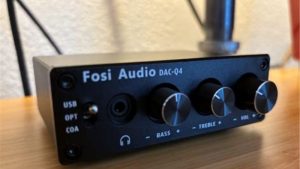
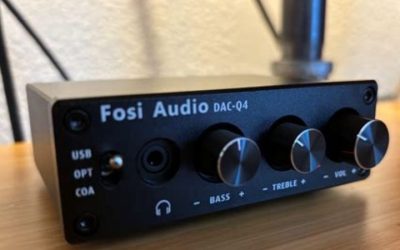
Fosi Audio Q4
Specs per listing: DAC headphone amp for PC, optical, coaxial, and USB digital inputs, 3.5mm headphone output, RCA outputs for powered speakers.
The Q4 is the hub pick. It combines a USB DAC with optical and coaxial inputs, a 3.5mm headphone output, and RCA outputs for powered speakers, so one box can serve headphones and speakers. That helps if you switch between a headset and a desktop pair. It converts the digital signal from a PC or console through its own DAC. The listing does not state output power in the text we compared, so check the maker page for a match with your headphones. It is a solid choice for users who want input variety.
- Pro: optical, coaxial, and USB inputs
- Pro: RCA outputs for speakers
- Pro: built-in DAC for PCs
- Con: output power not listed
- Con: only a 3.5mm headphone output listed
Fosi Audio DS2
Specs per listing: USB-C to AUX dongle DAC amp, 3.5mm jack, 4.4mm balanced output, DSD256, CS43131 chip, for phones and tablets.
The DS2 is a pocket-size USB-C DAC amp. The listing names a CS43131 chip, DSD256 support, and both 3.5mm and 4.4mm balanced outputs, a rare pairing in a dongle. It works with phones and tablets that have USB-C and is compact enough to carry. Power output is not in the text we compared, so it is best for earphones and sensitive headphones, while harder-to-drive models need a larger amp. Check your device compatibility on the maker page since USB-C audio behavior varies.
- Pro: 3.5mm and 4.4mm balanced outputs
- Pro: DSD256 listed
- Pro: portable USB-C dongle
- Con: output power not listed
- Con: needs a USB-C source
Douk Audio U3
Specs per listing: mini Hi-Fi headphone amp, Class A, RCA input, 6.35mm and 3.5mm headphone outputs, DC 5V.
The U3 is a small desktop amp that takes an analog RCA input and drives either a 6.35mm or 3.5mm headset. The listing mentions a Class A design and 5V DC power. It fits users who already have an analog source, such as a DAC or a mixer, and want a better headphone stage. Because it takes an RCA input, a computer needs a DAC or a sound card output to feed it. Output power is not in the text we compared. It is simple, compact, and aimed at people who like a Hi-Fi feel on a small desk.
- Pro: 6.35mm and 3.5mm outputs
- Pro: Class A design listed
- Pro: compact desktop size
- Con: RCA input needs an analog source
- Con: power not listed
Mackie HM-4
Specs per listing: 4-channel headphone amplifier, compact splitter, for tracking sessions and rehearsals, each listener sets their own volume.
The HM-4 solves a different problem: more than one person on headphones. The listing describes a four-channel amp in a compact splitter form where each listener controls their own volume. That is useful for recording sessions, podcasts, and rehearsals, where a musician or a guest needs a personal mix level. It is not designed to improve a single pair of headphones as much as to share one signal. Input and output connector types are not in the text we compared, so confirm them for your gear.
- Pro: four independent headphone outputs
- Pro: individual volume per listener
- Pro: compact
- Con: connector types not listed
- Con: not a power-focused amp
Neoteck Portable Headphone Amp
Specs per listing: 16-300 ohm portable amp, 3.5mm jack, rechargeable, volume control, two-stage gain switch, for PC, CD, and MP3/MP4 players, non-Bluetooth.
The Neoteck is the pocketable analog amp. The listing states support for 16 to 300 ohm headphones, a rechargeable battery, a volume control, and a two-stage gain switch for matching different headphones. It connects through a 3.5mm cable and is explicitly non-Bluetooth. Use it to raise the volume of an MP3 player or an older device that cannot drive headphones well. It does not include a DAC, so it only amplifies the signal it receives. It is a simple and portable solution for basic use.
- Pro: 16-300 ohm range listed
- Pro: rechargeable with two-stage gain
- Pro: portable 3.5mm design
- Con: no DAC
- Con: no Bluetooth
How to Choose a Headphone Amp Under $75
Match output power to your headphones
Easy-to-drive headphones need little. Harder-to-drive full-size models benefit from a stronger amp like the GIGAS 1. Check your headphone impedance on the maker page and compare it with the amp specs. Stay within Under $75 by choosing power only if you need it.
Decide whether you need a DAC
If your source is a PC or phone, a DAC and amp combo such as the Q4 or DS2 skips the sound chip in the device. If you already have a DAC, a pure analog amp like the U3 can be enough.
Check the connectors
3.5mm suits most headsets, 6.35mm suits studio headphones, and 4.4mm balanced suits balanced cables. Make sure your cable or adapter matches the output.
Choose desktop or portable
Desktop units use wall power and offer more output. Portable amps and dongles run from a battery or the host device and trade power for size.
Headphone Amps for Home Office, Small Spaces, and Gaming
Home office
The Fosi DS2 dongle gives a cleaner headphone output from a laptop without extra desk clutter.
Small spaces
The Douk U3 and Neoteck are small and fit on a crowded desk or in a bag.
Gaming
The Fosi Q4 can connect to a console or a PC over optical or USB, and the GIGAS 1 drives full-size gaming headphones that need more power.
Do You Actually Need a Headphone Amp?
Not always. Many headphones are designed to work with phones and laptops, and a good source often drives them well. An amp helps when the sound is quiet at maximum volume, when it distorts at high levels, or when you use high-impedance headphones. A DAC can also reduce noise from a busy computer. If your headphones already sound loud and clear, upgrading the amp may produce only a subtle change, and the money may be better spent on better headphones.
When you do need one, match the amp to the use: a dongle for travel, a desktop unit for a main setup, a splitter for shared monitoring. Use the volume control gradually to avoid sudden loud sound when you switch headphones, since a stronger amp can reach unsafe levels quickly.
Reading Headphone Amp Specs Without the Jargon
Output power
Listings give power in milliwatts per channel, often for a specific load. A higher figure means more headroom for demanding headphones, but a big number is no benefit with sensitive earphones. The GIGAS 1 lists the largest figure here, and it is for the balanced output.
Class A and Class AB
These describe how the amplifier circuit is built. Class A designs, like the one the Douk U3 lists, are known for simple, smooth operation, while Class AB, as on the GIGAS 1, balances efficiency with power. Neither label tells you how a pair of headphones will sound, so treat them as design notes rather than a ranking.
Gain switch
A two-stage gain switch, as on the Neoteck, lets you choose a lower setting for sensitive earphones and a higher one for harder-to-drive headphones. Start low to avoid noise and sudden loud peaks, and switch up only if the volume is not enough.
Connecting an Amp to Your Setup
For a PC, the simplest route is a USB DAC amp such as the Fosi Q4: connect it by USB, select it as the sound output, and plug headphones into the jack. For a console, the optical input on the Q4 can take a digital signal from the console, though you should confirm the console outputs optical audio. Analog amps like the Douk U3 need a line-level source, for example the output of a DAC or a mixer. Portable amps connect between the device and headphones with a short 3.5mm cable.
After you connect, turn the volume to a low point, play something familiar, and raise it slowly. Unplug and replug headphones with the volume low. If you hear hiss when nothing is playing, lower the gain or try a different cable before assuming the amp is faulty.
FAQ
What is the best headphone amp under $75?
The FiiO JadeAudio GIGAS 1 for power, or the Fosi Audio Q4 if you want a DAC and several digital inputs.
Do I need a DAC and an amp?
A DAC converts digital audio and an amp drives the headphones. Combo units like the Q4 and DS2 do both in one device.
Can an amp improve my headphones?
It can improve volume and control with hard-to-drive headphones. With easy-to-drive models, the change is small.
What does balanced output mean?
Balanced output uses separate paths for each channel. A 4.4mm connector like the one on the GIGAS 1 and DS2 supports balanced cables.
Is a portable amp good for a PC?
It can work through a 3.5mm cable, but a desktop DAC amp with USB is usually more convenient for a computer.
Last updated: November 2026
FAQ
Do You Actually Need a Headphone Amp?
What is the best headphone amp under $75?
Do I need a DAC and an amp?
Can an amp improve my headphones?
What does balanced output mean?
Is a portable amp good for a PC?
More from Amazon
Programs that pair well with the guide above. Offers and eligibility are set by Amazon and may change.
Free shipping on eligible items, Prime Video and more. Eligible new members can start with a free trial.
Start a Prime free trialAd-free music streaming. Eligible new subscribers can start with a free trial.
Try Music Unlimited freeA Prime membership for ages 18-24 with a trial period. Eligibility is set by Amazon.
See Prime for Young AdultsAudiobooks and podcasts to listen to on the go. Eligible new members can start with a free trial.
Try Audible freeAs an Amazon Associate we earn from qualifying purchases.