Key takeaways
- Table of Contents 7 sections 9 min read 1 Quick Verdict 2 Side by Side 3 Where Mesh Wifi Wins 4 Where Powerline Gaming Wins 5 Cost Over 5 Years 6 Which One for Your Home 6.1 Small Apartment 6.2…
What's inside
Designing a high-performance home gaming setup often collides with the reality of residential architecture. You have spent hours curating an clean, wire-free desk space, selecting an ergonomic chair, and optimizing cable management, only to discover that your internet gateway sits three rooms away in the main living space. Tacking 100 feet of bright blue Ethernet cable along your baseboards and around door frames destroys the interior aesthetic of your home and creates a constant tripping hazard for family members and pets.
When hardwiring directly to the main router is out of the question, gamers face a critical infrastructure fork in the road: mesh wifi vs powerline gaming. Mesh network systems blanket your entire home in a unified wireless fabric using multiple node towers, while powerline adapters piggyback on the copper electrical wiring already running inside your drywall to deliver a wired signal directly to your console or PC. Deciding between these two technologies requires balancing raw network stability, low latency, aesthetic integration, and installation complexity.
As an Amazon Associate we earn from qualifying purchases at no extra cost to you. Product prices and availability are accurate as of the date shown and are subject to change.


Quick Verdict
For dedicated competitive gaming where single-digit ping stability and zero packet loss are non-negotiable, powerline adapters offer the superior tactical connection, provided your home has modern electrical wiring. By routing data through solid copper wires, powerline bypasses the radio frequency interference caused by interior walls and household furniture.
However, for broader household utility, whole-home mobility, and smart home coverage, mesh Wi-Fi is the clear overall winner. While a mesh network introduces slightly higher latency variation (jitter) due to wireless backhaul processing, it elevates the digital infrastructure of your entire residence, supporting dozens of mobile devices, smart TVs, and laptops simultaneously without cluttering your wall outlets.
Side by Side
| Feature Category | Mesh Wi-Fi Systems | Powerline Adapter Kits |
|---|---|---|
| Primary Connection Medium | Multi-band wireless radio frequencies (2.4 GHz, 5 GHz, 6 GHz) | Existing copper home electrical wiring (HomePlug AV2 / G.hn) |
| Latency & Ping Stability | Moderate jitter (12–35 ms extra hop latency depending on node count) | Ultra-low jitter (2–6 ms added latency over solid electrical lines) |
| Price Range | $120 to $450+ for multi-node kits | $35 to $110 for standard two-plug kits |
| Space & Surface Footprint | Requires shelf or side-table space (cylinders avg 4.3″ x 4.3″ x 4.5″) | Plugs directly into wall outlet (compact plugs avg 4.7″ x 2.3″ x 1.5″) |
| Visual Integration / Decor | Modern matte sculptural aesthetic; requires visible power cord | Low-profile wall plug; retains clean open floor and counter space |
| Installation Complexity | 15–30 minutes via smartphone app and network pairing | 1–3 minutes plug-and-play pairing via physical sync buttons |
| Maintenance & Updates | Automatic firmware updates and cloud security management | Zero maintenance; passive local hardware operation |
| Long-Term Home Value | High utility across all smart home tech and guest devices | Targeted utility primarily for fixed desktop or console stations |
| Best For | Large multi-story homes, smart device density, mobile gaming | Competitive PC/console gaming through thick plaster/brick walls |
Where Mesh Wifi Wins
Mesh systems excel at solving broad structural coverage problems while maintaining a refined interior look. Unlike traditional single-router setups that force signals through multiple load-bearing walls, a mesh system relies on a main router unit connected to satellite nodes strategically placed throughout the floor plan. Modern multi-node setups—such as the TP-Link Deco X55 AX3000 WiFi 6 Mesh System (3-Pack) available around the $149.97 price mark—create an invisible fabric of connectivity across up to 4,500 square feet.
From an aesthetic perspective, mesh nodes are designed like decorative interior accents rather than industrial networking hardware. Sleek cylindrical or soft-cornered square towers measuring roughly 4.3 x 4.3 x 4.5 inches sit unobtrusively on bookcases, console tables, or nightstands. For homes requiring extreme wireless throughput, advanced systems like the Deco 7 Dual-Band BE5000 WiFi 7 Mesh Wi-Fi System ($208.73) deliver multi-gigabit speeds capable of pushing data at up to 5 Gbps across broad 240 MHz channels, preventing bandwidth starvation when one household member streams 4K video while another downloads a 100 GB game patch.
Mesh systems also dominate in longevity and total device capacity. A single mesh node comfortably manages 50 to 150 simultaneous connections—including smart thermostats, security cameras, lighting bridges, and phones—without degrading local network stability. If you frequently game on portable handhelds like the Steam Deck, Nintendo Switch, or gaming laptops while moving between the study, living room, and outdoor patio, mesh Wi-Fi seamlessly handsoff your connection without dropping packets.
Where Powerline Gaming Wins
When weighing mesh wifi vs powerline gaming performance inside rooms isolated by thick barrier materials, powerline hardware demonstrates distinct physics-based advantages. Wi-Fi signals suffer severe attenuation when attempting to penetrate dense materials like poured concrete, brick work, stone fireplaces, or thick plaster lathe common in pre-war homes. Powerline adapter kits completely bypass air-medium resistance by utilizing the shielded copper lines already buried inside your home’s walls.
For budget-conscious gamers, entry-level solutions such as the Tenda AV1000 WiFi Powerline Adapter Kit (PH10) sitting near $35.99 offer an affordable route to hardwiring a distant room. You simply plug one adapter into a wall outlet near your modem, connect it via short Ethernet cable, and plug the second adapter into the wall socket beside your gaming desk. The signal travels through the electrical wiring, giving your PC or console a physical Ethernet port right at the wall faceplate.
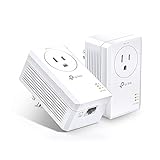
Higher-end powerline solutions, like the NETGEAR Powerline Adapter Kit 1200 Mbps (PLP1200-100PAS) in the $90.35 range, address outlet real estate issues by integrating a pass-through outlet directly into the front chassis. Measuring approximately 4.7 x 2.3 x 1.5 inches and weighing around 0.4 lbs, these units plug flush against the wall, allowing you to power your desk lamp or computer strip directly through the adapter. Powerline delivers steady, flatline ping rates with minimal jitter—crucial for first-person shooters and fighting games where a temporary 50 ms wireless latency spike means the difference between a winning hit and a respawn screen.
Cost Over 5 Years
Evaluating network hardware requires assessing both the initial equipment investment and ongoing electrical operational costs. Neither system demands monthly subscription fees, but power usage differs based on active transmission and idle modes.
A typical three-pack Wi-Fi 6 or Wi-Fi 7 mesh network draws approximately 4 to 6 watts per node during standard operation, translating to roughly 12 to 18 watts continuously across a full three-piece home system. At an average US residential electricity rate of $0.16 per kilowatt-hour, running a three-node mesh array continuously consumes about 105 to 157 kWh per year, costing between $17 and $25 annually in power. Combined with an initial purchase price ranging from $150 to $210, the total 5-year cost of ownership sits between $235 and $335.
By contrast, a two-plug powerline adapter kit draws approximately 3 to 5 watts combined during active data transmission and drops to under 0.5 watts in power-saving standby mode when your PC is turned off. Annual electricity costs for a powerline pair average just $3 to $6 per year. Factoring in an initial hardware purchase of $36 to $90, the total 5-year operational expense ranges from $51 to $120. Powerline remains the drastically lower-cost option for single-station gaming setups.
Which One for Your Home
Small Apartment
In a compact apartment under 900 square feet, structural distance is rarely an issue, but radio spectrum congestion from neighboring units is severe. Dozens of overlapping 2.4 GHz and 5 GHz Wi-Fi networks in multi-family buildings create heavy packet collisions. A powerline kit is ideal here: it avoids the overcrowded airwaves entirely, delivers a direct wired ping to your gaming rig, and leaves wall space completely open without requiring extra tables for wireless nodes.
Family with Kids and Pets
For active family homes, wire management and physical safety are primary concerns. Powerline adapters plugged down low can occasionally be bumped by vacuum cleaners, pulled on by curious toddlers, or blocked by low-profile furniture. A mesh system lifts your network infrastructure off the baseboards. Nodes can be elevated on tall bookshelves or wall mounts, keeping cord runs entirely out of foot traffic paths while providing high-speed coverage for kids’ tablets, family TVs, and your private gaming zone simultaneously.
Rental Property
Renters cannot drill through drywall to fish custom CAT6 cables between floors. Both technologies offer non-destructive installation, but powerline adapter kits are the ultimate renter tool: they require zero permanent alteration, pair instantly out of the box, and pack into a small shoebox during move-out day. However, ensure the rental unit does not rely on outdated knob-and-tube wiring, which severely degrades powerline speed.
Long-Term Home Ownership
If you own your single-family home and plan to stay for years, investing in a forward-looking Wi-Fi 6 or Wi-Fi 7 mesh framework pays dividends. As home automation, wireless security systems, smart appliances, and handheld devices expand, a robust mesh backbone elevates the utility and modern appeal of your property. For modern interior standards in 2026, a high-capacity mesh network provides the flexible, whole-home digital foundation modern households demand.
FAQ
Does powerline networking work across different circuit breakers?
Yes, powerline adapters can transmit signals across different electrical circuit breakers, provided the breakers are situated within the same main electrical breaker panel. However, if the data signal must cross between separate sub-panels or cross different phases of your home’s main panel, transmission speeds can drop by 20% to 50% compared to outlets located on the very same breaker loop.
Will a mesh Wi-Fi system give me the same ping as a direct Ethernet cable?
No wireless signal matches the absolute latency stability of a direct, continuous Ethernet cable. While premium mesh systems achieve fast average speeds, every wireless relay (“hop”) between a satellite node and the primary base node adds 2 to 15 milliseconds of latency processing time. Environmental factors like microwave operation or metallic studs can also introduce sudden transient jitter.
Do powerline adapters overheat or draw high standby power?
Modern HomePlug AV2 and G.hn powerline adapters generate minimal operational heat during heavy file transfers and gaming sessions. Built-in thermal management keeps chassis temperatures safe to the touch. In terms of energy efficiency, powerline plugs automatically enter an ultra-low-power standby state drawing under 0.5 to 1 watt whenever the connected computer or gaming console is powered down.
Can I use powerline adapters and mesh Wi-Fi together in the same home?
Yes, combining both technologies offers an excellent hybrid solution for complex home layouts. You can use a powerline kit to create a dedicated, low-latency wired link from your primary router directly to a remote gaming PC in a basement or attic, while simultaneously running a mesh Wi-Fi network to handle mobile devices, smart home appliances, and casual streaming throughout the rest of the house.