Key takeaways
- PTFE Skates Strategy: Standard PTFE sets cost between $7.00 and $12.00. Depending on daily usage (8–10 hours of work and play), a set lasts 9 to 18 months. Over a 5-year timeline, you will replace your feet approximately 4 times, costing roughly $35.00 to $50.00 total. Because PTFE is soft, it leaves your fabric or leather desk pads in pristine condition for years.
- Glass Skates Strategy: A set of glass feet costs $20.00 to $30.00 upfront. The feet themselves rarely wear down, meaning zero foot replacement costs over 5 years. However, the high hardness of glass speeds up fiber breakdown on standard cloth desk mats. You may find yourself replacing a $30.00 cloth desk pad every 12 to 18 months as the glide loses uniform smoothness. Your 5-year total expenditure often lands between $80.00 and $120.00 when factoring in mat refreshes.
What's inside
Designing an elevated home office or gaming desk setup requires balancing ergonomics, acoustics, aesthetics, and long-term durability. While most people spend weeks choosing the right mechanical keyboard, monitor arm, or solid hardwood desk, they often overlook the tiny point of contact that dictates how every hand movement feels: your mouse feet. When evaluating mouse skates glass vs ptfe, you are choosing between two completely different tactile experiences that affect not only tracking speed, but also acoustic noise levels in your living space and the lifespan of your desk pad.
Ptfe (polytetrafluoroethylene) has been the industry standard for decades due to its soft texture and forgiving slide. Meanwhile, tempered aluminosilicate glass skates have surged in popularity among desktop enthusiasts seeking zero initial friction and a permanent glide height. Whether you operate out of a quiet apartment nook or a dedicated dual-purpose home office, picking the correct material ensures your daily workflow remains smooth, comfortable, and scratch-free.
As an Amazon Associate we earn from qualifying purchases at no extra cost to you. Product prices and availability are accurate as of the date shown and are subject to change.


Quick Verdict
If you value whisper-quiet operation, soft tactile control, and surface versatility, PTFE mouse skates are the better choice for most home setups. Virgin-grade PTFE glides silently across cloth desk mats, leather pads, and hard surfaces without picking up microscopic scratch noises. Products like the TALONGAMES Mouse Skates for Glass Mousepads | High-Density UHMW-PE | Universal Round Dots 6.5mm 40pcs ($8.99) offer exceptional control and surface protection at an accessible price point.
Conversely, glass mouse skates win for users who demand near-zero static friction and effortless micro-adjustments without worrying about foot wear over time. Options like the Pulsar Gaming Gears Superglide Type-S Universal 6mm + 9mm (12pcs), White ($24.95) provide a glossy, premium aesthetic and virtually permanent glide consistency on soft cloth pads. However, glass skates require an immaculate dust-free environment and cannot be used on hard glass desk mats or unprotected glass tabletops.
Side by Side
| Feature | Glass Mouse Skates | PTFE Mouse Skates |
|---|---|---|
| Static Friction (Initial Drag) | Extremely low; glides instantly with zero initial force. | Low to moderate; offers slight stopping power and tactile feedback. |
| Durability & Wear | Virtually permanent height; does not thin out or reshape. | Wears down over 6 to 18 months depending on surface texture. |
| Acoustics & Desk Noise | Can amplify dust crunching; quiet on soft cloth, loud on hard mats. | Soft and dampening; exceptionally quiet on virtually all desk surfaces. |
| Price Range | $18.00 – $30.00 per set. | $6.00 – $15.00 per set. |
| Maintenance Needed | High; requires frequent desk pad wiping to prevent gritty tracking. | Low; naturally absorbs minor desk dust without severe feedback. |
| Surface Compatibility | Cloth and fabric mats only. (Never use on glass or hard plastic). | Universal; cloth, hybrid, wood, leather, plastic, and glass mats. |
| Aesthetic & Finish | Glossy, polished bevels (often custom-molded or universal dots). | Matte white or black opaque finish; clean, flush profile. |
| Impact Resistance | Brittle under direct drop impact against hard tile or glass. | Flexible and non-shattering under high force or drops. |
| Best For | Low-DPI precision work, speed gaming, pristine cloth mat setups. | Shared home offices, mixed surface usage, budget-conscious users. |
Where Mouse Skates Glass Wins
The primary advantage of glass mouse skates lies in their mechanical consistency. Traditional soft pads compress and wear down over thousands of movements, changing the distance between your mouse sensor and the desk surface. Glass skates—typically engineered from polished, heat-treated aluminosilicate glass with thickness ranges between 0.8mm and 1.0mm—maintain their geometric profile indefinitely. If you use a premium, thick fabric desk pad, glass skates float across the fibers with near-zero kinetic resistance.
For creative professionals doing detailed photo editing, CAD modeling, or high-speed gaming in 2026, the absence of initial resistance (“sticktion”) allows for effortless micro-adjustments. You do not need to apply extra wrist force just to nudge your cursor a single pixel. High-end universal sets, such as the Pulsar Gaming Gears Superglide Type-S Universal 6mm + 9mm (12pcs), White ($24.95), allow users to apply polished glass dots to virtually any wireless mouse bottom, transforming a heavy productivity mouse into a weightless navigation tool.
Additionally, glass feet provide a distinct visual upgrade for open-concept home offices. The polished, rounded edges catch light subtly and offer an ultra-clean, architectural look that pairs beautifully with minimalist desk aesthetic trends.
Where Ptfe Wins
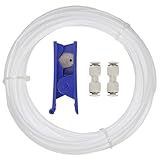
While glass delivers speed, pure virgin-grade PTFE delivers versatility, acoustic control, and user forgiveness. PTFE is a remarkably slick fluoropolymer with an inherently low coefficient of friction. Interestingly, this self-lubricating material is celebrated across various high-precision home and tech applications; for instance, the same smooth tube properties found in desktop 3D printer systems—like the Sovol PTFE Tube 2.5mm ID 4mm OD, 5M/16.4ft w/2 Coupler&Tubing Cutter ($6.99) or specialized guide lines like the Ultra-Clear Tube for 1.75mm Filament with Cutter ($14.99)—rely on PTFE’s slick surface to eliminate material drag.
When applied to mouse bases, PTFE acts as a natural dampener. If your home office desk harbors occasional dust, pet hair, or minor surface crumbs, PTFE skates slide over those micro-particles silently. Glass skates, by contrast, tend to crush micro-particles against hard pads, producing an unpleasant grinding sensation.
Furthermore, PTFE is safe on every desk surface. Whether you prefer bare oak wood, a full-desk leather blotter, a textured plastic hard pad, or even a hardened glass mousepad, PTFE will not scratch or damage the underlying material. Ultra-control alternatives, such as the TALONGAMES Mouse Skates for Glass Mousepads | High-Density UHMW-PE | Universal Round Dots 6.5mm 40pcs ($8.99), explicitly optimize control and noise dampening for users working on hard glass desk surfaces, providing a cushioned, tactile feel that glass feet simply cannot replicate.
Cost Over 5 Years
When analyzing the true financial cost of mouse skates glass vs ptfe, you must look beyond the initial purchase price and calculate skate wear alongside desk mat longevity:
- PTFE Skates Strategy: Standard PTFE sets cost between $7.00 and $12.00. Depending on daily usage (8–10 hours of work and play), a set lasts 9 to 18 months. Over a 5-year timeline, you will replace your feet approximately 4 times, costing roughly $35.00 to $50.00 total. Because PTFE is soft, it leaves your fabric or leather desk pads in pristine condition for years.
- Glass Skates Strategy: A set of glass feet costs $20.00 to $30.00 upfront. The feet themselves rarely wear down, meaning zero foot replacement costs over 5 years. However, the high hardness of glass speeds up fiber breakdown on standard cloth desk mats. You may find yourself replacing a $30.00 cloth desk pad every 12 to 18 months as the glide loses uniform smoothness. Your 5-year total expenditure often lands between $80.00 and $120.00 when factoring in mat refreshes.
Which One for Your Home
Small Apartment or Studio Workspace
In compact living spaces where your desk sits just feet from a sleeping partner or living room TV, noise reduction is paramount. PTFE skates are the clear winner here. Their soft composition muffles tracking noise and eliminates the crisp scraping sounds that glass feet can make if dust gets trapped on your desk pad late at night.
Family with Kids or Pets
Homes with pets or children inevitably accumulate dust, stray hair, and small particles across open surfaces. Glass skates attract static hair and generate a harsh gritty feel the moment a stray particle lands underneath. Furthermore, if a child drops a heavy mouse onto a tile floor, glass skates can chip or crack. Flexible PTFE or high-density UHMW-PE dot skates offer much greater durability and daily forgiveness in busy households.
Rental Home with Multi-Use Desks
If you rent and frequently adjust your living spaces, you might move your mouse between a dedicated desk, a kitchen island, or a leather sofa tray. PTFE skates work on literally every surface without scratching furniture finishes or damaging polished granite or wood surfaces. They provide total peace of mind regardless of where you set up your laptop.
Long-Term Dedicated Home Office
For a permanent home office equipped with a large, ultra-smooth oversized fabric desk blotter and deep ergonomic wrist rests, glass skates excel. Their effortless motion minimizes wrist strain during marathon work sessions, while their sleek, glass-molded aesthetic enhances high-end desktop hardware.
FAQ
Can you use glass mouse skates on a glass mousepad?
No, you should never pair glass mouse skates with a glass mousepad or a glass tabletop. Glass rubbing against glass creates intense friction, loud grinding noises, and severe surface scratching that permanently ruins both the pad and the skates.
Do glass mouse skates wear out cloth desk pads faster?
Yes. Because glass is significantly harder than PTFE, it exerts more focused pressure on individual fabric fibers. Over time, this breaks down the weave and hydrophobic coating of standard cloth pads, creating subtle “slow spots” faster than soft PTFE feet would.
How thick are standard replacement mouse skates?
Most aftermarket mouse skates, whether glass or PTFE, range between 0.6mm and 1.0mm in thickness. Universal dot configurations (typically 6mm to 9mm in diameter) allow you to place individual rounded feet into the skate recessed channels of almost any standard mouse chassis.
Are glass skates faster than 100% virgin PTFE skates?
Glass skates feature vastly lower static friction, meaning they start moving instantly with zero effort. However, once in motion, pure virgin PTFE offers a slightly smoother, more controllable glide on many hybrid cloth pads. Speed preference depends heavily on whether you value quick initial movement (glass) or stopping power and control (PTFE).