Key takeaways
- Eliminates Total Dead Zones: If your gaming room is so far from the router that your console cannot even connect to the network, an extender will successfully restore basic connectivity.
- Affordable Ethernet Bridging: For $30 to $40, you can plug an Ethernet cable directly into the port of an extender like the RE315 or RE550, turning the extender into a dedicated external wireless receiver for your PC or console, which is often more stable than a device’s internal Wi-Fi card.
- Minimal Aesthetic Footprint: Wall-plug designs mean no messy power bricks or extra cables cluttering your media console or desk.
- Simple Setup: Most modern extenders can be paired with your main router in under five minutes using a simple WPS button press.
What's inside
The Short Answer
If you are staring at a lagging screen and asking yourself, “do i need a wifi extender gaming setup to stop my connection from dropping?” the short answer is: No, you almost certainly do not. In fact, adding a standard Wi-Fi extender to your gaming setup can actually make your online gaming experience worse.
The only condition under which you should consider a Wi-Fi extender for gaming is if you plan to use it strictly as a wireless bridge. This means plugging the extender into a wall outlet directly next to your gaming console or PC, and then running a physical Ethernet cable from the extender into your device. If you rely on a pure Wi-Fi-to-Wi-Fi connection through an extender, you will experience a massive spike in latency (ping), which is the ultimate enemy of competitive online play.
As an Amazon Associate we earn from qualifying purchases at no extra cost to you. Product prices and availability are accurate as of the date shown and are subject to change.


What You Actually Get
To understand why a Wi-Fi extender is a double-edged sword for home design and tech setups, you have to look at how they handle data. In a typical home, thick drywall, plaster, or brick walls degrade wireless signals. A Wi-Fi extender acts as a relay station: it grabs the weak wireless signal from your main router, amplifies it, and rebroadcasts it to your gaming room.
From a hardware perspective, these devices are incredibly compact and unobtrusive, making them appealing for clean home aesthetics. For instance, a budget-friendly option like the TP-Link AC1200 WiFi Extender (RE315) costs about $29.99, measures a tiny 4.9 x 2.7 x 1.4 inches, and plugs directly into a standard wall outlet while drawing a modest 7 watts of power. A slightly more robust model, the TP-Link AC1900 WiFi Range Extender (RE550), costs around $39.99, has a footprint of 6.4 x 3.4 x 1.6 inches, uses three external antennas, and draws up to 15 watts of power.
While these devices are excellent at expanding basic internet coverage so you can stream video or browse the web from a distant bedroom, they are fundamentally flawed for gaming. Because most standard extenders operate on a “half-duplex” system, they cannot send and receive data at the same exact time on the same band. They must first receive data from your gaming console, and then turn around and transmit it to your router. This extra step instantly introduces latency. In 2026, where modern multiplayer games demand sub-30ms response times, adding a cheap repeating hop into your network path can easily double your ping and cause severe packet loss.
Pros
- Eliminates Total Dead Zones: If your gaming room is so far from the router that your console cannot even connect to the network, an extender will successfully restore basic connectivity.
- Affordable Ethernet Bridging: For $30 to $40, you can plug an Ethernet cable directly into the port of an extender like the RE315 or RE550, turning the extender into a dedicated external wireless receiver for your PC or console, which is often more stable than a device’s internal Wi-Fi card.
- Minimal Aesthetic Footprint: Wall-plug designs mean no messy power bricks or extra cables cluttering your media console or desk.
- Simple Setup: Most modern extenders can be paired with your main router in under five minutes using a simple WPS button press.
Cons
- Doubles Your Latency (Ping): Because of the store-and-forward nature of repeating wireless signals, your ping will almost certainly increase, leading to noticeable lag in fast-paced games.
- Halves Your Potential Bandwidth: Standard dual-band extenders must share their wireless bandwidth between communicating with the router and communicating with your gaming device, cutting your potential download speeds in half.
- Susceptible to Household Interference: Because the extender must be placed halfway between your router and your console, it is often subjected to interference from household appliances, baby monitors, and physical barriers.
- Lack of Seamless Roaming: Many extenders create a secondary network name (e.g., “HomeNetwork_EXT”). Your phone or laptop may stubbornly cling to the weaker main router signal rather than switching to the stronger extender signal as you move through the house.
Who Should Buy It
You should buy a Wi-Fi extender if you are a casual gamer who primarily plays single-player RPGs, turn-based strategy games, or simulators where a slight delay in packet transmission does not affect gameplay. It is also an excellent, budget-friendly solution if you are renting a home, cannot drill holes in the walls to run physical cables, and simply need to bridge a 15-foot gap between a hallway and your desk using a short Ethernet cable plugged into the bottom of the extender.
Who Should Skip It
You should absolutely skip a Wi-Fi extender if you play competitive, fast-paced multiplayer games like first-person shooters, fighting games, or sports simulators. If your gaming success relies on split-second reaction times, the latency spikes and packet loss introduced by a wireless repeater will leave you frustrated. Homeowners who have the budget to invest in a more robust, long-term network infrastructure should also skip cheap extenders in favor of cleaner, high-performance alternatives.
Cheaper Alternatives
Before spending money on a Wi-Fi extender that might ruin your gaming experience, consider these highly effective and often cheaper alternatives that keep your home looking clean while maximizing your connection quality.
| Option | Estimated Cost | Trade-off |
|---|---|---|
| Direct Cat6 Ethernet Cable | $10 – $25 (for 50ft – 100ft) | Requires routing cables along baseboards or through walls, which can look untidy if not hidden properly. |
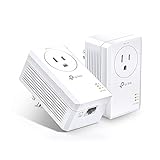
| Powerline Ethernet Adapter Kit | $40 – $70 | Performance depends entirely on the age and quality of your home’s electrical wiring. |
| MoCA Adapter Kit (using Coax) | $60 – $110 | Requires existing coaxial TV outlets in both your router room and your gaming room. |
| Router Relocation / Channel Tuning | Free ($0) | Requires moving physical furniture or spending time adjusting settings in your router’s admin portal. |
FAQ
Does a Wi-Fi extender lower my ping for gaming?
No. A Wi-Fi extender will almost always increase your ping. Because the extender has to receive wireless data packets from your console, process them, and then transmit them to the router (and vice versa), it adds an extra step to the data path. This process increases latency and can cause jitter, which manifests as stuttering during online matches.
Can I plug an Ethernet cable from my console into a Wi-Fi extender?
Yes, and this is actually the best way to use one for gaming. By connecting your console or PC to the Ethernet port of an extender (such as the 10/100 Mbps port on the TP-Link RE315 or the Gigabit port on the RE550), you bypass the console’s internal wireless card. This “wireless bridge” setup is significantly more stable than a pure wireless connection, though still slightly slower than a direct line to your main router.
What is the difference between a Wi-Fi extender and a Mesh Wi-Fi system?
Standard Wi-Fi extenders act as independent repeaters that create a separate network name, forcing your devices to manually switch between signals. They also lose bandwidth because they use the same channel to talk to your device and the router. A Mesh Wi-Fi system uses multiple nodes that work together as a single, seamless network. Many mesh nodes have a dedicated wireless backhaul band (trivand), meaning they can communicate with each other without slowing down your gaming traffic.
Why is my gaming connection laggy even though my extender shows “full bars”?
Signal strength (the number of bars on your screen) only measures the connection quality between your gaming console and the extender, not the quality of the connection between the extender and your router. If the extender is placed too far from the router, it will rebroadcast a weak, slow, and high-latency signal. You are essentially getting a “strong” connection to a “slow” middleman.