Our Top Picks
 Audio-Technica ATH-M20x Professional Studio Monitor HeadphonesATH-M20X11.4 x 10 x 4.1 inches0.5 poundsCheck on Amazon
Mixing on the wrong headphones is a quiet way to ruin a good session. A pair that hypes the bass makes you thin out the low end, and a pair that sparkles in the treble makes every vocal sound dull once it hits a car stereo. A budget of under 300 dollars is more than enough to avoid both problems, but only if you pick for translation rather than for fun listening. The decision here is simple to state and hard to execute: which wired pair gives you a trustworthy picture of a mix without a studio-grade monitoring chain behind it?
This guide is for bedroom producers, podcast editors, guitarists tracking at a desk, and anyone who mixes at night when speakers are off the table. The list covers closed-back, semi-open, and open-back designs, from entry-level monitors to a 250-ohm open-back model that wants a proper amplifier. Everything below is judged on the specs printed in each listing, so use it to narrow the field, then match the impedance and plug type to the gear you already own.
Quick Picks
Audio-Technica ATH-M20x Professional Studio Monitor Headphones, Black | 96dB Sensitivity, 15-20kHz Frequency Response, Suspension Headband, 6.3mm Adapter, for Monitoring, Tracking and Mixing
One of the consumer electronics options compared in this guide.
View on Amazon
OneOdio Wired DJ Hi-Res Over-Ear Headphones for PC, Keyboard Guitar - Black | headphone with 50mm drivers, dual 3.5mm and 6.35mm jacks for studio monitoring, recording, podcasting, mixing and DJ use.
One of the consumer electronics options compared in this guide.
View on Amazon
OneOdio A71 Hi-Res Wired Over-Ear Studio Headphones for DJ, Mixing - Black | headphone for studio recording, monitoring and mixing, with foldable design, 3.5mm/6.35mm jacks connect to PC, computer, DJ
One of the consumer electronics options compared in this guide.
View on Amazon
New Bee Studio Headphones, Wired Headphones with 50mm Drivers, Professional DJ Headphones for Recording Mixing Podcast Guitar Piano, 210g Ultra-Lightweight Design, 3.5/6.35mm Jack
One of the consumer electronics options compared in this guide.
View on Amazon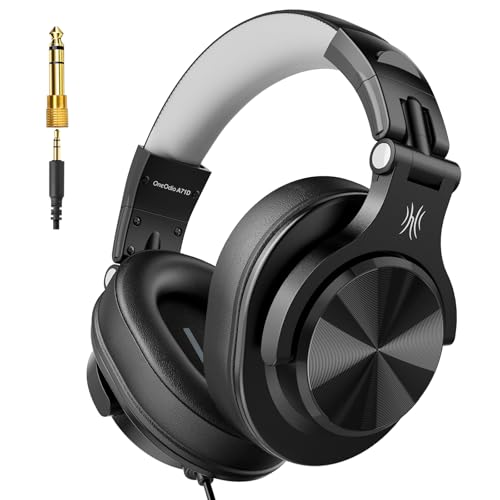
OneOdio A71D Wired Over-Ear Headphones, Hi-Res DJ Studio Headphone | Foldable monitor design with 3.5/6.35mm plugs for DJing, recording, podcasting, mixing, PC listening and guitar amps.
One of the consumer electronics options compared in this guide.
View on Amazon
beyerdynamic DT 990 Pro (250 Ohm), Open-Back Studio Headphones, Black | Best from a headphone amp or audio interface, sound is audible to others, mixing reference, velour ear pads, 3m coiled cable
One of the consumer electronics options compared in this guide.
View on Amazon
AKG K240STUDIO Semi-Open Studio Headphones | Varimotion Diaphragms, 55 Ohms Impedance, XLR Connector, Mixing, Mastering, Production
One of the consumer electronics options compared in this guide.
View on Amazon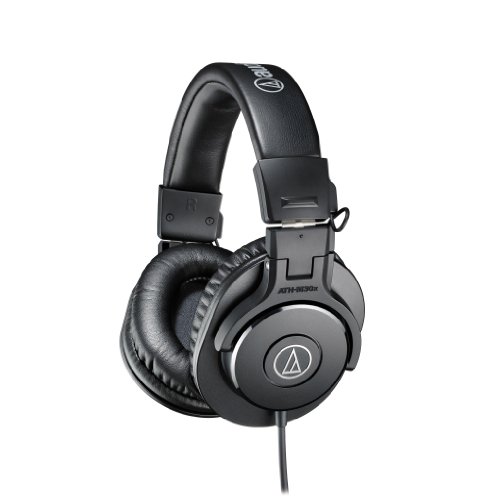
Audio-Technica ATH-M30x Professional Studio Monitor Headphones, Black | Closed-back Over-ear Earcups, Screw-on Adapter, Carrying Pouch, Studio Tracking, Mixing, Field Recording
One of the consumer electronics options compared in this guide.
View on Amazon| Product | Best for | Key spec from the title |
|---|---|---|
| Audio-Technica ATH-M20x | Cheapest dependable monitor | 96dB sensitivity, suspension headband |
| OneOdio Wired DJ Hi-Res | Dual-use PC and keyboard | 50mm drivers, 3.5mm and 6.35mm jacks |
| OneOdio A71 | Foldable recording pair | Hi-Res wired, foldable design |
| New Bee Studio Headphones | Long sessions on a light frame | 50mm drivers, 210g |
| OneOdio A71D | DJ plus tracking work | Foldable monitor design, 3.5/6.35mm plugs |
| beyerdynamic DT 990 Pro | Open-back critical mixing | 250 ohm, open-back |
| AKG K240STUDIO | Semi-open mastering checks | 55 ohms, XLR connector |
| Audio-Technica ATH-M30x | Closed-back tracking and mixing | Closed-back over-ear earcups |
How to Choose
Open-back, semi-open, or closed-back
Open-back headphones leak sound both ways, which is a problem for recording but a gift for mixing. They tend to give a wider, less boxy soundstage, so panning and reverb tails are easier to judge. Closed-back pairs isolate you from the room and keep the click track out of the microphone. If you only own one pair and you both track and mix, closed-back is the safer default. If mixing is the main job and you work alone in a quiet room, an open-back or semi-open design is worth the trade.
Impedance and amplifier needs
Impedance tells you how hard the headphones are to drive. Roughly 32 to 80 ohms will run fine from a laptop jack or a basic interface. Anything at 250 ohms, like the DT 990 Pro here, asks for a real headphone output on an audio interface or a dedicated amp. Plugged into a phone, it will play quietly and sound thin. Check what your interface outputs before you buy a high-impedance pair, and see whether the output has enough headroom at your usual listening level.
Plugs, cables, and adapters
Studio gear uses a 6.35mm (quarter-inch) plug, while laptops and phones use 3.5mm. Models that ship with a screw-on adapter or dual jacks save you from a loose adapter that eventually crackles. A detachable cable is a real advantage because the cable is the part that fails first. An XLR connector, as on the AKG, suits a balanced headphone output but is useless on a normal laptop, so confirm that your gear has the matching socket.
What to ignore and where budget models cut corners
Ignore marketing words such as “Hi-Res” and “studio quality” without a frequency response to back them. Driver size alone also says little, because a 50mm driver can be tuned bass-heavy or neutral. Budget pairs usually cut corners in three places: pads that flatten within a year, tuning that boosts the low end for casual listeners, and headbands that clamp too hard for a three-hour session. Weight matters more than most buyers expect, so a sub-250-gram frame is easier to wear all evening.
The 8 Best Options
Audio-Technica ATH-M20x
The M20x is the entry point for people who want a recognized studio monitor and have no wish to spend heavily. The listing states 96dB sensitivity, a 15-20kHz frequency response, and a suspension headband, which spreads pressure across the crown for longer wear. It suits a beginner building a first mixing setup or a podcaster who needs a reliable closed-back pair.
- Strength: closed-back isolation keeps spill out of a live microphone.
- Strength: a 6.3mm adapter is included, so it plugs into interfaces and laptops alike.
- Trade-off: it is the plainest pair here, with no frills and little detail in the listing beyond the basics.
Skip it if you want a wide, open soundstage or if your budget stretches toward the premium end of this list.
OneOdio Wired DJ Hi-Res Over-Ear
This OneOdio is aimed at buyers who split time between a PC, a keyboard, a guitar rig, and the occasional mix. The listing highlights 50mm drivers and dual 3.5mm and 6.35mm jacks, which means no adapter hunting when you move between a desktop and an interface. Mixers on a tight budget will find it a flexible all-rounder, especially if the same pair also has to serve gaming or video calls between sessions.
- Strength: both plug sizes are built in, so it works with nearly any source on the desk.
- Strength: 50mm drivers give it the headroom to handle loud tracking sessions.
- Trade-off: DJ-style tuning often leans toward bass, so cross-check low-end decisions on another pair.
Skip it if you need a flat reference tonality for critical balance calls.
OneOdio A71
The A71 positions itself for recording, monitoring, and mixing, with a foldable design that fits into a backpack. It is a practical choice for someone who tracks vocals at a friend’s place on Saturday and mixes at home on Sunday. The listing calls it Hi-Res and wired, which keeps latency out of the equation. That matters when you are overdubbing against a backing track and need what you hear to line up with what you play.
- Strength: the foldable design makes transport simple.
- Strength: a wired connection avoids Bluetooth delay when recording.
- Trade-off: the title offers no impedance or sensitivity figure, so match it to your interface by ear.
Skip it if you want a neutral open-back design or a detachable-cable guarantee.
New Bee Studio Headphones
New Bee leads with comfort: the listing gives a 210g weight alongside 50mm drivers, aimed at recording, mixing, podcasting, guitar, and piano. A light frame is a real advantage for editors who sit with headphones on for half a day. It suits a home studio where one pair has to serve many roles, such as late-night editing, practice, and the occasional podcast recording with a friend.
- Strength: 210g keeps neck and head fatigue down.
- Strength: the multi-instrument use list points to a general-purpose tuning that does well for tracking.
- Trade-off: a lesser-known brand gives you less community feedback on long-term durability.
Skip it if brand reputation and replacement-part availability matter to your workflow, or if you want published frequency-response data before you commit.
OneOdio A71D
The A71D shares the family look but adds a clear DJ-and-studio pitch, with a foldable monitor design and both 3.5mm and 6.35mm plugs. Pick it if you spin records one night and edit a podcast the next. For a hobbyist, one pair covering both jobs keeps the budget in check and leaves room for a decent interface or a pair of speakers later.
- Strength: dual plugs remove the need for a screw-on adapter.
- Strength: the foldable monitor design travels well.
- Trade-off: it overlaps heavily with the other OneOdio models, so the gain over the A71 is small.
Skip it if you already own an A71, or if you want something with a distinctly different sound signature than the rest of this brand’s lineup.
beyerdynamic DT 990 Pro
The DT 990 Pro is the serious open-back option. The title lists 250 ohm impedance and states it is best from a headphone amp or audio interface, and that the sound is audible to others. That honesty tells you what it is: a mixing tool for a quiet room, not a commuter pair. Experienced mixers who want spatial detail will see the point immediately.
- Strength: open-back construction offers a more spacious view of the stereo field.
- Strength: the 250 ohm rating pairs well with a good interface output.
- Trade-off: it leaks sound, so it cannot be used while a microphone is live.
Skip it if you track vocals, share a room, or only have a phone or basic laptop jack to plug into.
AKG K240STUDIO
This semi-open pair sits between the isolation of a closed-back and the air of an open design. The listing cites Varimotion diaphragms, 55 ohms impedance, and an XLR connector, with mixing, mastering, and production named as uses. At 55 ohms it is easier to drive than the Beyerdynamic, though the XLR connector requires a matching output. Mastering engineers who like to check a finished track on a more relaxed, airy pair will see the appeal.
- Strength: semi-open design gives a more natural presentation than most closed-back models.
- Strength: 55 ohms is manageable for many interfaces.
- Trade-off: the XLR connector limits it to gear that supports that plug, or to adapters.
Skip it if your interface or laptop has only a standard headphone jack and you want to avoid adapters.
Audio-Technica ATH-M30x
The M30x steps up from the M20x with closed-back over-ear earcups, a screw-on adapter, a carrying pouch, and a studio tracking focus in the title. The pouch is a small touch that makes this a good pick for mobile recording. It is a safe closed-back choice for tracking and mixing in one pair, and a sensible step up for anyone who has outgrown a first set of studio cans but still wants a familiar design.
- Strength: closed-back earcups isolate well for tracking.
- Strength: the carrying pouch and screw-on adapter come in the package.
- Trade-off: closed-back designs usually give a narrower soundstage than the open-back picks above.
Skip it if wide imaging is your priority for reverb and panning decisions.
Which One Fits Your Situation
You mix and record in the same room
Go closed-back. The Audio-Technica ATH-M30x offers isolation plus a pouch and adapter, so one purchase covers tracking and mixing.
You mix alone and want a wide stereo image
The beyerdynamic DT 990 Pro is the match, provided you own an interface with a proper headphone amp. Use a second pair for tracking.
You hop between laptop, keyboard, and interface
The OneOdio Wired DJ Hi-Res with dual jacks keeps things plug-and-play, and the New Bee at 210g is the one to wear when sessions run long.
You have a balanced XLR output and a mastering mindset
The AKG K240STUDIO is built for that, with a semi-open design and a listed 55 ohms for mastering-style checks.
Common Mistakes
- Buying open-back headphones and then trying to record vocals with them, which bleeds the click into the microphone.
- Pairing a 250-ohm model with a phone jack and concluding the headphones sound weak.
- Trusting a bass-heavy DJ tuning for low-end decisions without cross-checking on speakers or a second pair.
- Ignoring plug type and then relying on a cheap adapter that fails mid-session.
- Mixing at high volume for hours, which dulls your judgment and raises fatigue faster than any headphone flaw.
Related guides
- Aio Liquid Coolers For High Performance Gaming
- How To Overclock A Gpu Safely With Msi Afterburner
- Which Motherboards Support Rtx 4090 And Rtx 5090
Frequently Asked Questions
Can I mix entirely on headphones?
Yes, and many people do. Headphones reveal noise and detail well, but they exaggerate stereo width and hide how bass behaves in a room. Check your mix on speakers or in a car whenever possible.
Do I need an amplifier for these?
Only for high-impedance models. The 250 ohm DT 990 Pro benefits from an interface or amp, while the lower-impedance closed-back models run fine from most laptops and interfaces.
Are DJ headphones fine for mixing music?
They can work for rough balance and tracking, but they often emphasize bass. Treat them as a convenient second pair rather than a sole reference.
Which is better for 2026 home studios, wired or Bluetooth?
Wired. Bluetooth adds latency and compresses audio, which makes it unreliable for timing and tonal decisions during mixing.
FAQ
Can I mix entirely on headphones?
Do I need an amplifier for these?
Are DJ headphones fine for mixing music?
Which is better for 2026 home studios, wired or Bluetooth?
More from Amazon
Programs that pair well with the guide above. Offers and eligibility are set by Amazon and may change.
Free shipping on eligible items, Prime Video and more. Eligible new members can start with a free trial.
Start a Prime free trialAd-free music streaming. Eligible new subscribers can start with a free trial.
Try Music Unlimited freeA Prime membership for ages 18-24 with a trial period. Eligibility is set by Amazon.
See Prime for Young AdultsAudiobooks and podcasts to listen to on the go. Eligible new members can start with a free trial.
Try Audible freeAs an Amazon Associate we earn from qualifying purchases.