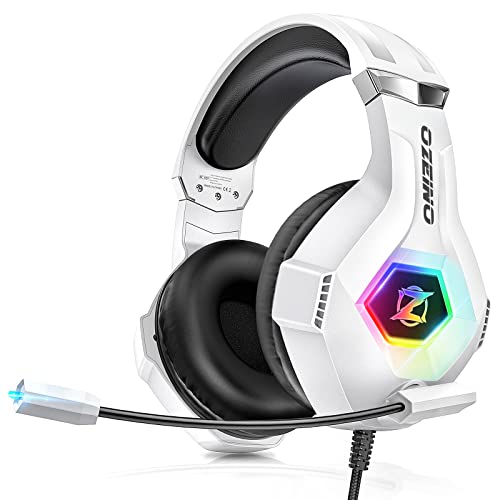
Our Top Picks
 Razer BlackShark V2 X Wired Gaming Headset with3.5 mm7.6 x 6.76 x 3.86 inches0.5 poundsCheck on Amazon
A detachable headset mic is the better choice for most gamers because you can remove it when you only want to listen, swap it if it breaks, and often upgrade to a separate microphone later, while a fixed or retractable mic wins on simplicity and the fact that you can never lose it. Neither design guarantees better voice quality on its own. What matters more is the capsule, the placement near the corner of your mouth, the software processing and how the headset connects to your system.
Short Answer: Which Mic Style Fits Which Player
Pick detachable if you move between gaming and music or video, if you share the headset, or if you want the option to replace a damaged boom. Pick fixed (including flip-up and retractable booms) if you want a single piece of gear that is always ready and never needs a socket to stay clean and tight. Many makers now blend the two: a boom that slides into the earcup, or a flip-to-mute arm that stays attached.

Microdot 4016 Headset Headworn Microphone for SENNHEISER Wireless System- Detachable Cable with 3.5mm Screw Locking Plug - Omnidirectional Mic
Chosen because it specifies Omnidirectional Mic.
View on AmazonRazer BlackShark V2 X Wired Gaming Headset with Mic for PC and PS5, Black | TriForce Titanium 50 mm Drivers, HyperClear Cardioid Mic, 240 g Lightweight, Noise-Isolating Earcups, 3.5 mm, PS4, Switch
Chosen because it specifies Black and TriForce Titanium 50 mm Drivers.
View on Amazon
EKSA E900 Gaming Headset with Mic for Xbox PC PS4 PS5 | Detachable Noise Canceling Mic, 3D Surround Sound, Wired Headphone for Gaming, Computer, Laptop, 3.5MM Jack
Chosen because it specifies Detachable Noise Canceling Mic and 3D Surround Sound.
View on Amazon
ZORIOXI Open Ear Headphones with Mic, 29g Bluetooth Headset, Air Conduction Headphones with Dual Device Connection & Mute, Wireless Headset with Mic for Work, Driving, Office, Workout, Black
Chosen because it specifies 29g Bluetooth Headset and Air Conduction Headphones with Dual Device Connection & Mute.
View on AmazonWhat the Terms Mean
Detachable microphone
The boom plugs into a small jack or proprietary port on the earcup and can be pulled out. Examples of headsets whose makers list a removable boom include the HyperX Cloud II, the Logitech G Pro X and the Razer BlackShark V2 Pro. With the boom removed, the headset becomes a plain pair of headphones, which suits commuting, music and watching video.
Fixed (permanently attached) microphone
The boom is part of the headset. It may be flexible, rigid or able to flip up. When the boom is flipped up, many designs automatically mute the mic, a feature that is a real convenience in voice chat.
Retractable microphone
The boom slides back into the earcup so it is hidden but still attached. SteelSeries lists a retractable boom on models in its Arctis Nova range, for example. This gives some of the tidiness of a detachable design without a loose part to misplace.
Comparison Table
| Factor | Detachable | Fixed / flip-up | Retractable |
|---|---|---|---|
| Use as plain headphones | Clean look, no boom | Boom always present | Boom hidden in earcup |
| Risk of losing the mic | Real, if stored loose | None | None |
| Replacing a damaged boom | Often possible | Usually means replacing the headset or repair | Depends on design |
| Possible weak point | Jack or port wear, loose fit | Cable or hinge fatigue | Slide mechanism |
| Positioning flexibility | Varies by boom | Varies, often very bendy | Usually limited travel |
| Auto-mute on flip | Less common | Common | Sometimes when retracted |
Does Detachable Sound Better Than Fixed?
Not by design. A microphone capsule picks up your voice the same way regardless of whether the boom is removable. Reviewers who measure headset mics, such as RTINGS and other outlets that publish recorded samples, judge them on tone, noise handling and how well they isolate your voice from the room, not on the attachment method. A detachable boom with a basic capsule can sound worse than a well-tuned fixed boom, and the reverse is equally true.
What does change voice quality in practice is how close the capsule sits to your mouth. Audio advice from microphone makers consistently points to placing the mic a short distance from the corner of the mouth, off to the side so breath does not hit it directly. A boom that stays where you set it wins, and that is a function of the arm’s stiffness, not whether it detaches.
Real Trade-Offs You Will Notice
1. Durability
Every connection point is a potential failure point. A detachable boom has a plug that can loosen over time, collect dust or lose contact if bent repeatedly, which can show up as crackling or sudden dropouts. A fixed boom has no plug, but a cable running through a bendy arm can fatigue if flexed constantly. If you tend to toss your headset in a bag, a retractable or well-protected fixed design can be more forgiving. If you tend to break booms, the ability to replace one is a major advantage.
2. Everyday convenience
If your headset doubles as your music and video headphones, a removable boom avoids a metal-and-foam stick poking at the side of your face on the train. If you only ever sit at a desk and talk on voice chat, a boom you never remove is simpler.
3. Upgrade path
A detachable boom lets you use the headset with a standalone desktop or clip-on microphone, which many streamers prefer. With a fixed boom, your options are limited to what is built in. A few headsets also offer a boom-less configuration that keeps wireless use tidy while you use a different mic for streaming.
4. Mute behavior
A flip-up fixed boom that mutes automatically is hard to beat for fast communication. Several detachable designs still include a mute button or in-line control, so check the specific model’s manual rather than assuming either way.
5. Wireless versus wired
On wireless models the mic runs through the same wireless link and processing as the audio. Detachable booms on wireless headsets are common, but the sound you get still depends on the transmitter, codec and any noise suppression the maker applies. Wired USB and analog headsets differ again: USB headsets contain their own sound hardware, while analog ones rely on your motherboard or sound card.
Connection Type Matters More Than Boom Type
| Connection | How the mic reaches the PC | Note |
|---|---|---|
| USB or wireless dongle | Processed by the headset or dongle hardware | Often adds software noise reduction and sidetone |
| 3.5 mm four-pole plug (headphone and mic combined) | Single jack on console controllers or laptops | Desktop PCs often have separate pink and green jacks |
| Two 3.5 mm plugs | Separate headphone and mic jacks | Use a splitter or adapter for a combined port, and match the wiring standard |
| Bluetooth | Hands-free profile for the mic | Mic audio in this mode is commonly lower in quality than a USB or dongle link |
This is why a cheap detachable-boom headset on a USB sound adapter can sound clearer than an expensive fixed-boom headset plugged into a noisy motherboard jack. If the mic is hissy, check the connection path and your recording input level before blaming the boom type.
Decision Table: Pick This If
| Your situation | Better choice | Why |
|---|---|---|
| You also listen to music or watch video away from your desk | Detachable or retractable | Cleaner headphones when the boom is gone |
| You are rough on gear or share a headset | Detachable | A damaged boom can often be swapped |
| You only game at a desk and want zero fuss | Fixed with flip-to-mute | Nothing to lose, quick muting |
| You plan to stream with a separate mic | Detachable | Headset remains usable without its own mic |
| You worry about a loose connector crackling | Fixed or retractable | Fewer contact points |
| You often lose small parts | Fixed or retractable | Mic stays with the headset |
Common Mistakes
- Assuming detachable means better audio. The capsule, placement and signal path decide quality, not the plug.
- Not seating the boom fully. Many detachable booms must click or push in all the way. A half-seated plug causes a faint, scratchy or intermittent mic. Some makers mark a line or arrow to align.
- Positioning the mic directly in front of the mouth. Breath noise and plosives increase. Aim for the corner of the mouth, a short distance away.
- Ignoring the wiring standard on 3.5 mm headsets. Combined headset plugs use different pin arrangements, so a plug that works on a console controller may not work on a laptop jack without the right adapter.
- Leaving boost or noise gate settings at extremes. High boost lifts room noise. Adjust the input level in the operating system first and use the maker’s software only as needed.
- Storing a detachable boom loose in a drawer. Keep it in a case or in a spot that protects the plug.
How to Evaluate Any Headset Mic Before Buying
- Look for recorded microphone samples from independent reviewers, and compare how voices sound in a noisy room as well as a quiet one.
- Read the maker’s page for the pickup pattern, mute method and whether the boom is removable, flexible or retractable.
- Check how the headset connects, and whether the maker supplies software for mic level, sidetone and noise reduction.
- Look for user reports about the connector or hinge after months of use, since this is where long-term problems appear.
- Confirm the return policy so you can assess fit and comfort at your own desk.
Alternatives to Consider
- Headphones plus a standalone USB microphone. Gives the best control over positioning and tone, at the cost of desk space.
- Clip-on lavalier or boom mic. A small add-on mic for headphones that have no built-in mic.
- Headsets with built-in beamforming or noise-cancelling mics. Often fixed or retractable, designed to work without a boom close to the mouth.
Frequently Asked Questions
Is a detachable headset mic worth it?
Yes if you want to use the headset as ordinary headphones or replace a worn boom. If you only ever play at a desk and never remove the mic, the benefit is small. It is a convenience feature, not a sound quality feature.
Why does my detachable mic crackle or cut out?
A common cause is a boom that is not fully seated or a worn jack. Remove and reinsert it until it clicks, and clean the plug gently with a dry cloth. If the problem continues, try a different cable or port, and contact the maker if the headset is under warranty.
Are fixed headset mics more durable?
They avoid connector wear, but the arm and its internal wiring can still fail from repeated bending. Durability depends on build quality more than on the attachment style. Reviews that mention long-term use are more informative than the spec sheet.
Can I use a detachable headset mic on a console or phone?
Often yes, provided the headset uses a compatible connection, such as a four-pole 3.5 mm plug or a USB link the device supports. Wireless dongles are frequently limited to particular platforms, so read the maker’s compatibility list.
Does a flip-to-mute mic matter?
It is a very practical feature, since it lets you silence the mic instantly without reaching for a button. Not every fixed boom has it, so confirm on the maker’s page. Some headsets use a separate mute switch or button instead.
Should I buy a separate microphone instead?
If you stream or record often, a dedicated microphone usually gives more control over tone and positioning. For casual voice chat, a good headset mic of either type is usually adequate. Choose based on how seriously you use voice.
FAQ
Does Detachable Sound Better Than Fixed?
Is a detachable headset mic worth it?
Why does my detachable mic crackle or cut out?
Are fixed headset mics more durable?
Can I use a detachable headset mic on a console or phone?
Does a flip-to-mute mic matter?
Should I buy a separate microphone instead?
More from Amazon
Programs that pair well with the guide above. Offers and eligibility are set by Amazon and may change.
Free shipping on eligible items, Prime Video and more. Eligible new members can start with a free trial.
Start a Prime free trialAd-free music streaming. Eligible new subscribers can start with a free trial.
Try Music Unlimited freeA Prime membership for ages 18-24 with a trial period. Eligibility is set by Amazon.
See Prime for Young AdultsAudiobooks and podcasts to listen to on the go. Eligible new members can start with a free trial.
Try Audible freeAs an Amazon Associate we earn from qualifying purchases.