Key takeaways
- Gaming chair vs ergonomic office chair, compared on support, mesh versus cushion, adjustability and long work-plus-play days, with picks by situation.
As an Amazon Associate we earn from qualifying purchases.
Plenty of comparisons pit a gaming chair against a generic office chair, which usually means a cheap padded task chair with no real adjustments. That is not the contest most people are actually deciding. The real alternative on the other side of the desk is the ergonomic office chair: the mesh-backed task chair built around adjustability, with a proper lumbar system, a seat that slides, and arms that move in several directions. Against that opponent, the gaming chair’s racing looks stop being an argument, and the comparison becomes about support philosophy, materials and how each chair handles a day that mixes work and play.
This comparison keeps the focus on that ergonomic office chair category specifically. It weighs the two designs across the dimensions that decide daily comfort: how each supports your back, mesh against cushion, how deep the adjustability really goes, what happens across a combined work-and-gaming day, and how each fits a room. It ends with situation-based guidance, because the honest answer is that each design wins for a different kind of sitter.
At a Glance
| Feature | Gaming Chair | Ergonomic Office Chair |
|---|---|---|
| Back support approach | Shaped backrest with pillows or built-in lumbar dial | Dedicated lumbar system, often height and depth adjustable |
| Backrest material | Foam cushion under leatherette or fabric | Tensioned mesh that flexes with the sitter |
| Recline style | Deep recline, often toward 165 to 180 degrees as listed | Moderate recline with synchro tilt, tuned for working postures |
| Seat design | Flat or bucket-style seat, sometimes with side bolsters | Waterfall-edge seat pan, often with seat-depth sliding |
| Adjustability focus | Recline range, armrest movement, pillow placement | Lumbar placement, seat depth, arm position, tilt tension |
| Warm-room behaviour | Cushions insulate; fabric versions breathe better | Mesh ventilates continuously |
| Look and room presence | Tall, bold, motorsport styling | Lower, neutral, blends into a home office |
| Typical extra features | Head pillow, footrest on some models, replaceable arm tops | Headrest often optional, parts ecosystems on established models |
| Best daily pattern | Play-heavy evenings, reclined media and controller sessions | Long seated workdays with gaming after hours |
Back Support Philosophy: Shaped Cradle Versus Tuned System
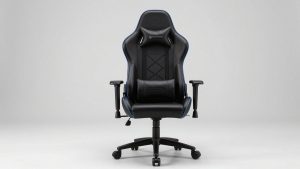
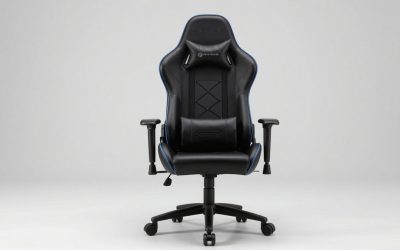
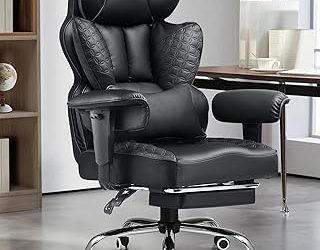
A gaming chair supports the back by shape. The backrest is tall and sculpted, the lumbar zone is filled either by an adjustable pillow or, on better models, a built-in mechanism you dial in and out, and the shoulder wings encourage you to settle into the centre of the chair. When the shape matches your torso, the effect is a cradle: support arrives everywhere at once, and the tall backrest keeps your head and shoulders backed even when you lean into a tense match.
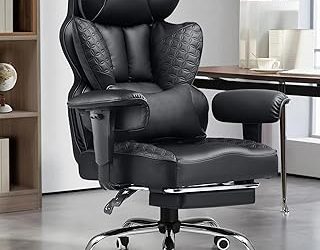
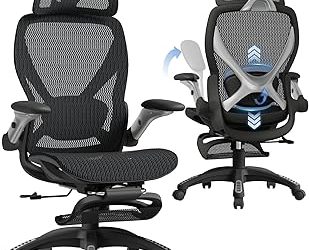
An ergonomic office chair supports the back by adjustment instead. Its lumbar system is a distinct component, a pad, a tensioned membrane or a sprung structure, whose height and often firmness you position against your own lower back. The backrest itself is usually shorter and follows the spine’s curve rather than enclosing it. Neither philosophy is automatically superior. The cradle wins when its fixed geometry happens to fit you; the tuned system wins when it does not, because it can be moved until it does. Buyers between sizes, or with a known sensitive lower back, generally get more from the design they can tune.
Mesh Versus Cushion: Two Different Ways to Spend Eight Hours
The material divide is the most physical difference between the categories. Ergonomic office chairs typically stretch mesh across a frame, and that mesh does three things foam cannot: it ventilates constantly, it distributes pressure by flexing, and it never packs down, because there is no padding to compress. In a warm room or a long summer session, mesh is the difference between a dry back and a stuck shirt. Its trade-off is feel: mesh support is firmer and more suspended, and some sitters find it less welcoming than a padded surface, especially in the first week.
Gaming chairs use foam cushions, moulded foam on stronger models, under leatherette or fabric. Cushioning gives a softer initial sit, better insulation in a cold room, and a seat that feels substantial rather than hammock-like. Its weakness is time and heat: foam compresses over years, and leatherette in particular holds warmth against the body. Fabric gaming chairs narrow the ventilation gap considerably, but the mesh chair still owns this category. If your room runs hot and your sessions run long, material alone may settle the whole comparison.
Adjustability Depth: Range Versus Precision
Both categories advertise adjustability, but they adjust different things. The gaming chair’s headline is range: a backrest that reclines far beyond anything an office chair attempts, armrests that move in up to four directions on better models, and pillows that can be repositioned or removed. That range serves posture variety, leaning back with a controller, watching a stream, dropping into a near-horizontal rest between matches.
The ergonomic office chair’s headline is precision in the working zone. Seat depth slides so the seat edge lands behind your knees correctly. The lumbar support moves to your belt line, not a fixed point. Tilt tension is tuned so the chair follows your weight as you shift, and armrests adjust to put your elbows level with the desk. None of this is dramatic, and all of it matters across a full workday. In short, the gaming chair adjusts how far you can lean; the ergonomic chair adjusts how exactly you can sit up.
Long Work-Plus-Play Days: Where Each Design Earns Its Keep
The hybrid day is where the philosophies collide honestly. For the work portion, the ergonomic office chair holds real advantages: mesh ventilation across hours of stillness, a lumbar system that stays where you set it, and a synchro tilt that supports small posture changes while typing. Many people who switch to one for work report that the end-of-day stiffness they blamed on sitting was partly their old chair’s fixed shape.
For the play portion, the gaming chair answers back. Evening gaming is more dynamic than office work: you lean in for ranked matches, slump back for cutscenes, swivel toward a second screen, maybe recline fully with a controller. The tall backrest supports your head through all of it, while most ergonomic chairs, with shorter backrests and headrests as an afterthought, leave your head unsupported exactly when you relax. A sitter whose day is mostly work should weight the first paragraph; a sitter whose chair time is mostly play should weight the second. The genuinely split household is the hard case, and it is decided by which activity causes you more discomfort today.
Room Fit: Size, Style and the Rest of the Household
A gaming chair is furniture with a presence. It stands tall, its backrest rises well above desk height, and its styling announces itself on camera and to anyone entering the room. That is a feature for streamers and a drawback for a shared living space or a spare-room office that must look like an office on a video call. Some gaming chairs also carry a larger wheelbase, particularly big-and-tall sizes, which needs floor clearance.
Ergonomic office chairs are visually quieter and often slightly narrower in the backrest, though their five-star bases are comparable in footprint. They disappear into a home office and read as neutral on work calls. The practical checks are the same for both: measure the space between armrests and your desk underside, confirm the chair’s stated height range suits your desk height, and check the wheelbase diameter against your floor space before the box arrives.
Which Should You Choose?
You Work From Home All Day, Then Game for an Hour
Choose the ergonomic office chair. Your dominant activity is upright, still and long, which is exactly what its lumbar system, seat-depth adjustment and mesh back are engineered around. An hour of evening gaming does not need a 170-degree recline, and your back will notice eight hours of correct support far more than it will miss a racing silhouette. If you play with a controller and lean back, pick an ergonomic model with a headrest option rather than switching categories.
Your Chair Time Is Mostly Gaming, Streaming and Media
Choose the gaming chair. Your sessions are posture-varied and recline-heavy, and the tall backrest, head pillow and deep recline serve that pattern directly. Streaming adds another argument: the gaming chair reads as part of the setup on camera. Spend your effort on the build markers instead of the styling, a steel frame, moulded foam and a named mechanism matter more than the colourway, and choose fabric upholstery if your room runs warm.
Your Room Is Hot and Your Sessions Are Long
Choose mesh, which in practice means the ergonomic office chair, or at minimum a fabric gaming chair rather than a leatherette one. Ventilation is the one comfort factor you cannot retrofit: no pillow or cushion swap changes how a sealed leatherette surface behaves in hour three of a summer evening. Mesh also sidesteps foam compression entirely, which suits sitters who keep a chair for many years.
You Have a Sensitive Back and a Fixed Budget of Patience
Choose the ergonomic office chair, and choose it for its lumbar system specifically. A gaming chair’s support depends on its fixed shape suiting your torso, which is a gamble you cannot fully test from a product page. An adjustable lumbar component, movable seat depth and tunable tilt let you iterate toward comfort over the first weeks. Whichever you buy, confirm the return terms before ordering, because backs are individual and no comparison table can promise a personal fit.
Common Mistakes
- Comparing a gaming chair against a bargain office chair and concluding gaming chairs win on support, when the real rival is the adjustable ergonomic category.
- Assuming mesh is automatically more comfortable, when its firmer, suspended feel genuinely suits some sitters less than a moulded cushion.
- Buying a gaming chair for a work-heavy day and discovering the deep recline you paid for is the feature you use least.
- Ignoring head support: choosing an ergonomic chair without a headrest for reclined controller sessions, or a gaming chair whose head pillow lands at the wrong height.
- Skipping the tape measure, so the new chair’s armrests collide with the desk or its wheelbase overwhelms a small room.
Frequently Asked Questions
Is an ergonomic office chair actually better for your back?
It is better equipped for your back, which is not quite the same thing. Its lumbar support moves to where your lower back is, its seat depth adjusts, and its tilt follows your weight, so it can be fitted to more bodies. A gaming chair with a shape that happens to match you can feel just as supportive. The ergonomic chair simply removes more of the guesswork.
Can a gaming chair work as a full-time office chair?
Yes, with conditions. Pick a model with a proper adjustable lumbar system rather than a loose pillow, a mechanism that locks at upright working angles, and fabric or quality leatherette you can sit on for eight hours. Plenty of people work happily in gaming chairs; the ones who struggle usually bought on styling, with a basic tilt plate and fixed support that cannot be tuned to a working posture.
Why do ergonomic chairs recline so much less than gaming chairs?
Because they are designed around working postures. A synchro tilt that opens the hip angle modestly while keeping your eyes and hands near desk level serves typing and reading. Gaming chairs recline deeply because play includes leaning back with a controller or watching content. Neither range is a defect; each reflects the activity the chair expects you to be doing most.
Which chair type lasts longer?
The one with the better build, regardless of category. Mesh has an inherent edge because it cannot pack down like foam, and established ergonomic models often have strong spare-parts support. A gaming chair with a steel frame, cold-cure moulded foam and a Class 4 lift should serve for years as well. Judge the frame, foam and warranty language on the specific listing rather than trusting the category label.
FAQ
Is an ergonomic office chair actually better for your back?
Can a gaming chair work as a full-time office chair?
Why do ergonomic chairs recline so much less than gaming chairs?
Which chair type lasts longer?
More from Amazon
Programs that pair well with the guide above. Offers and eligibility are set by Amazon and may change.
Free shipping on eligible items, Prime Video and more. Eligible new members can start with a free trial.
Start a Prime free trialAd-free music streaming. Eligible new subscribers can start with a free trial.
Try Music Unlimited freeA Prime membership for ages 18-24 with a trial period. Eligibility is set by Amazon.
See Prime for Young AdultsAudiobooks and podcasts to listen to on the go. Eligible new members can start with a free trial.
Try Audible freeAs an Amazon Associate we earn from qualifying purchases.