Key takeaways
- Do you have a spare wall outlet near your router and your PC? Powerline adapters must be plugged directly into a wall socket; they do not work reliably through surge protectors or extension cords. If your outlets are already crowded, you will need to buy a model with an integrated “passthrough” socket so you do not lose a plug.
- Does your home have modern three-prong outlets? High-performance adapters rely on the ground wire to send secondary data streams. If your home has older, two-prong outlets (common in homes built before 1970), you will be limited to slower, single-stream adapters.
- What is your actual internet plan speed? If you pay for a 100 Mbps fiber connection, buying an ultra-premium 2000 Mbps adapter will not make your downloads any faster. Conversely, if you have gigabit internet, cheap adapters with 100 Mbps Fast Ethernet ports will severely bottleneck your system.
What's inside
- Decide These 3 Things First
- 1. Physical Size, Footprint, and Outlet Clearance
- 2. Casing Material, Venting, and Heat Dissipation
- 3. Electrical Circuitry and Phase Compatibility
- 4. Latency, Throughput, and Real-World Speeds
- 5. Price Tiers and Value Mapping
- 6. Warranty, Reliability, and Setup Integration
- Spec Checklist
- Red Flags to Avoid
- FAQ
For online gamers, nothing is more frustrating than a sudden spike in ping right when a match hangs in the balance. While Wi-Fi has made massive strides in speed, its vulnerability to physical obstructions, radio interference, and concrete walls makes it a risky bet for competitive play. Laying down hundreds of feet of category-6 Ethernet cable through your walls is the gold standard, but it is often structurally or financially impossible—especially if you rent your home.
- Decide These 3 Things First
- 1. Physical Size, Footprint, and Outlet Clearance
- 2. Casing Material, Venting, and Heat Dissipation
- 3. Electrical Circuitry and Phase Compatibility
- 4. Latency, Throughput, and Real-World Speeds
- 5. Price Tiers and Value Mapping
- 6. Warranty, Reliability, and Setup Integration
- Spec Checklist
- Red Flags to Avoid
- FAQ
This is where powerline Ethernet adapters bridge the gap. By turning your home’s existing copper electrical wiring into a high-speed data network, they offer the stability of a wired connection without the construction headache. However, many buyers make critical mistakes when choosing a kit. They buy based solely on the inflated theoretical speeds printed on the box (such as “2000 Mbps”), ignore the physical footprint of the plug, or purchase units that lack the grounded pins required for advanced data transmission. Learning how to choose gaming powerline adapter kits requires looking past the marketing fluff and assessing your home’s physical layout, electrical age, and outlet availability.
As an Amazon Associate we earn from qualifying purchases at no extra cost to you. Product prices and availability are accurate as of the date shown and are subject to change.
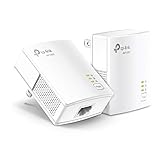

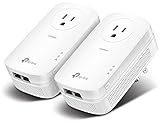
As we look at modern home network demands in 2026, finding a balance between low latency, heat dissipation, and physical room integration is what actually matters. Let us break down how to choose the perfect system for your gaming setup.
Decide These 3 Things First
Before comparing brands or speeds, you must evaluate your physical space and electrical environment. Answering these three questions first will narrow your search immediately:
- Do you have a spare wall outlet near your router and your PC? Powerline adapters must be plugged directly into a wall socket; they do not work reliably through surge protectors or extension cords. If your outlets are already crowded, you will need to buy a model with an integrated “passthrough” socket so you do not lose a plug.
- Does your home have modern three-prong outlets? High-performance adapters rely on the ground wire to send secondary data streams. If your home has older, two-prong outlets (common in homes built before 1970), you will be limited to slower, single-stream adapters.
- What is your actual internet plan speed? If you pay for a 100 Mbps fiber connection, buying an ultra-premium 2000 Mbps adapter will not make your downloads any faster. Conversely, if you have gigabit internet, cheap adapters with 100 Mbps Fast Ethernet ports will severely bottleneck your system.
1. Physical Size, Footprint, and Outlet Clearance
Powerline adapters are physical hardware units that must plug directly into your wall. Their dimensions matter immensely for both room aesthetics and utility. Standard powerline adapters generally fall into two categories: compact “nano” models and larger “passthrough” models.
Nano adapters typically measure around 2.0 inches wide, 2.8 inches tall, and 1.1 inches deep. Their small profile is designed to sit in the bottom half of a standard duplex wall outlet without blocking the top plug. This is ideal for clean, minimalist rooms where you want the tech to blend into the baseboards.
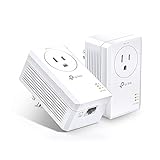
Passthrough adapters are significantly larger, often measuring 3.0 inches wide, 5.0 inches tall, and 1.6 inches deep. While they occupy the entire wall outlet footprint, they feature an integrated electrical socket on the front. This physical construction ensures you do not lose any outlet capacity. For a gaming desk where monitors, speakers, and PCs compete for plugs, a passthrough adapter is almost always the superior physical design choice, even if it stands out more visually.
2. Casing Material, Venting, and Heat Dissipation
Powerline adapters are small, self-contained computers that continuously convert radio frequency signals into electrical pulses. This process generates noticeable heat. High-speed chipsets, particularly those rated at 1200 Mbps to 2000 Mbps, can draw between 4 and 6 watts of electricity under a heavy gaming load.
When choosing an adapter, inspect the casing construction. Cheap models use thin, unvented PVC plastic that traps heat inside. Over time, high operating temperatures degrade the internal capacitors, leading to connection drops, packet loss, and eventual hardware failure within 12 to 18 months.
Look for premium adapters constructed from fire-retardant, high-density ABS or polycarbonate plastics. These units feature dedicated ventilation grilles along the sides and top to allow natural convective cooling. A well-vented chassis keeps the internal silicon chips below their thermal throttling limits, ensuring your ping remains stable during multi-hour gaming sessions.
3. Electrical Circuitry and Phase Compatibility
To understand how a powerline adapter will perform, you must look at how it interacts with your home’s electrical panel. Most American homes use a split-phase electrical system, where 240 volts enters the house and is split into two separate 120-volt phases (Phase A and Phase B) at the breaker box.
If your router is plugged into an outlet on Phase A, and your gaming PC is on Phase B, the data signal must travel all the way back to the breaker panel, jump across the phases (often losing signal strength in the process), and then travel down to your PC.
To combat this physical limitation, look for adapters that utilize MIMO (Multiple Input Multiple Output) technology with beamforming. Older SISO (Single Input Single Output) adapters only transmit data along the line and neutral wires. MIMO technology utilizes the ground wire as a third pathway. By sending data across multiple wire combinations simultaneously, MIMO adapters can bridge the phase gap much more effectively, maintaining a stable signal even if your outlets are on separate breakers.
4. Latency, Throughput, and Real-World Speeds
The speeds printed on powerline adapter packaging are theoretical laboratory maximums. In a real-world home environment, electrical noise from appliances, phone chargers, and vacuum cleaners degrades the signal.
As a general rule, expect to get about 15% to 35% of the advertised box speed. Here is how that translates to real-world performance:
- AV1000 Class: Advertised at 1000 Mbps. Real-world throughput typically ranges between 100 Mbps and 250 Mbps. This is perfectly adequate for standard online gaming and streaming.
- AV2000 Class: Advertised at 2000 Mbps. Real-world throughput typically ranges between 250 Mbps and 450 Mbps. These units use advanced HomePlug AV2 MIMO technology, offering the lowest possible latency overhead (adding only 1 to 3 milliseconds of delay compared to a direct Ethernet cable).
For gaming, throughput (megabits per second) is actually secondary to latency stability. A steady 50 Mbps connection with zero packet loss is infinitely better for gaming than a jittery 300 Mbps connection that drops packets every time your refrigerator compressor kicks on.
5. Price Tiers and Value Mapping
Powerline adapter kits are almost always sold in pairs (one for the router, one for the client device). The market is clearly segmented into three distinct price brackets based on performance and physical features:
- Budget ($35 to $50): These are typically AV1000 kits. They feature a single Gigabit Ethernet port, a compact nano-sized plastic chassis, and lack a passthrough outlet. They are ideal for casual gaming in smaller apartments where electrical runs are short.
- Mid-Range ($55 to $80): This tier introduces passthrough outlets and basic MIMO technology. Speeds range from AV1000 to AV1200. These offer the best balance of utility and cost for the average suburban home.
- Premium ($85 to $120+): These are top-tier AV2000 kits featuring advanced HomePlug AV2 MIMO technology, dual Gigabit Ethernet ports (allowing you to connect both a gaming PC and a console), robust heat-vented casings, and integrated noise-filtering passthrough sockets.
6. Warranty, Reliability, and Setup Integration
Because powerline adapters are plugged directly into your home’s electrical grid, they are vulnerable to power surges, lightning strikes, and voltage fluctuations. A high-quality adapter should be treated as an investment in your home network infrastructure.
When buying, look for manufacturers that offer at least a 2-year warranty with 24/7 technical support. Brands that stand behind their products for multiple years typically use higher-grade internal surge protection circuitry to shield the delicate network chips from minor electrical spikes.
Additionally, look for true “plug-and-play” integration. Premium kits feature pre-paired hardware out of the box. Setup should require nothing more than plugging both units into the wall and pressing a physical “Pair” or “Security” button on the side to establish 128-bit AES hardware encryption, securing your network from neighboring apartments or homes sharing the same transformer.
Spec Checklist
Use this quick-reference table to compare technical specifications across budget, mid-range, and premium tiers before making your final selection:
| Specification | Budget Tier | Mid-Range Tier | Premium Tier |
|---|---|---|---|
| Standard | HomePlug AV | HomePlug AV2 (SISO) | HomePlug AV2 (MIMO) |
| Theoretical Speed | Up to 1000 Mbps | 1000 to 1200 Mbps | 2000+ Mbps |
| Real-World Speed | 50 to 150 Mbps | 150 to 250 Mbps | 250 to 500+ Mbps |
| Port Speed | 1x Gigabit (10/100/1000) | 1x Gigabit (10/100/1000) | 2x Gigabit Ports |
| Passthrough Plug | No (Nano design) | Optional | Yes (with noise filter) |
| Average Power Draw | 2.5 Watts | 4.0 Watts | 5.5 Watts |
| Warranty | 1 Year | 1 to 2 Years | 2 to 3 Years |
Red Flags to Avoid
When shopping for a gaming powerline adapter, steer clear of products that exhibit any of these technical warning signs:
- Fast Ethernet Ports (10/100 Mbps): Some cheap “1000 Mbps” adapters use a physical Ethernet port limited to 100 Mbps. This physical bottleneck means you can never exceed 100 Mbps, regardless of how fast the powerline link is. Always ensure the spec sheet explicitly lists “Gigabit” or “10/100/1000” ports.
- No Ground Pin (Two-Prong Plugs): If an adapter plug lacks a metal ground pin, it cannot support MIMO technology. This means it will struggle to transmit data across different electrical phases in your home.
- No Integrated Noise Filtering: If you buy a passthrough model, make sure the built-in outlet features electrical noise filtering. Without this, plugging a noisy device (like a phone charger or fan) directly into the adapter will degrade your gaming signal.
- Lack of Safety Certifications: Because these devices interface directly with high-voltage mains power, look for clear UL (Underwriters Laboratories) or ETL safety certifications stamped on the plastic casing. Avoid unbranded, generic imports that lack these certifications.
FAQ
Can I plug a gaming powerline adapter into a power strip or surge protector?
No. Surge protectors and power strips are designed to filter out high-frequency electrical noise to protect your electronics. Because powerline adapters use these exact same high-frequency RF signals to transmit data, plugging them into a surge protector will completely block or severely degrade the network connection. Always plug them directly into the wall outlet.
Do powerline adapters work across different circuit breakers?
Yes, in most cases. As long as the outlets are wired to the same main breaker panel (the central consumer unit in your home), the signal will connect. However, passing through the breaker panel to get from one circuit to another introduces signal attenuation (loss of strength), which can reduce your overall speeds.
What causes latency spikes on a powerline connection, and how do I fix them?
Latency spikes are usually caused by electrical noise introduced by high-draw appliances (like hair dryers, vacuum cleaners, or microwave ovens) running on the same circuit. To fix this, identify the noisy appliance and move either it or your powerline adapter to a different physical outlet circuit. Using a passthrough adapter with built-in noise filtering also helps isolate your data signal from appliance interference.
How much electricity do these adapters consume when my PC is turned off?
Modern powerline adapters are highly energy-efficient. Most high-quality kits feature an automatic power-saving mode. When they detect that the connected PC or console is turned off, they drop from their active state (drawing 3 to 6 watts) down to a standby state, which consumes less than 0.5 watts of electricity.