Key takeaways
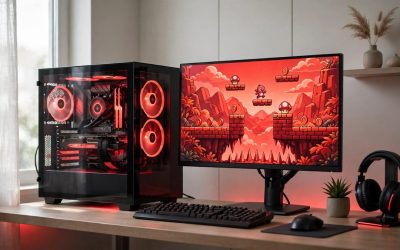
- Gamers with a high-end graphics card: strong per-core speed means the processor is rarely the limit at 1440p and 4K, according to reviewers who test CPU scaling.
- Streamers and creators: the Efficient cores help when a game, capture software and a stream encode run together.
- Existing LGA1700 owners: if a lower 12th-generation chip is already installed, a 12900K is a socket-compatible upgrade.
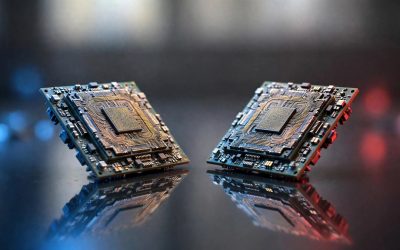
The Intel Core i9-12900K is a 16-core, 24-thread desktop processor for the LGA1700 socket with a top boost of 5.2 GHz, and it suits gamers and creators who want a high-end 12th-generation chip on a DDR5 or DDR4 motherboard. It is the flagship of the Alder Lake desktop launch, and it now sits a generation or two behind Intel’s newest desktop families.
Official specifications
Intel lists the following for the Core i9-12900K.
| Specification | Intel’s listed value |
|---|---|
| Total cores | 16 (8 Performance plus 8 Efficient) |
| Total threads | 24 |
| Max turbo frequency | 5.20 GHz |
| Performance-core base | 3.20 GHz |
| Efficient-core base | 2.40 GHz |
| Cache | 30 MB Intel Smart Cache |
| Processor base power | 125 W |
| Maximum turbo power | 241 W |
| Memory support | Up to DDR5-4800 or DDR4-3200, two channels, up to 128 GB |
| PCI Express | 5.0 and 4.0, up to 20 lanes from the processor |
| Integrated graphics | Intel UHD Graphics 770, 32 execution units |
| Socket | FCLGA1700 |
Reading the numbers in plain terms
Hybrid cores
Eight Performance cores handle demanding threads such as the main game loop, and eight Efficient cores handle background and highly parallel work. Only the Performance cores run two threads each, which is how 16 cores become 24 threads.
Two power figures
The 125 W base power is the figure Intel uses for the processor’s sustained rating, and 241 W is the maximum it may draw during turbo. Motherboard makers often set their own limits, so some boards let the chip run at high power indefinitely while others follow Intel’s defaults. That is why cooling needs vary so much between systems.
Memory
The chip supports both DDR5 and DDR4, but a given motherboard supports only one type. This is the biggest platform decision with this processor and is covered below.
Who it suits
- Gamers with a high-end graphics card: strong per-core speed means the processor is rarely the limit at 1440p and 4K, according to reviewers who test CPU scaling.
- Streamers and creators: the Efficient cores help when a game, capture software and a stream encode run together.
- Existing LGA1700 owners: if a lower 12th-generation chip is already installed, a 12900K is a socket-compatible upgrade.
It is a weaker fit for buyers on a tight budget who mostly play at higher resolutions, since a mid-range chip often delivers a similar experience when the graphics card is the limit.
Comparison with neighbours
| Processor | Cores (P+E) | Threads | Top turbo | Notes |
|---|---|---|---|---|
| Core i9-12900K | 8+8 | 24 | 5.2 GHz | Unlocked, flagship of the family |
| Core i9-12900KF | 8+8 | 24 | 5.2 GHz | Same chip without integrated graphics |
| Core i7-12700K | 8+4 | 20 | 5.0 GHz | Fewer Efficient cores, popular gaming pick |
| Core i5-12600K | 6+4 | 16 | 4.9 GHz | Value gaming tier |
| Core i9-13900K | 8+16 | 32 | 5.8 GHz | Next generation, same socket |
Reviewers commonly describe the i7-12700K as the better value for pure gaming, with the i9 mostly making sense for mixed gaming and heavy multi-threaded work. The next-generation i9-13900K offers considerably more Efficient cores on the same socket.
Platform and compatibility notes
- Socket and chipsets. LGA1700 boards in the 600 series were the launch partners, and 700 series boards also accept it. Overclocking-oriented K-series features need a chipset that allows it, such as a Z-series board.
- DDR5 or DDR4. Pick the board type first. The two memory types are not interchangeable, and the module will not fit the wrong slot.
- Cooling. The retail K-series box does not include a cooler, so a capable air cooler or liquid cooler has to be bought separately. Given the 241 W maximum turbo power, a large cooler is the sensible choice.
- Power supply and board power delivery. Entry-level boards with weak voltage regulation can throttle this chip under long loads. Look at the board’s power design, not only its price tier.
- Cooler mounting. The LGA1700 socket has a different hole spacing from older Intel sockets. Confirm the cooler maker lists LGA1700 support or includes a bracket.
- Operating system. Windows 11 is the version Intel’s Thread Director scheduling was designed around.
Gaming fit
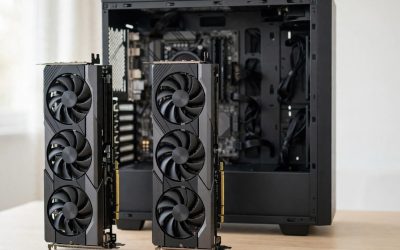
No frame-rate numbers are published here because they vary with game, settings, memory and the graphics card. The reliable rule from reviewers is that at 1080p with a very fast graphics card, the processor matters more, while at 4K the graphics card dominates and most modern chips converge. A 12900K pairs sensibly with upper mid-range to high-end graphics cards; pairing it with an entry-level graphics card wastes the processor’s capability.
| Resolution and goal | What matters most |
|---|---|
| 1080p, high refresh rate | CPU speed, memory speed, fast graphics card |
| 1440p | Balanced; both matter |
| 4K | Graphics card first; most recent processors perform similarly |
| Streaming while gaming | Core count; the 12900K has headroom |
Common mistakes
- Buying a cheap board and expecting full boost behaviour.
- Ordering DDR5 memory for a DDR4 board, or the reverse.
- Forgetting the cooler, which is not in the K-series box.
- Assuming the integrated graphics will play modern games well. UHD Graphics 770 is intended for display output and light use.
- Buying the KF model and then discovering the system has no video output without a graphics card.
Pick-by-need table
| Your situation | Sensible choice |
|---|---|
| Already on LGA1700 with a lower 12th-gen chip | 12900K is a straight drop-in upgrade for heavy workloads |
| Building new for gaming only | Consider the i7-12700K or a newer generation instead |
| Want to avoid paying for unused graphics | 12900KF if you will always use a graphics card |
| Want the strongest LGA1700 option | Look at 13th and 14th generation chips on the same socket, subject to BIOS support |
Alternatives
- Core i7-12700K: lower cost class and fewer Efficient cores; reviewers often rate it for gaming value.
- Core i9-13900K: same socket and many more cores; a BIOS update may be needed on early 600 series boards.
- AMD Ryzen options: the Ryzen 7000 and 9000 series use the AM5 socket and DDR5 only, so they mean a different platform.
Frequently Asked Questions
How many cores and threads does the i9-12900K have?
It has 16 cores, made of 8 Performance and 8 Efficient, and runs 24 threads. The Performance cores support Hyper-Threading and the Efficient cores do not.
Does the i9-12900K come with a cooler?
The K-series retail box ships without one, so you need to buy a cooler separately. Choose one rated for the processor’s high maximum turbo power.
Is DDR5 or DDR4 better for the 12900K?
The processor supports both, up to DDR5-4800 or DDR4-3200 per Intel’s listing. The type is decided by the motherboard you buy, and DDR5 boards generally cost more but offer higher-speed memory options.
Can the i9-12900K use PCIe 5.0?
Yes, Intel lists PCIe 5.0 and 4.0 support with up to 20 lanes from the processor. Whether you can use PCIe 5.0 in practice depends on the board and the devices fitted.
Is the 12900K still worth buying in 2026?
It remains a capable chip, particularly as a drop-in upgrade for an existing LGA1700 system. For a new build, newer platforms offer better efficiency and longer upgrade paths, so compare before committing.
What is the difference between the 12900K and 12900KF?
The KF variant omits the integrated graphics. It needs a separate graphics card to produce any display output.
FAQ
How many cores and threads does the i9-12900K have?
Does the i9-12900K come with a cooler?
Is DDR5 or DDR4 better for the 12900K?
Can the i9-12900K use PCIe 5.0?
Is the 12900K still worth buying in 2026?
What is the difference between the 12900K and 12900KF?
More from Amazon
Programs that pair well with the guide above. Offers and eligibility are set by Amazon and may change.
Free shipping on eligible items, Prime Video and more. Eligible new members can start with a free trial.
Start a Prime free trialAd-free music streaming. Eligible new subscribers can start with a free trial.
Try Music Unlimited freeA Prime membership for ages 18-24 with a trial period. Eligibility is set by Amazon.
See Prime for Young AdultsAudiobooks and podcasts to listen to on the go. Eligible new members can start with a free trial.
Try Audible freeAs an Amazon Associate we earn from qualifying purchases.