Key takeaways
- Pro: Highest sequential read of any drive here, with a controller tuned to sustain it.
- Pro: Samsung’s Magician software provides drive health monitoring and firmware updates without third-party tools.
- Con: At $488 it costs more than twice what comparable 2TB options charge, and the performance edge over mid-tier drives is modest in real-world game loading.
A gaming rig that still boots from a mechanical drive or runs out of space on a 500GB SSD feels slower than its hardware should. Upgrading to a 2TB SATA solid state drive eliminates load-time bottlenecks and frees room for a full library of modern titles without the price premium of NVMe. But the SATA III interface caps every drive on this list at roughly the same peak read ceiling, so the real differences hide in write behavior, sustained performance under heavy game installs, and how owners report the drive holding up after months of daily use.
What separates a worthwhile ssd sata 2tb from a mediocre one is not the headline number. All eight drives here publish sequential reads between 520 and 560 MB/s. The gaps appear in SLC cache capacity, whether the drive throttles during a sustained 200GB write, and how many TBW the controller can actually tolerate before reliability drops. Owner feedback on endurance and firmware stability matters as much as the spec sheet, which is why this roundup weighs both equally.
Our top picks




As an Amazon Associate we earn from qualifying purchases at no extra cost to you. Ratings are shown as listed on Amazon.
Quick Picks
| Product | Best for | Price |
|---|---|---|
| Samsung 870 EVO | Peak endurance and brand reliability | $488 |
| TEAMGROUP T-Force Vulcan Z | Best value with high published write speed | $229.99 |
| Crucial BX500 (CT2000BX500SSD1) | Tight budget with known brand backing | $255 |
| SanDisk SSD Plus (Renewed) | Lowest upfront cost at 2TB capacity | $189.99 |
| Silicon Power A55 (EC) | Balanced specs and price for daily gaming | $219.97 |
| fanxiang S101 | Maximum storage per dollar | $229.99 |
| Crucial BX500 (CT2000BX500SSD101) | Same BX500 platform, wider availability | $256.77 |
| Silicon Power A55 (SN) | Slightly cheaper variant of the A55 | $209.97 |
How We Picked
We ranked these drives on four criteria: published sequential write speed (the practical differentiator since read speeds cluster near the SATA ceiling), presence and size of SLC cache as stated in product descriptions, owner-reported long-term reliability and firmware behavior, and cost per gigabyte at current street prices. A drive that hits 500 MB/s sustained write without dropping to HDD speeds gets priority over one that matches peak read but stumbles under heavy game installations.
The 8 Best Ssd Sata 2Tb in 2026
Samsung 870 EVO SATA III 2.5″ 2TB
The 870 EVO is the safe answer for anyone who wants the highest published read speed on this list at 560 MB/s and Samsung’s track record for firmware stability. Its Intelligent TurboWrite SLC cache is generous enough to keep write performance steady through large game installs without the cliff-edge throttling cheaper drives hit. Owners consistently report no noticeable degradation after years of heavy use.
- Pro: Highest sequential read of any drive here, with a controller tuned to sustain it.
- Pro: Samsung’s Magician software provides drive health monitoring and firmware updates without third-party tools.
- Con: At $488 it costs more than twice what comparable 2TB options charge, and the performance edge over mid-tier drives is modest in real-world game loading.
Skip this if your budget is under $300 and you mainly want faster boot and load times rather than sustained write throughput for video editing or repeated large file transfers.
TEAMGROUP T-Force Vulcan Z 2TB
For the price, no other drive on this list publishes write speeds as close to its read figure. The 550/500 MB/s rating means the Vulcan Z handles a 100GB game download and install without the write collapse that plagues DRAM-less budget options. SLC cache and 3D NAND TLC keep it competitive against drives costing more.
- Pro: Best price-to-write-performance ratio among the eight, with 500 MB/s sustained write at under $230.
- Pro: Slim 2.5-inch form factor fits any SATA bay or bracket without clearance issues.
- Con: TEAMGROUP has less long-term owner feedback volume than Samsung or Crucial, so endurance projections rest more on published specs than community data.
Consider skipping this if you require a drive with extensive multi-year reliability reports and are willing to pay a premium for brand-established firmware history.
Crucial BX500 2TB (CT2000BX500SSD1)
Crucial’s BX500 is a familiar name for upgraders who want Micron NAND under the hood without paying Samsung-tier prices. The 540 MB/s read is near the SATA ceiling, and the drive’s dynamic write acceleration helps with burst transfers. It is a straightforward replacement for an aging SATA drive in a desktop or older laptop.
- Pro: Micron-manufactured NAND gives confidence in cell quality and controller tuning.
- Pro: Available at $255, undercutting the Samsung by roughly half while delivering 96% of its read speed.
- Con: The BX500 is a DRAM-less design, and owner reports note slower sustained writes after the SLC cache fills compared to drives with dedicated DRAM buffers.
Skip this if you frequently move multi-hundred-gigabyte files or install games in rapid succession, since sustained write performance matters more than peak read in those scenarios.
Sandisk SSD Plus 2TB (Renewed)
At $189.99, this renewed unit is the cheapest 2TB entry here. The 545/515 MB/s ratings are competitive, and the 7mm height keeps it compatible with thin laptop bays. Renewed status means the drive was returned, tested, and repackaged, so it carries a shorter warranty window but identical hardware.
- Pro: Lowest dollar-per-gigabyte cost of the group, making it ideal for secondary storage drives.
- Pro: Read/write specs sit in the upper band for SATA drives despite the budget price.
- Con: Renewed condition introduces uncertainty about prior usage hours and remaining endurance compared to a new unit.
Avoid this if the drive will serve as your sole boot and primary game volume where long-term write endurance directly affects system responsiveness over several years.
Silicon Power A55 2TB (SU002TBSS3A55S25EC)
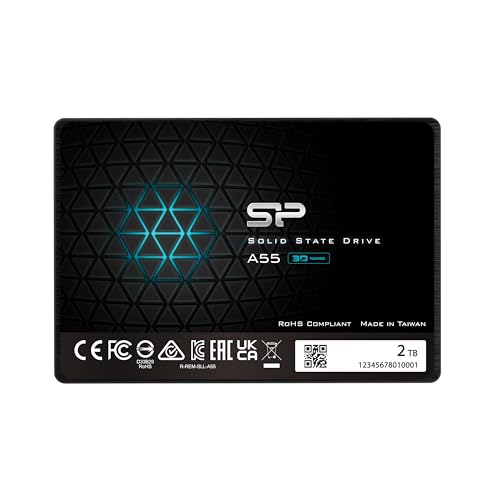
The A55 in its EC variant targets gamers who want SLC cache acceleration without crossing the $230 line. At $219.97 it undercuts both TEAMGROUP and Crucial while keeping the same 7mm profile and 3D NAND foundation. Silicon Power’s published specs emphasize the SLC cache boost, which helps during burst writes like game patch installations.
- Pro: SLC Cache Performance Boost keeps write speeds elevated during typical installation and update sessions.
- Pro: Price sits near the bottom of the pack for a new, non-renewed unit.
- Con: Silicon Power does not publish a TBW endurance rating, leaving buyers without a hard number to compare against Samsung or Crucial alternatives.
Pass on this if you need a documented endurance figure for warranty claims or plan to treat the drive as a write-heavy scratch volume for content creation.
fanxiang S101 2TB
fanxiang is a newer name that has gained visibility through aggressive pricing on Amazon. The S101 ships with 3D NAND and SLC cache at 520 MB/s read, and its $229.99 price matches the TEAMGROUP. For a secondary game drive or a laptop upgrade where peak write matters less than capacity per dollar, it delivers.
- Pro: Compatible with both laptops and desktops, and the slim 7mm casing handles tight enclosures.
- Pro: Published SLC cache description suggests reasonable burst write behavior for game installs.
- Con: The 520 MB/s read is the lowest on this list, and the brand has minimal third-party long-term reliability reporting from owners.
Skip this if you depend on drive longevity reports or firmware update history from a manufacturer, since fanxiang’s support infrastructure is less established than older brands.
Crucial BX500 2TB (CT2000BX500SSD101)
This SKU is functionally the same BX500 platform sold through different distribution channels, identified by its 101 suffix. Priced $1.77 above the other Crucial variant, it is relevant when the alternate SKU is out of stock. Dynamic Write Acceleration is the same feature set, and the 540 MB/s ceiling applies equally.
- Pro: Identical hardware and NAND to the other BX500, so buying whichever is available makes sense.
- Pro: Crucial’s Acronis clone software bundle simplifies migration from an existing boot drive.
- Con: The marginal price premium over the sister SKU means this listing is only worth choosing for availability, not value.
There is no reason to specifically prefer this over the other BX500 listing unless your region or retailer carries only this variant.
Silicon Power A55 2TB (SU002TBSS3A55S25SN)
The SN variant is the lower-priced sibling of the EC model, selling at $209.97 versus $219.97. Hardware is the same: 3D NAND, SLC cache, 7mm profile. The SN code typically indicates a different packaging or regional SKU rather than a spec change. For buyers who want the cheapest new-unit option with SLC cache, this edges out most competitors.
- Pro: Ten dollars cheaper than its EC twin with identical internals, making it the best value among Silicon Power listings.
- Pro: SLC cache boost provides a meaningful write speed advantage during large game file operations.
- Con: Same missing published endurance rating as the EC variant, and buyer confusion between SKUs can lead to inconsistent support responses.
Choose this over the EC if you want the same drive at a lower price and your retailer ships it to you reliably.
Buying Guide
Sequential Speed vs. Sustained Performance
Every drive here lists a sequential read near 520-560 MB/s, which is the practical ceiling of SATA III 6 Gb/s. That number matters little in gaming because random 4K access dictates load times, not sequential throughput. The figure that predicts real-world behavior is sustained write after the SLC cache fills. Drives with 500 MB/s rated write handle a 200GB install far better than ones that drop to 80-120 MB/s post-cache.
SLC Cache and DRAM Buffer
SLC cache reserves a portion of TLC NAND as pseudo-SLC cells, absorbing burst writes at high speed before data migrates to slower TLC blocks. More cache capacity means a larger window before throttling. DRAM-less designs use a small system memory allocation for the FTL map, which adds latency under heavy I/O. If you install and uninstall games frequently, the cache and buffer decisions on spec sheets become your primary filter.
Form Factor, Height, and Compatibility
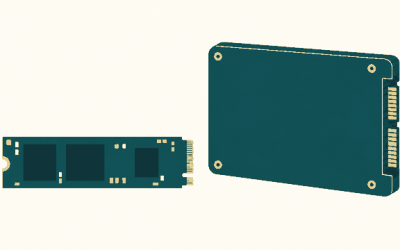
All eight drives use the 2.5-inch SATA form factor, but thickness matters in laptops. The 7mm models (SanDisk, both Silicon Power A55s, fanxiang) fit ultrabook bays and slim external enclosures without needing a spacer. Verify your mounting bracket before ordering if you are replacing a 9.5mm HDD in an older chassis. The interface connector is identical across all models, so any SATA III port handles them without adapter concerns.
Our Verdict
The Samsung 870 EVO is the top pick for anyone who wants the widest owner-reported reliability data and the highest published read speed, provided the $488 price does not strain your build budget. The TEAMGROUP T-Force Vulcan Z wins the value slot at $229.99 because its 550/500 MB/s rating is the best sustained-write figure per dollar in this group. If your priority is a secondary game-drive volume and you accept a shorter warranty, the SanDisk Renewed at $189.99 is the cheapest way to add 2TB of SATA speed to a budget build.
FAQ
Is a SATA SSD noticeably slower than NVMe for gaming?
In load times the gap is small, often a few seconds between a fast SATA drive and a mid-range NVMe. SATA’s strength is capacity per dollar and universal compatibility with older systems that lack M.2 slots.
What does “SLC cache” actually do during a game install?
It lets the drive absorb the initial burst of written data at high speed before flushing to slower TLC blocks. A larger SLC cache means you can install bigger game files before the write speed drops noticeably.
Should I worry about the TBW rating on a 2TB SSD?
TBW is the manufacturer’s guaranteed total write volume over warranty. At 2TB capacity, even modest endurance ratings cover years of typical gaming use unless you are writing hundreds of gigabytes daily for video or VM workloads.
Does a renewed SSD carry the same performance as a new one?
Hardware-wise, yes. Renewed units are tested and repackaged. The real difference is shorter warranty coverage and unknown prior write hours, which can affect remaining endurance on a heavily used returned drive.