Key takeaways
- Gaming chair quality explained in plain terms: frames, foam, gas lifts, upholstery and mechanisms, and how to read each one on a product page.
As an Amazon Associate we earn from qualifying purchases.
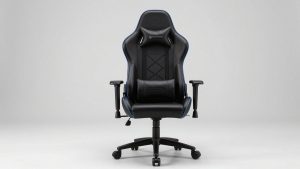
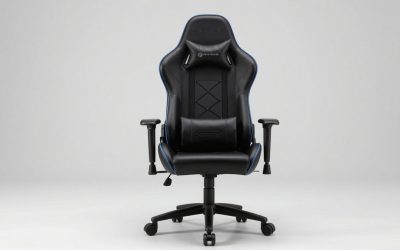
Two gaming chairs can look identical in photos: same racing silhouette, same bold colour panels, same tall backrest with wings. One is still supportive after three years of daily play; the other leans, squeaks and flattens within a year. The difference is almost never visible in the hero image. It sits in a handful of construction details that manufacturers state plainly on the product page when they are proud of them, and phrase vaguely when they are not.
This explainer is not a shopping list and recommends no specific chair. Instead, it walks through the quality markers that separate a well-built gaming chair from a dressed-up weak one: the frame, the foam, the gas lift, the upholstery, the tilt mechanism and the warranty language. For each marker, you will learn what the good version looks like, what the cheap version looks like, and exactly where on a product page that information hides, so you can judge any chair, at any tier, for yourself.
‘Good’ Is a Build Question, Not a Style Question
Gaming chairs inherited their shape from motorsport seats, and that shape is mostly styling. Bucket-seat wings do not hold you in place during a racing game; they exist because they photograph well. Real quality in a chair is structural and material: how the skeleton is built, what the padding is made of, how the height piston is rated, and whether the surface layer can survive friction, sweat and sunlight. A plain-looking chair with a steel frame and moulded foam will outlast a dramatic-looking chair built on thin plywood and loose stuffing every time.
That is why experienced buyers read a product page backwards. They skip the lifestyle photos, scroll past the feature icons, and hunt for the specification table and the sentences where the manufacturer commits to something measurable: a frame material, a foam type, a lift class, a capacity figure. Vague words like premium, luxury and ergonomic carry no commitment at all. The sections below take each marker in turn and show how to read it.
The Frame: Steel Carries the Years
The frame is the chair’s skeleton, and it decides how the chair ages. A full steel tube frame, welded and running through both the seat and the backrest, resists the twisting forces of leaning, reclining and perching on the seat edge. Steel also gives the tilt mechanism and armrest mounts something solid to bolt into, which is why well-built chairs feel planted rather than creaky.
The weak alternative is a frame of plywood panels, thin bent board, or a mix where only the base is metal. Plywood seat shells flex, fasteners loosen in the material over time, and the first symptom is usually a chair that rocks slightly even with the tilt locked. On a product page, look for the exact phrase in the specifications: steel frame or metal frame is a commitment; a listing that never mentions frame material, or buries reinforced or sturdy without naming a material, is telling you something by omission. Capacity figures support the same reading: a frame engineered for higher stated weight limits has thicker members and stronger welds behind that number.
The Foam: Cold-Cure Moulded Foam Versus Loose Fill
Sit on a chair for a year and you are really testing its foam. The better technology is cold-cure foam, also described as cold-moulded foam: liquid foam is poured into a mould shaped like the seat or backrest and cured as one dense piece. Because it is moulded rather than cut, its density is consistent, it springs back after compression, and it resists the permanent flat spot that forms under a player’s weight. Listings for stronger chairs name this process directly, sometimes with a density figure.
The cheap route is loose fill: shredded foam, polyester stuffing, or thin cut foam slabs glued over the frame. These compress unevenly, migrate inside the cover, and produce the lumpy, bottomed-out seat familiar from worn-out budget chairs. Reading a page, treat named processes as the signal. Cold-cure, cold-moulded or high-density moulded foam are specific claims a maker can be held to. Comfort foam, sponge, or thick padding with no process named usually means cut or loose fill. The same logic applies to pillows: a memory foam head pillow that holds its shape is a different component from a soft stuffed cushion, and good listings say which one is in the box.
The Gas Lift: Classes Are a Real Rating
The gas lift is the pneumatic piston that sets seat height, and it is one of the few chair parts with a genuine classification system. Lifts are rated in classes, with Class 4 the strongest and most durable grade commonly used in gaming chairs, Class 3 a step below, and lower classes found on the cheapest models. A higher class means thicker cylinder walls, better seals and smoother, longer-lasting height adjustment that does not slowly sink mid-session.
This is an easy marker to read because honest listings state it outright: Class 4 gas lift or Class 4 hydraulic piston in the specifications is a deliberate quality claim. If a listing describes the lift only as a sturdy piston or height-adjustable cylinder with no class, assume it is a lower grade. The lift also interacts with capacity: a chair rated for heavier users needs the stronger piston to hold position under load, so a high stated weight limit paired with a named Class 4 lift is a consistent, credible combination, while a high capacity with no lift class named deserves a second look.
Upholstery: Grades Hide Behind Generic Names
The surface you touch every day wears faster than any other part, and its naming is where marketing gets slippery. Standard PU leather, also called faux leather or leatherette, is a plastic coating on a fabric backing. Its weakness is hydrolysis and friction: over time the coating can crack and peel, starting where thighs and armrests rub. Better chairs use improved leatherette formulations and say so, often with a durability claim relative to standard PU, or they switch to woven fabric upholstery, which trades the leather look for breathability and no peeling risk at all. Genuine leather exists at the top of the market and is always named proudly when present.
To read a listing, separate the name from the evidence. PU leather alone tells you the category, nothing more. Supporting details include a stated durability comparison, a thickness or material description, double stitching, or a fabric option described by its weave. Care instructions are a quiet tell as well: surfaces that can only be wiped with a dry cloth are more delicate than the bold photos suggest. Whatever the material, upholstery quality shows up first at the seat front edge and the armrest tops, so those are the areas to picture when judging a claim.
The Mechanism: What Actually Moves Under the Seat
The tilt mechanism is the metal assembly between the lift and the seat, and it controls how the chair reclines and rocks. The basic version is a simple tilt plate: the backrest and seat move together at a fixed ratio, with a single tension knob and a lock at one angle. A multi-tilt or synchro mechanism is the quality step up, letting the backrest recline at a different rate from the seat, locking at several angles, and keeping your feet grounded while you lean back. Frog-style mechanisms offer the finest control and appear on chairs that expect all-day use.
Listings reveal the tier if you read the verbs. Recline figures up to around 165 or 180 degrees describe the backrest range, but the mechanism type decides whether that range is usable or just a party trick for photos. Look for multi-tilt, tilt lock at multiple positions, or adjustable tilt tension as named features. A chair that advertises a huge recline angle but never names its mechanism usually has the basic plate, which is fine for upright play and little else. Armrests follow the same ladder: fixed arms, height-only arms, then 3D and 4D arms that also move sideways, forward and in angle, with metal internals outlasting plastic at every step.
Warranty Language: The Maker’s Own Confidence, in Writing
A warranty is the one place where a manufacturer prices its own confidence. Longer coverage on the frame and mechanism signals that the maker expects the structure to survive, while a short overall warranty with many exclusions signals the opposite. Read the structure, not just the headline number: strong warranties separate the frame, the mechanism and the upholstery into different terms, because those parts genuinely age at different rates.
Vague warranty presentation is itself a marker. If the product page trumpets a long number, check what it attaches to; a long frame warranty beside a very short upholstery term is still honest, but a single big number with no breakdown available anywhere is not. Also note whether replacement parts such as lifts, armrest tops and casters are sold separately. A maker with a spare-parts ecosystem is planning for the chair to be repaired and kept, which only makes economic sense if the underlying build is worth repairing.
Red Flags That Give a Weak Chair Away
- No frame material named anywhere in the specifications, while words like sturdy and reinforced appear without a material attached.
- Foam described only as sponge, soft fill or thick padding, with no moulding process or density mentioned.
- A gas lift with no class rating, especially on a chair claiming a high weight capacity.
- A large recline angle advertised loudly while the mechanism type is never stated.
- Weight capacity missing entirely, or a capacity that seems very high for a chair whose frame and lift go undescribed.
- Upholstery named only as PU or faux leather with no durability detail, on a chair styled to look like a premium model.
- A warranty reduced to a single number with no breakdown by part and no spare parts available.
- Dimensions given only as the outer box size, with no seat width, seat depth or backrest height to judge fit against your body.
Common Mistakes
- Judging a chair by its silhouette and colour scheme, which are styling choices, instead of the frame and foam, which are lifespan choices.
- Assuming every chair labelled ergonomic has meaningful adjustability, when the label is unregulated and the mechanism may be a basic tilt plate.
- Treating the headline recline angle as a comfort feature without checking whether the mechanism can lock at intermediate angles.
- Ignoring seat dimensions and buying a chair whose seat is too deep or too narrow for your legs and hips, no matter how good its materials are.
- Reading a long warranty number as full coverage without checking which parts it actually covers and for how long.
Frequently Asked Questions
What is the single most reliable quality marker on a product page?
The frame material, because it is a hard commitment that is expensive to fake. A named steel frame, ideally paired with a Class 4 gas lift and a moulded foam description, tells you the maker spent money where it cannot be seen. Listings that avoid naming the frame material almost always have something cheaper underneath.
Is cold-cure foam really different from regular foam padding?
Yes. Cold-cure foam is moulded in the shape of the seat or backrest as a single piece, so its density is even and it recovers its shape after years of compression. Cut foam and loose fill start softer but pack down unevenly, which is why weaker chairs develop a permanent hollow where the player sits. The process name on the listing is the giveaway.
Does a higher weight capacity mean a chair is better built?
Usually it correlates, because holding more weight demands a stronger frame, lift and mechanism, but only when the supporting details agree. A high capacity beside a named steel frame and Class 4 lift is credible. A high capacity with no frame material and no lift class is just a number, and numbers without structure behind them are marketing.
How long should a good gaming chair last?
A well-built chair used daily should keep its support and mechanisms sound for several years, with upholstery and armrest tops as the parts most likely to show wear first. That is exactly why the warranty breakdown matters: makers of durable chairs cover the frame longest, and the availability of spare lifts, casters and armrest tops extends useful life further.
FAQ
What is the single most reliable quality marker on a product page?
Is cold-cure foam really different from regular foam padding?
Does a higher weight capacity mean a chair is better built?
How long should a good gaming chair last?
More from Amazon
Programs that pair well with the guide above. Offers and eligibility are set by Amazon and may change.
Free shipping on eligible items, Prime Video and more. Eligible new members can start with a free trial.
Start a Prime free trialAd-free music streaming. Eligible new subscribers can start with a free trial.
Try Music Unlimited freeA Prime membership for ages 18-24 with a trial period. Eligibility is set by Amazon.
See Prime for Young AdultsAudiobooks and podcasts to listen to on the go. Eligible new members can start with a free trial.
Try Audible freeAs an Amazon Associate we earn from qualifying purchases.