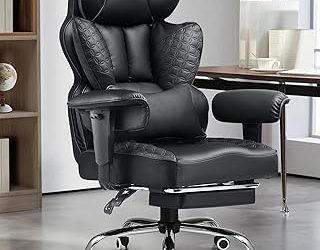
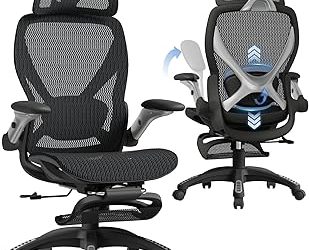
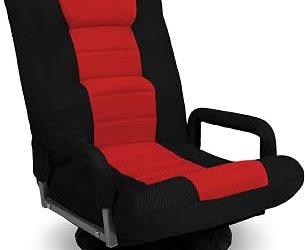
Key takeaways
- A body-type checklist for gaming chairs: the measurements that matter, fit checks for shorter, average, tall and heavier players, and page checks to run.
As an Amazon Associate we earn from qualifying purchases.
Two players can sit in the same gaming chair and have opposite experiences, and the reason is almost never quality. It is geometry. Seat depth that suits a tall player leaves a shorter player’s feet dangling; a backrest that supports an average torso puts its lumbar curve in the wrong place for a long back. Gaming chairs are built around an assumed body, and the closer your body is to that assumption, the better the chair feels.
This checklist removes the guesswork. It starts with the measurements to take, then walks through the fit checks for four broad body types, and finishes with the checks you can run on any product page before you spend anything. Work through it with a tape measure in hand and you will be able to reject unsuitable chairs in seconds, whatever their styling or feature list.
Measure First: The Numbers That Matter
Take these measurements sitting down, in the clothes and shoes you normally game in. First, your height and weight — the two figures every sizing chart starts from. Second, your popliteal height: sit on a hard chair with your feet flat and measure from the floor to the crease behind your knee. That number defines the seat height you need; a chair whose lowest setting sits above it will leave your feet unsupported and pressure under your thighs.
Third, your hip width at its widest point, which you compare against the usable seat width between the bolsters, not the overall seat width in the headline. Fourth, your buttock-to-knee length, which you compare against seat depth: you want a small gap — roughly two or three fingers — between the seat edge and the back of your knee when your back is against the backrest. Fifth, your sitting shoulder height, which tells you whether the backrest and headrest will meet your body in the right places. Finally, measure your desk height and the clearance beneath it, because a perfectly fitted chair that cannot roll up to the desk is still the wrong chair.
Keep the numbers visible while you shop. Listings state seat height ranges, seat dimensions, backrest dimensions and maximum weight recommendations, and this checklist is simply a system for confronting those figures with your own.
The Body-Type Checklist
Shorter and Lighter Players
- Check the minimum seat height first: it must drop low enough for your feet to rest flat, using your popliteal measurement as the guide.
- Favour shallower seats. A deep seat forces you to perch forward away from the backrest, which cancels the lumbar support you paid for; if the depth is fixed and long, budget for a cushion that effectively shortens it.
- Look at backrest height honestly. On a tall racing back, the headrest pillow may sit above your head and the lumbar pillow may land mid-back instead of in the curve of your spine.
- Prefer compact or standard size classes and check the overall footprint, since smaller rooms and smaller players usually arrive together.
- Confirm the weight capacity is comfortably above your weight, but do not over-prioritise it; for this group, dimensions fail far more often than structures do.
- Check armrest height at its lowest setting, because arms set too high will shrug your shoulders through every session.
Average Builds
- You are the body the standard size class is designed around, so most mid-range chairs will fit; your job is checking details rather than hunting for a special model.
- Compare seat depth against your buttock-to-knee length and keep the two-to-three-finger gap behind your knees.
- Confirm the lumbar support — pillow or built-in — lands in the small of your back when you sit fully back; average height does not guarantee average torso proportions.
- Use your desk measurement: seat height range plus armrest height should let your forearms rest level with the desktop without raising your shoulders.
- Treat the stated capacity as a durability guide and leave sensible headroom, especially if you lean back hard or share the chair with a heavier household member.
- If you sit near the top of the standard class on any single measurement — height, hips or weight — run the tall or broad checklists below for that measurement before deciding.
Tall Players
- Start with backrest height and sitting shoulder height: the backrest should reach at least to your shoulder blades, and any headrest should meet your head rather than your neck.
- Check seat depth next. Long legs in a shallow seat concentrate pressure at the front edge and push you into a slouch; deeper seats, or models with adjustable seat depth, serve you better.
- Verify the maximum seat height lets your knees sit at roughly a right angle or slightly open, without the seat pressing into the underside of your thighs.
- Look for chairs whose lumbar support adjusts in height or whose backrest curve is tall, since a fixed lumbar bump placed for an average torso will press your pelvis instead of supporting your lower back.
- Mind the recline geometry: deep recline on a tall frame raises your centre of gravity, so a wide, stable base and a higher capacity rating matter more for you than for shorter players.
- Check the headrest pillow’s strap length and position range on the listing photos; pillows that cannot reach your head are decoration, not support.
Broad and Heavier Players
- Lead with the maximum weight recommendation and leave real headroom below it; the lift, base and recline mechanism all work hardest under load and during reclining.
- Measure usable seat width between the bolsters, not the headline width. Aggressive side bolsters are the most common reason a chair rated for your weight still feels two sizes too small.
- Prefer flat or gently contoured seats over deep bucket shapes, and look for reinforced frames, metal bases and higher gas lift classes in the specification table.
- Check seat depth and backrest width together: you need room for your thighs and shoulders without the frame edges pressing into either.
- Treat foam claims cautiously and favour dense foam or spring-based seats, which resist bottoming out under heavier loads better than thin cut foam.
- Read the fine print on capacity: some listings state one figure in the title and a lower one in the specification table, and the lower one is the safer number to plan around.
One Worked Example
To see the checklist in motion, imagine a player who is tall, with long legs and a long torso, choosing between two standard chairs. The first lists a generous recline and a high capacity, which look reassuring, but its seat depth is modest and its backrest is a standard height. Run the tall checklist: the shallow seat will press into the backs of their thighs and push them forward, away from a backrest that already ends below their shoulder blades, so the lumbar curve will meet their pelvis instead of their lower back. On paper it is the stronger chair; on their body it fails three checks.
The second chair reclines less and costs the same tier of money, but its seat is deeper, its backrest taller, and its lumbar support adjusts in height. Every tall-player check passes. That is the correct purchase, and the example generalises: specifications only become comfort when they land on the right parts of your particular body. The same logic runs in reverse for a shorter player facing a big-and-tall model whose minimum seat height alone disqualifies it, however impressive its capacity figure looks. Fit is a matching exercise, and the checklist is how you do the matching before the box arrives.
Fit Checks to Run on Any Product Page
Whatever your body type, run these five checks before ordering. One: find the dimension table, not the marketing banner, and note seat width, seat depth, seat height range and backrest height. Two: find the maximum weight recommendation in the specifications and compare it with the figure in the title; plan around the lower of the two. Three: look for the recommended user height range if the brand publishes one, and treat it as a starting hint rather than a guarantee. Four: check the armrest style and the chair’s overall width against your desk gap and doorway. Five: confirm the return terms let you send the chair back after a genuine trial, because even a fully measured purchase can surprise you, and keep the packaging until you are sure.
Common Mistakes
- Comparing your weight against the capacity but never comparing your hips against the usable seat width between bolsters.
- Assuming a big-and-tall label guarantees a fit, instead of checking that model’s actual dimension table.
- Measuring yourself standing up, when seat depth, seat height and backrest checks all depend on sitting measurements.
- Ignoring desk clearance, then discovering the armrests or the chair’s width stop it rolling up to the desk.
- Keeping a chair that almost fits because returning furniture feels like a hassle, then sitting badly in it for years.
Frequently Asked Questions
What if I fall between two size classes?
Choose based on the measurement that is hardest to fix. A seat that is slightly too deep can be corrected with a cushion behind your back; a seat that is too narrow, or a capacity rating you exceed, cannot be corrected at all. When in doubt, the larger class with the wider seat and higher rating is the safer side to land on.
How much gap should there be behind my knees?
Roughly two or three fingers between the front edge of the seat and the back of your knee when your back is pressed against the backrest. No gap at all means the seat edge presses into your calves and restricts circulation; a very large gap means your thighs are under-supported and the seat is too shallow for your legs.
Does weight capacity tell me anything besides safety?
Yes. Within a brand’s range, higher capacity usually travels with a stronger frame, a better gas lift class and a sturdier base, so the rating doubles as a rough build-quality signal. It says nothing about whether the chair’s shape fits you, though, which is why capacity is a filter, not a final decision.
Can a cushion fix a chair that is the wrong size?
A cushion can shorten an overly deep seat or soften a firm one, and a lumbar pillow can reposition support within a small range. It cannot widen a narrow seat, raise a low backrest to your shoulders, or increase a weight rating. Use cushions for fine-tuning a close fit, not for rescuing a chair built for a different body.
FAQ
What if I fall between two size classes?
How much gap should there be behind my knees?
Does weight capacity tell me anything besides safety?
Can a cushion fix a chair that is the wrong size?
More from Amazon
Programs that pair well with the guide above. Offers and eligibility are set by Amazon and may change.
Free shipping on eligible items, Prime Video and more. Eligible new members can start with a free trial.
Start a Prime free trialAd-free music streaming. Eligible new subscribers can start with a free trial.
Try Music Unlimited freeA Prime membership for ages 18-24 with a trial period. Eligibility is set by Amazon.
See Prime for Young AdultsAudiobooks and podcasts to listen to on the go. Eligible new members can start with a free trial.
Try Audible freeAs an Amazon Associate we earn from qualifying purchases.