Key takeaways
- Where is your router located? If your router is in the same room or has a direct line of sight to your desk, a tiny, low-profile nano adapter is perfect. If your router is downstairs, behind three drywall partitions, or tucked inside a utility closet, you will absolutely need an adapter with external, high-gain antennas to cut through the physical interference.
- What are your router’s capabilities? Your adapter cannot perform miracles. If you have an older Wi-Fi 5 (802.11ac) router provided by your ISP, buying an expensive, cutting-edge Wi-Fi 6E or Wi-Fi 7 adapter won’t make your internet any faster. Check the sticker on your router to see if it supports “AC,” “AX,” or “Tri-Band” before matching it to an adapter.
- Which USB ports do you have open? Look at your computer. Do you have empty USB 3.0 ports (usually color-coded blue or labeled with an “SS” SuperSpeed icon), or are you working with older USB 2.0 ports? High-speed adapters require the bandwidth of a USB 3.0 port to operate at their full potential. If you plug a fast adapter into a USB 2.0 port, you will experience a severe speed bottleneck.
What's inside
- Decide These 3 Things First
- Size, Form Factor, and Port Clearance
- Material Quality and Heat Dissipation
- Wireless Standards, Bands, and Real-World Speeds
- Price Tiers: What Do You Actually Get?
- Operating System Compatibility and Driver Installation
- Warranty and Support Lifespan
- Spec Checklist
- Red Flags to Avoid
- FAQ
Setting up a beautiful, minimalist home office is one of the most satisfying interior design projects you can undertake. You select the perfect solid wood desk, an ergonomic chair that saves your back, and cable management trays to hide the clutter. But nothing ruins the clean aesthetic of a modern workspace faster than running a 50-foot blue Ethernet cable down your hallway and under your rug just to get a stable internet connection.
- Decide These 3 Things First
- Size, Form Factor, and Port Clearance
- Material Quality and Heat Dissipation
- Wireless Standards, Bands, and Real-World Speeds
- Price Tiers: What Do You Actually Get?
- Operating System Compatibility and Driver Installation
- Warranty and Support Lifespan
- Spec Checklist
- Red Flags to Avoid
- FAQ
This is where a USB wireless adapter comes in. It is a tiny, inexpensive piece of hardware that can instantly connect a desktop computer to your home network or revive a laptop with a broken internal wireless card. However, shopping for one is a minefield of confusing jargon. Buyers often make the mistake of choosing an adapter based solely on the massive speed numbers printed on the box—like “1300Mbps!”—only to find that their actual internet speeds are sluggish, the connection drops during video calls, or the physical dongle blocks every other port on their computer.
As an Amazon Associate we earn from qualifying purchases at no extra cost to you. Product prices and availability are accurate as of the date shown and are subject to change.



If you want to know what to look for usb wifi adapter purchases that actually deliver on their promises, you need to look past the marketing hype. As home offices evolve in 2026, clean desk setups and reliable gigabit speeds have become the standard. You must balance physical design, thermal performance, and radio standards to find the perfect fit for your workstation.
Decide These 3 Things First
Before diving into spec sheets and price tags, you need to assess your physical space and existing hardware. Answering these three questions first will immediately eliminate 80% of the adapters on the market, saving you time and frustration.
- Where is your router located? If your router is in the same room or has a direct line of sight to your desk, a tiny, low-profile nano adapter is perfect. If your router is downstairs, behind three drywall partitions, or tucked inside a utility closet, you will absolutely need an adapter with external, high-gain antennas to cut through the physical interference.
- What are your router’s capabilities? Your adapter cannot perform miracles. If you have an older Wi-Fi 5 (802.11ac) router provided by your ISP, buying an expensive, cutting-edge Wi-Fi 6E or Wi-Fi 7 adapter won’t make your internet any faster. Check the sticker on your router to see if it supports “AC,” “AX,” or “Tri-Band” before matching it to an adapter.
- Which USB ports do you have open? Look at your computer. Do you have empty USB 3.0 ports (usually color-coded blue or labeled with an “SS” SuperSpeed icon), or are you working with older USB 2.0 ports? High-speed adapters require the bandwidth of a USB 3.0 port to operate at their full potential. If you plug a fast adapter into a USB 2.0 port, you will experience a severe speed bottleneck.
Size, Form Factor, and Port Clearance
From an aesthetic and practical standpoint, physical dimensions are everything. USB adapters generally fall into three design categories:
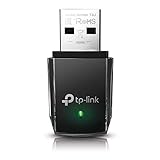
- Nano Adapters: These are incredibly small, typically measuring around 0.7 x 0.6 x 0.3 inches and weighing less than 5 grams. Once plugged in, they protrude only a quarter of an inch from your USB port. They are virtually invisible, making them ideal for laptops because you can leave them plugged in when sliding the computer into a sleeve or bag. However, their tiny internal antennas offer limited range.
- Standard Dongles (USB Stick): These look like traditional flash drives, measuring roughly 3 x 1 x 0.4 inches. They offer a middle ground, housing slightly larger internal antennas or small flip-up antennas. The major drawback is port blockage; on slim laptops or tightly packed desktop motherboards where USB ports are spaced only 2 to 4 millimeters apart, these wide sticks can easily block adjacent ports.
- High-Gain Antenna Adapters: These feature a main body connected to one or two external antennas that measure anywhere from 5 to 7 inches in length. Some even come with a dedicated desktop cradle and a 3-foot to 5-foot extension cable. While they take up physical space on your desk and break up a minimalist aesthetic, they provide the absolute best signal reception and speed over long distances.
Material Quality and Heat Dissipation
Because USB Wi-Fi adapters are continuously transmitting and receiving data, they generate a surprising amount of heat. Cheaply constructed adapters made of thin, unvented polycarbonate (plastic) can quickly reach internal temperatures of over 110°F (43°C) under heavy use, such as downloading large files or streaming 4K video.
When an adapter overheats, it triggers thermal throttling. This causes your connection speed to drop dramatically or causes the device to drop the connection entirely to cool down. When shopping, look for adapters that feature physical ventilation grilles molded into the plastic casing. For high-performance adapters (speeds over 1200 Mbps), premium models that utilize aluminum alloy housings are highly recommended, as the metal acts as a natural heatsink to dissipate heat away from the internal chipset.
Wireless Standards, Bands, and Real-World Speeds
The wireless standard determines how efficiently your adapter communicates with your router. Here is a breakdown of the terminology and numbers you will encounter:
- Wi-Fi 5 (802.11ac): Still highly common and very affordable (typically ranging from $10 to $25). Adapters labeled as “AC600” or “AC1300” use this standard. AC600 typically means up to 150 Mbps on the 2.4 GHz band and 433 Mbps on the 5 GHz band. AC1300 offers up to 400 Mbps on 2.4 GHz and 867 Mbps on 5 GHz. Keep in mind these are theoretical maximums; real-world speeds are usually 40% to 60% of these numbers.
- Wi-Fi 6 & 6E (802.11ax): The modern standard for high-bandwidth homes. Wi-Fi 6 operates on the 2.4 GHz and 5 GHz bands but manages crowded networks much better. Wi-Fi 6E introduces the ultra-fast, uncongested 6 GHz band. If you live in a dense apartment building with dozens of competing Wi-Fi networks, a Wi-Fi 6E adapter is crucial to escape signal interference.
- Dual-Band vs. Tri-Band: Dual-band adapters operate on 2.4 GHz (great for long-range but slower) and 5 GHz (fast but shorter range). Tri-band adapters add the 6 GHz band, offering an incredibly fast, clear highway for your data, provided your router supports it.
Price Tiers: What Do You Actually Get?
Understanding the price tiers of USB Wi-Fi adapters prevents you from overpaying for features you do not need, or under-buying and ending up with a frustratingly slow connection.
- Budget Tier ($10 – $15): These are almost exclusively Wi-Fi 5 (AC600) nano-sized adapters using a USB 2.0 interface. They are perfect for secondary home office PCs used strictly for word processing, emails, and light web browsing. They are not built for heavy gaming or constant video conferencing.
- Mid-Range Tier ($18 – $30): The sweet spot for most home users. Here you will find AC1300 to AX1800 (Wi-Fi 6) adapters featuring USB 3.0 interfaces. Many in this tier offer small adjustable external antennas or high-efficiency internal antennas. They handle zoom calls, 4K streaming, and everyday office work flawlessly.
- Premium Tier ($35 – $60+): Designed for power users, gamers, and creative professionals transferring large files. These are dual-band or tri-band Wi-Fi 6E/7 devices with massive high-gain dual antennas, aluminum construction, and dedicated desktop cradles. They maximize your local network speeds to match high-end fiber internet connections.
Operating System Compatibility and Driver Installation
A beautiful adapter is useless if your computer cannot talk to it. While most adapters advertise plug-and-play functionality for Windows 10 and Windows 11, the reality can be more complicated.
Many budget and mid-range adapters require specific drivers to work. If your computer does not have an active internet connection (which is why you are buying the adapter in the first place), downloading a driver can be a major headache. Look for adapters that advertise an “auto-driver” or “built-in driver.” These devices have a small, isolated flash memory partition containing the driver installer; when you plug it in, it appears as a temporary storage drive, allowing you to install the software offline in seconds. Additionally, if you are a macOS or Linux user, read user reviews carefully, as manufacturer support for these operating systems is often limited or requires complex manual terminal commands.
Warranty and Support Lifespan
USB Wi-Fi adapters are subject to physical wear and tear, constant heat cycles, and potential damage if bumped while plugged into a laptop. Established, reputable networking brands typically offer a 2-year or 3-year limited warranty along with active firmware updates to protect against security vulnerabilities. Conversely, generic, white-label brands sold online often promise “lifetime support” but lack physical offices, Western support phone numbers, or active websites where you can download updated drivers when your computer’s operating system updates.
Spec Checklist
Use this quick-reference table to match your specific home office needs with the correct hardware specifications.
| Specification / Feature | Budget Tier ($10 – $15) | Mid-Range Tier ($18 – $30) | Premium Tier ($35 – $60+) |
|---|---|---|---|
| Wireless Standard | Wi-Fi 5 (802.11ac) | Wi-Fi 5 or Wi-Fi 6 (802.11ax) | Wi-Fi 6E or Wi-Fi 7 |
| USB Interface | USB 2.0 | USB 3.0 | USB 3.0 / USB-C |
| Max Theoretical Speed | 150 Mbps to 600 Mbps | 1200 Mbps to 1800 Mbps | 1800 Mbps to 5400+ Mbps |
| Antenna Type | Internal / Nano | Foldable or Single External (3-5 dBi) | Dual High-Gain (5+ dBi) with Desktop Cradle |
| Best Use Case | Basic web browsing, email, old PCs | 4K streaming, home office, video calls | Online gaming, massive file transfers, fiber internet |
Red Flags to Avoid
When browsing products, watch out for these deceptive marketing tactics and design flaws:
- High Speed Claims on a USB 2.0 Plug: If an adapter claims speed capabilities of “1200 Mbps” but has a black USB 2.0 plastic insert instead of a blue USB 3.0 insert, run away. USB 2.0 has a maximum theoretical speed limit of 480 Mbps (and real-world speeds rarely exceed 300 Mbps). The manufacturer is advertising a speed the physical port cannot physically deliver.
- No Mention of Operating System Versions: If the listing lists compatibility with “Windows XP/7/8” but makes no mention of Windows 11 or modern macOS versions, the chipset inside is likely obsolete and will not work on your modern computer without causing system crashes (Blue Screens of Death).
- No Ventilation Holes on Large Dongles: High-speed adapters generate heat. If a mid-range stick adapter is completely sealed in a smooth, seamless plastic shell with no visible grilles or metal parts, it is highly prone to overheating and dropping your connection during long work sessions.
FAQ
Can I use a USB Wi-Fi adapter if my computer already has built-in wireless?
Yes. If your computer’s built-in wireless card is outdated (for example, if it only supports old 2.4 GHz networks) or is physically damaged, you can plug in a USB Wi-Fi adapter to upgrade your connection. You will just need to go into your operating system’s network settings and disable the old internal wireless card so the computer knows to route all internet traffic through the new USB device.
Does plugging a USB 3.0 adapter into a USB 2.0 port damage it?
No, it will not damage the adapter or your computer. USB standards are backward compatible. However, it will severely limit your speeds. A fast Wi-Fi 6 adapter capable of 1200 Mbps will be bottlenecked by the physical speed limits of the older USB 2.0 port, capping your actual performance to a fraction of its potential.
Why does my USB Wi-Fi adapter feel hot to the touch?
It is completely normal for these adapters to feel warm or hot during use, as they are compact radios transmitting and receiving high-frequency signals. However, if the adapter becomes too hot to comfortably hold, or if your internet connection drops whenever the device gets hot, it is a sign of poor heat dissipation. You should replace it with an adapter that features physical ventilation grilles or an aluminum chassis.
Is a USB Wi-Fi adapter as good as an internal PCIe card for desktop PCs?
For most home office tasks, video calls, and standard streaming, a high-quality USB adapter is indistinguishable from an internal PCIe card. However, PCIe cards plug directly into the motherboard and often feature much larger external antennas and massive metal heatsinks. If you are a competitive online gamer or need to maximize every megabit of a gigabit fiber connection, an internal PCIe card or a premium USB adapter with a dedicated desktop cradle is preferred.