Key takeaways
- Best overall for most buyers: amFilm Auto-Alignment OneTouch, for a guided installation and two clear-glass protectors.
- Best budget glass: JSAUX HD Tempered Glass, for low-priced Switch 2-specific two- and three-pack options.
- Best premium installation: dbrand Prism 2.0, for its drop-in application system and strong independent review evidence.
- Best midrange alternative: Genki Aegis Shield, for its two-piece kit and removable applicator frame.
- Best fit with a named case family: Spigen Glas.tR EZ Fit, with Spigen’s stated Liquid Air case compatibility.
- Best officially licensed multipack: PowerA Screen Protector 2-Pack, a straightforward Nintendo-licensed option.
- Best licensed thin-film alternative: HORI Premium Screen Protective Filter, if flexible film matters more than the feel of tempered glass.
- Best for premium warranty-oriented buyers: ZAGG Glass XTR4, though its high price makes it difficult to justify for ordinary scratch prevention.
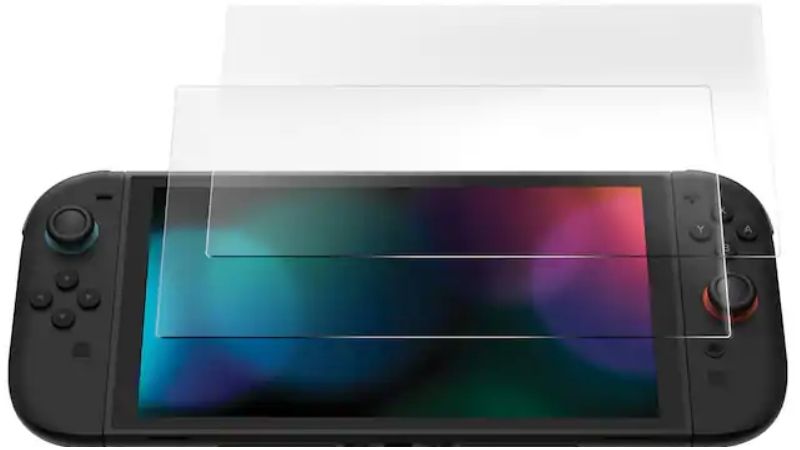
The best Switch 2 screen protectors add a replaceable scratch-resistant surface without making the Nintendo Switch 2’s 7.9-inch touchscreen harder to use. For most players, the amFilm Auto-Alignment OneTouch tempered-glass two-pack is a sensible first choice because its installation frame reduces positioning guesswork and leaves a spare for a second attempt. JSAUX’s HD tempered-glass pack is an equally practical lower-cost alternative, while the dbrand Prism 2.0 offers a more refined but substantially pricier fitting system. The essential rule is to buy the exact Nintendo Switch 2 version and apply it over Nintendo’s factory-installed anti-scattering film. Never peel that factory layer off.
Quick verdict: The best Switch 2 screen protectors for different buyers
Choose based on the problem you actually need to solve rather than a giant advertised hardness number. A well-fitted, cleanly installed, inexpensive clear-glass protector is usually more useful than an expensive one with features you cannot independently evaluate. The recommendations below compare real Switch 2-specific products, application methods, verified pack contents, materials, and manufacturer price listings checked in October 2026. Listed prices can change and are not promises of stock.
- Best overall for most buyers: amFilm Auto-Alignment OneTouch, for a guided installation and two clear-glass protectors.
- Best budget glass: JSAUX HD Tempered Glass, for low-priced Switch 2-specific two- and three-pack options.
- Best premium installation: dbrand Prism 2.0, for its drop-in application system and strong independent review evidence.
- Best midrange alternative: Genki Aegis Shield, for its two-piece kit and removable applicator frame.
- Best fit with a named case family: Spigen Glas.tR EZ Fit, with Spigen’s stated Liquid Air case compatibility.
- Best officially licensed multipack: PowerA Screen Protector 2-Pack, a straightforward Nintendo-licensed option.
- Best licensed thin-film alternative: HORI Premium Screen Protective Filter, if flexible film matters more than the feel of tempered glass.
- Best for premium warranty-oriented buyers: ZAGG Glass XTR4, though its high price makes it difficult to justify for ordinary scratch prevention.
Switch 2 screen protector comparison table
| Product | Verified type and kit | Best reason to choose | U.S. price status checked October 2026 | Main limitation |
|---|---|---|---|---|
| amFilm Auto-Alignment OneTouch | Clear tempered glass; 2-pack with alignment tools | Beginner-friendly alignment | Maker listed $19.99; maker reports insufficient stock | Clear gloss does not target room reflections |
| JSAUX HD Tempered Glass | Clear tempered glass; Switch 2 2-pack or 3-pack; guide frame | Low cost and spare sheets | Maker listed $9.99 for 2-pack; $11.99 for 3-pack | Basic frame; variant selection needs attention |
| dbrand Prism 2.0 | Clear tempered glass; 2-pack with application frame | Polished fit and reviewed application | $34.95 published reference; current checkout not verified | Significant premium over basic glass |
| Genki Aegis Shield | Clear tempered glass; 2-pack with slide-in applicator | Mid-priced, complete installation kit | Maker listed $19.99 | Applicator still requires dust-free preparation |
| Spigen Glas.tR EZ Fit (AGL10156) | Clear tempered glass; auto-alignment tray | Verified Spigen Liquid Air compatibility | Maker listed $39.99 | High maker price for common protective features |
| PowerA Screen Protector 2-Pack (NSAC0530-01) | Two screen protectors; cleaning and placement aids | Official Nintendo license and two-year limited warranty | Maker listed $12.99; availability may vary | Maker does not clearly identify it as tempered glass |
| HORI Premium Screen Protective Filter (NSX-059U) | Crystal-clear protective film; pull-tab application | Licensed flexible-film option | Maker listed $16.99 | Film is not the same as a thick glass layer |
| ZAGG Glass XTR4 | Premium tempered-glass protector with specialty coatings | Replacement program and additional coatings | Maker listed $59.99 | By far the most expensive option here |
Prices in this table are from manufacturer pages where available; dbrand’s figure is a published product-price reference, not a verified live offer. Watch for sales, marketplace bundles, retailer-specific SKUs, shipping charges, and discounts that change the value equation. Do not assume every product labeled “Switch” or “Switch OLED” comes in the same size as the Switch 2 version.
Our detailed picks and who should buy each one
amFilm Auto-Alignment OneTouch: Best overall for an easier first installation
The amFilm Auto-Alignment OneTouch is the most balanced pick for someone who wants a conventional, glossy Switch 2 tempered-glass protector without doing manual millimeter-by-millimeter positioning. TechMatte’s Switch 2-specific product listing specifies a 7.9-inch fit, two glass protectors, and protectors already seated in auto-alignment installation tools. Its kit also lists microfiber cloths, cleaning wipes, dry wipes, and instructions. The advantage is practical: you are less likely to ruin an otherwise usable sheet while trying to center it, and a second protector is already included.
The manufacturer advertises a roughly 30-second alignment process. Treat that as a claim about the tray operation, not the total time needed for a clean installation. Dust removal, handwashing, good lighting, and checking both edges can take longer. TechMatte also advertises 9H hardness, anti-fingerprint treatment, and touch responsiveness. Those are manufacturer-described characteristics, not independently verified drop resistance or quantified touchscreen latency.
Independent September 2026 testing by Deku Deals selected the OneTouch as a strong value pick, particularly for installation and basic durability. That outside evaluation is more meaningful than repeating marketing phrases, but it does not make this glass unbreakable. The glossy surface is designed primarily to preserve image clarity; it is not a specialized solution for bright overhead reflections.
Reasons to choose: Correct Switch 2 variant, guided installation, two protectors, published independent evaluation, and minimal complication. Reasons to skip: You prioritize glare suppression or have access to an equivalent JSAUX pack for much less. TechMatte showed $19.99 on its product page during this review but also reported insufficient stock, so check a retailer and the exact product name before purchasing.
JSAUX HD Tempered Glass: Best value for spare glass protectors
The JSAUX HD Tempered Glass Screen Protector for Switch Series is the value-minded choice for a family with more than one console or anyone who might need a retry. Unlike a generic marketplace listing that says only “for Switch,” the current manufacturer page lets you select a distinct Switch 2 option, including a two-pack listed at $9.99 and a three-pack listed at $11.99. Both selected variations use a guide frame, and JSAUX advertises a clear surface, an anti-fingerprint coating, and 9H pencil-hardness protection.
That pack-count difference matters more in everyday ownership than a tiny, unverified transparency percentage. A second sheet lets you start over if dust remains trapped at the edge. A three-pack is attractive when several people handle the same Switch 2, provided you store spare glass flat and keep its protective backing in place. Manufacturer descriptions claim approximately 99% transparency, but real-world perception also depends on fingerprints, ambient light, installation cleanliness, and the condition of the original screen.
There is one purchasing trap on the JSAUX page: the family also contains original Switch and Switch OLED versions. The product family’s broad label should not be interpreted as one interchangeable cut. Select the Switch 2 variant shown on the order page, and verify it again on the package. Nintendo explicitly says protectors made for the older Switch families do not fit Switch 2.
Reasons to choose: Cheap replacement sheets, a clear finish, a guided frame, and direct manufacturer configuration information. Reasons to skip: You want the most sophisticated one-step applicator or a surface engineered specifically to reduce reflections. Some marketplace listings for different JSAUX quantities may have different prices; the figures here refer to the manufacturer-selected two- and three-packs, not every JSAUX protector online.
dbrand Prism 2.0: Best premium application experience
dbrand Prism 2.0 is aimed at buyers who dislike applying screen protectors enough to pay substantially more for a polished installation experience. Its Switch 2 version is supplied as a two-pack of clear tempered-glass protectors with fitted application frames. Instead of hovering the glass over the display, the user lowers the prepared applicator over the console and follows the release process. The technique reduces alignment decisions, though it cannot eliminate the basic physics of dust and trapped air.
The strongest support for this pick comes from named independent testing rather than the brand’s promotional comparisons. In its September 2025 Prism 2.0 review, TechRadar reported an easy installation, clear image quality, and resistance to a scratch attempt involving keys. The reviewer also noted good fingerprint behavior and the high price. These findings apply to the review sample and method; they do not establish that every protector will survive a sharp point, a drop, or the same abuse over years.
Prism 2.0 makes sense for an owner who is concerned about visible edges, wants a tidy included kit, and uses the Switch 2 in handheld mode frequently. The main trade-off is value. A published price of about $34.95 is several times the manufacturer-listed cost of JSAUX’s basic pack. Spending extra does not transform a screen protector into a shockproof case or repair warranty for the console’s LCD.
Reasons to choose: Reviewed fitting process, two replacement opportunities, and a clear-glass look. Reasons to skip: You mainly need economical scratch protection. The published $34.95 reference was not confirmed as a live October 2026 checkout price; verify the current dbrand or retailer listing before using it in a price-sensitive recommendation.
Genki Aegis Shield: Best midrange alternative to dbrand
Genki Aegis Shield offers an appealing compromise between a basic glass pack and a premium installation system. Genki’s official listing identifies it as a Switch 2 tempered-glass two-pack and includes a slide-in application frame, microfiber cloth, screen wipes, and a squeegee. The manufacturer lists it at $19.99. Those tangible accessories help explain the product’s value: both of your installation attempts have a guided setup, with cleaning and bubble-smoothing tools available in the box.
Genki states that the glass has an oleophobic coating and is compatible with the Switch 2 dock. That compatibility claim is useful, but a screen protector can still interact with a particular grip case or shell that sits extremely close to the display edges. Verify the combination you own rather than treating any manufacturer’s dock-friendly statement as proof that all third-party cases will fit.
Genki’s marketing describes aggressive scratch and transparency tests. Consider those product claims, not tests performed by Geek Gaming Tricks. Independent coverage by The Verge and TechRadar has also discussed the Aegis Shield as an appealing mainstream clear-glass choice. That gives you some external context without claiming laboratory equivalence to more expensive protectors.
Reasons to choose: A complete two-sheet installation kit and lower listed price than dbrand or Spigen. Reasons to skip: A cheaper pack with a simpler guide frame already meets your needs. Buyers should also inspect the two sheets on arrival; any chip or cracked edge is reason to request a replacement before installation rather than placing damaged glass on the console.
Spigen Glas.tR EZ Fit: Best for a Spigen-centered setup
The Spigen Glas.tR EZ Fit for Nintendo Switch 2, SKU AGL10156, stands out for buyers already using a Spigen Liquid Air case. Its manufacturer’s page explicitly describes the protector as compatible with that case, a narrower and more useful statement than generic “case friendly” language. Spigen specifies tempered glass, an auto-alignment installation tray, a 9H rating, and an oleophobic surface coating.
Its guided tray uses the familiar place-and-press method. For a Switch 2 owner who tends to install their own accessories and wants matching brand instructions, that arrangement can be comforting. Yet guided trays are no longer unusual: cheaper competitors provide them too. More important than the brand is the quality of the alignment along the screen border and whether the case presses against the protector once attached.
Spigen’s direct U.S. listing showed $39.99, which creates a clear trade-off. The premium might make sense for someone who values an explicitly compatible Spigen case pairing or that specific brand’s support process, but it does not prove better scratch resistance than amFilm, Genki, or JSAUX. The company also lists a two-year manufacturing warranty; read its actual terms before assuming cracked glass from accidental damage qualifies.
Reasons to choose: Specific Switch 2 SKU, Spigen Liquid Air compatibility statement, an alignment tray, and recognizable support documentation. Reasons to skip: Price is your main deciding factor or you use an unrelated shell whose fit Spigen does not verify. The manufacturer page was reviewed for its device selector, so ordering the correct Nintendo Switch 2 option still matters.
PowerA Screen Protector 2-Pack: Best straightforward officially licensed option
PowerA’s product NSAC0530-01 provides a different kind of reassurance: it is officially licensed for Nintendo Switch 2. PowerA says the product has undergone Nintendo’s compatibility testing, and the manufacturer includes two screen protectors, a cleaning cloth, placement guides, dust-removal stickers, and an applicator. Its listed U.S. price was $12.99, with a two-year limited warranty.
This is a compelling choice for parents or buyers who value explicit platform compatibility over material buzzwords. You can identify the exact package by SKU, verify the Nintendo licensing seal, and use PowerA’s published support and application resources if the first attempt goes badly. It also avoids confusion with packs intended for the Switch OLED or first-generation console.
There is an important evidence limit: the PowerA product page identifies it as a “screen protector,” but does not unambiguously describe the material as tempered glass. Do not purchase on the assumption that it is glass or that a vague hardness claim applies. If rigid tempered glass is essential, choose a supplier that states the material explicitly or confirm with PowerA support. The two-pack remains reasonable for normal surface protection even without an independently verified materials claim.
Reasons to choose: Official Nintendo licensing, clear SKU, useful tools, two protectors, and a moderate manufacturer price. Reasons to skip: You specifically want guaranteed tempered-glass construction backed by a published material specification. Manufacturer category pages may show a future restock date, so check inventory instead of assuming immediate delivery.
HORI Premium Screen Protective Filter: Best licensed flexible-film option
HORI’s Premium Screen Protective Filter for Nintendo Switch 2, SKU NSX-059U, is for players who deliberately prefer a thin flexible film to a glass layer. HORI describes its material as a crystal-clear, Japan-made high-quality film and notes Nintendo licensing, a pull-tab installation method, scratch resistance, and a blue-light-cut feature. The company listed it at $16.99.
The decision here is about feel and material, not a universal ranking. Flexible film is generally less rigid than tempered glass, and the exact scratch protection depends on the coating and test method. HORI advertises “9H Super Hardness,” but that wording alone does not make the material identical to glass or establish protection against a particular drop. The blue-light-cut feature may also be irrelevant to a player who values maximum color fidelity; there is no reason to claim medical benefits without clinical evidence.
HORI’s pull-tab application can appeal to someone who dislikes handling rigid glass around the edges. However, make sure you are buying the Premium NSX-059U, not the less expensive standard Screen Protective Filter NSX-071U or the separate Ultimate Anti-Glare filter. Each has a different product name, intended feature set, and price.
Reasons to choose: Thin-film construction, official license, clear SKU, and a manufacturer-supported application method. Reasons to skip: You want the replaceable rigidity of tempered glass or the highest value per protector. This pick is a material alternative, not a claim that film exceeds glass in impact protection.
ZAGG Glass XTR4: Best for buyers focused on replacement service and extra features
ZAGG Glass XTR4 occupies the high end of this list. Its official Nintendo Switch 2 listing describes a premium tempered-glass protector with advanced blue-light filtration, an anti-reflective treatment, and an installation method intended to reduce trapped dust. ZAGG also advertises a replacement program and lists the product at $59.99. For somebody who already uses ZAGG service and values the replacement arrangement, those may be meaningful extras.
At this price, however, you should be exceptionally cautious about interpreting marketing. ZAGG claims strength up to 11 times that of a reference glass in a specified company test. That is not proof the Switch 2 display itself becomes eleven times more drop-resistant, and it should not be compared as if it were the same test used by amFilm, Spigen, or other brands. The cost of replacement shipments, eligibility, registration, and terms should be checked before assigning a dollar value to the service.
The anti-reflective treatment deserves a brief mention because it is part of the product, but this general roundup does not rank screen protectors on glare reduction. That more specific comparison belongs in a dedicated anti-glare guide, where reflection performance and image-quality trade-offs can be evaluated on common terms. Here, XTR4 earns a place mainly as a premium-feature alternative.
Reasons to choose: You deliberately want ZAGG’s extra coatings and replacement program and accept the initial expense. Reasons to skip: You only need a clear barrier against routine scratches; several verified glass packs cost a fraction as much. Confirm the terms of any replacement offer rather than treating “lifetime” language as unlimited no-cost shipping or console repair insurance.
How we selected these Switch 2 screen protectors
This is a specification- and source-based buying guide. Geek Gaming Tricks did not run its own scratch machine, measure touchscreen latency, perform drop tests, or install these eight products on a test console. We first required a real product listing explicitly supporting Nintendo Switch 2, then reviewed the manufacturer’s described material, number of protectors, alignment aids, coating claims, case compatibility, warranty language, and published price where available.
We treated Nintendo support instructions as the controlling source for the device itself. For independent perspective on installation and durability, we considered clearly attributed published reviews and testing from Deku Deals, The Verge, and TechRadar. A reviewer’s observed result is evidence about that review sample, not a universal guarantee. We rejected unsupported “unbreakable” promises, did not convert 9H marketing language into a Mohs-scale result, and did not assign invented lab scores.
The eight picks intentionally have different purchase reasons. Two products can both be glossy tempered glass and still deserve separate coverage if one offers materially better pack value and another offers a well-documented case fit or installation workflow. Conversely, buying all eight would be unnecessary. Pick one correct-size protector kit and a good carrying case, rather than stacking multiple adhesive protectors.
What matters before buying a Switch 2 screen protector
Exact Switch 2 fit matters more than a universal label
Switch 2 uses a 7.9-inch capacitive touchscreen with 1920-by-1080 resolution, according to Nintendo’s specifications. That is not the same cutout as the 6.2-inch original Switch display or 7.0-inch OLED model. Nintendo’s U.S. support page explicitly states that protectors intended for the Switch, Switch OLED, or Switch Lite will not fit Switch 2. A retailer’s product family page may offer every size: choose the Switch 2 variant in its selector, then check the box when it arrives.
Clear tempered glass versus flexible film
Clear tempered glass is the default recommendation if you prioritize a familiar smooth touch feel and a replaceable scratch-resistant layer. It can crack from impacts even when the underlying screen survives, which is sometimes the very point of a sacrificial layer; it still cannot guarantee survival of a drop. Film is thinner and may suit a particular installation preference, but its flexibility alone should not be interpreted as better or worse on every scratch test. Material, thickness, adhesive, edge finish, and coating all matter, and most suppliers do not publish standardized comparable results.
Understand what 9H really says
When a protector listing says “9H,” the seller often refers to a pencil-hardness scale or related surface-coating test. That is different from nine on the Mohs mineral-hardness scale. A 9H label is therefore not a certified measure of screen survival during a fall, and two brands’ 9H claims may involve different testing. Give more weight to documented material, precise fit, clear instructions, and reliable return options than to a lone hardness badge.
Coatings, reflections, and image quality
Clear glossy glass tends to preserve the familiar look of Nintendo’s LCD but may reflect windows and lamps. An oleophobic coating can make fingerprints easier to wipe away; it does not mean fingerprints can never appear. Matte treatments reduce the sharpness of reflected images by scattering light and can introduce visible texture or affect perceived contrast. Some anti-reflective clear coatings aim to reduce reflections with fewer matte trade-offs, but outcomes vary. If glare is your primary problem, select from a separately researched anti-glare shortlist rather than assuming all products here behave alike.
Cases, docks, and edge pressure
Most Switch 2 protectors are thin enough to be marketed as dock compatible, yet a tight-fitting third-party grip shell can lift an edge if it presses into the glass. After installation, test the exact case you own without forcing anything. Look for a slight clearance gap between a case lip and the applied protector. Do not repeatedly push the console into a resistant dock, and do not treat a maker’s general compatibility claim as independent confirmation of every possible accessory combination.
Price per usable sheet, not price per package
Compare price per included protector, the number of complete application sets, and the cost of a failed installation. A $10 three-pack can be an excellent buy if every sheet is correct and the frame works. A $20 kit with two preloaded alignment trays may be less frustrating for a first-timer. A $60 single premium unit needs a compelling service or specialty-coating benefit to overcome the difference. Shipping, return policy, and warranty conditions can matter as much as a small advertised discount.
How to install a screen protector without damaging your Switch 2
Before doing anything, turn off the console, disconnect its power accessories, and read the instructions for the specific protector. Nintendo’s guidance for its own included protectors provides useful cleaning and alignment principles, but an auto-alignment tray may require a different release sequence. Follow your accessory manufacturer’s kit steps when they differ.
- Leave Nintendo’s built-in film alone. The factory-installed anti-scattering film is part of the display’s safety arrangement. Nintendo specifically warns not to remove it. Apply your additional protector on top of it.
- Prepare a clean, flat surface. Wash and dry your hands, use bright indirect light, and keep pets, fabric lint, and loose dust away from the work area. Set the console flat on a soft but stable surface.
- Remove surface particles gently. Use the supplied microfiber cloth and dust-lifting stickers as directed. Do not scrape the display, soak the seams, or use harsh solvents that the manufacturer has not approved.
- Check orientation before peeling backing. Confirm the kit says Switch 2, line up the top and bottom, and identify any pull tabs. If the frame requires Joy-Con 2 removal, follow the manufacturer’s direction and release the controllers properly rather than bending them aside.
- Apply in one controlled motion. Seat the alignment frame or manually lower the protector as directed. Avoid sliding adhesive glass around repeatedly; doing so can bring in lint or distort the adhesive.
- Smooth only normal trapped air. Use a microfiber cloth or the supplied squeegee with gentle pressure. If a bubble contains visible dust, do not press harder against the touchscreen. Follow the product’s removal-and-retry guidance or use your spare.
- Inspect the result before docking. Check the full perimeter for lifted edges, test touch input on the console, and confirm any protective shell or dock can be used without extra force. Follow the maker’s stated settling period if one is provided.
A small air bubble may settle, but a dark particle underneath the glass usually will not disappear by pushing on it. If the protector arrives cracked, stop and seek a replacement. If you discover damage to the console display itself, a screen protector does not replace professional repair.
Frequently asked questions
Does Nintendo Switch 2 already have a screen protector?
It has a factory-installed anti-scattering film on the display, which Nintendo says must remain in place. That layer is designed to help prevent glass fragments from scattering if the display is damaged; it is not a removable third-party scratch-protector accessory. Nintendo explicitly allows adding a separate screen protector over it. Never try to peel off the original film before installing tempered glass.
Will a Switch OLED screen protector fit Switch 2?
No. The screen sizes and panel geometry differ. Nintendo’s U.S. support guidance names Switch, Switch OLED, and Switch Lite protectors as incompatible with Switch 2. Even if a listing says “Switch series,” confirm its actual Switch 2 model or selected variant before opening the package.
Is glass always better than a film screen protector?
Not for every preference. Clear tempered glass is a strong mainstream choice for a smooth, replaceable scratch-resistant surface. A flexible film can be thinner and may suit a specific fit or touch preference. Manufacturer hardness numbers are not a common standardized performance ranking. Consider fit, application, and replacement options rather than assuming one material is universally indestructible.
Do screen protectors reduce touchscreen responsiveness or 120Hz support?
A correctly fitted protector designed for capacitive touchscreens should allow normal touch use, but there is no published common latency benchmark across these eight products. A screen protector does not change the display controller’s supported refresh rates or unlock higher frame rates. If you notice missed touches after installation, first check for incorrect fit, debris, trapped air, or edge lifting before blaming the console’s software.
Can I use a glass protector with a travel case or dock?
Usually yes when the protector is cut for Switch 2 and the accessory allows clearance, but this is not a guarantee for every grip shell and aftermarket dock. Spigen specifically describes compatibility with its Liquid Air case, while Genki states dock compatibility for Aegis Shield. Other accessory combinations need their own fit check. Never force the console past an obstruction.
How many spare screen protectors should I buy?
For one console, a two-pack is sensible because it covers a failed first installation or future replacement. A three-pack makes sense for multiple consoles or people who prefer extras. More sheets are not automatically better if the product has a poor fit or you already have an intact protector installed. Check that every spare remains sealed and undamaged in storage.
Are matte screen protectors better for outdoor gaming?
They can scatter reflections more effectively, which may improve usability in some bright environments, but they can also introduce haze or change the perceived texture of text and colors. A clear anti-reflective coating is another approach with different trade-offs. Neither material overcomes direct sunlight in every situation. This guide focuses on general scratch protection; dedicated anti-glare products should be evaluated separately for actual reflection performance.
Does a screen protector make my Switch 2 drop-proof?
No. It can help protect the exposed surface against some scratches and may absorb certain minor impacts, but it cannot guarantee that a display, housing, or internal components will survive a fall. Even expensive glass with dramatic strength marketing may crack. A well-fitting carrying case and careful handling address types of travel damage a flat sheet cannot.
Final thoughts
The smartest way to shop for the best Switch 2 screen protectors is to start with the exact Switch 2 fit and a clean installation system, then pay more only for a feature you will actually use. Choose amFilm OneTouch if you want an easy guided application; JSAUX HD glass if you want dependable pack value; Genki if you prefer a complete midrange kit; and dbrand Prism 2.0 if paying extra for the fitting experience is worthwhile. PowerA is the clearly documented officially licensed two-pack, while HORI offers an intentional film alternative. Spigen and ZAGG make sense for narrower compatibility or premium-service preferences, not because a high price automatically proves greater screen safety. Whatever you choose, keep Nintendo’s factory anti-scattering film in place and verify current U.S. stock and price before ordering.