Key takeaways
- Recumbent position reduces lower-back strain while still engaging both upper and lower body simultaneously.
- Adjustable seat accommodates a range of heights without compromising stride quality.
- Eight resistance levels may plateau for users who progress quickly past intermediate intensity.
A home gym on a tight footprint is the real challenge most buyers face, and hybrid exercise machines attempt to solve it by merging upper- and lower-body movement into a single platform. The category is crowded with equipment that claims quiet operation, full-body engagement, and compact storage, yet the actual experience varies wildly depending on stride geometry, resistance quality, and frame stability. A buyer comparing a sub-$200 unit against a $750 model is not choosing between the same machine at different price points—they are choosing between fundamentally different engineering trade-offs.
What separates a good hybrid elliptical from a mediocre one is whether the resistance system stays smooth under load, whether the stride length actually accommodates your height without hip pinching, and whether the arm exercisers add meaningful upper-body work or merely exist on the spec sheet. This guide compares the published specifications and owner-reported experiences across eight models so you can match the machine to your body, your space, and your training goals without guessing.
Our top picks





As an Amazon Associate we earn from qualifying purchases at no extra cost to you. Ratings are shown as listed on Amazon.
Quick Picks
| Product | Best for | Price |
|---|---|---|
| THERUN Recumbent Elliptical | Full-body low-impact workouts in a recumbent position | $629.99 |
| CURSOR Elliptical | Budget buyers who need a compact footprint | $189.99 |
| Sunny Health & Fitness Upright Elliptical | Reliable mid-range upright training with heart-rate feedback | $499.99 |
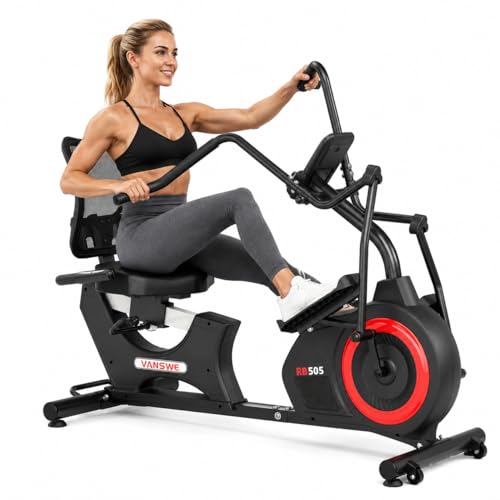
| VANSWE Recumbent Cross Trainer | Rehabilitation and seated cross-training comfort | $599.99 |
| Niceday Elliptical | Tall users who need a longer stride | $749.99 |
| Dripex Elliptical | Maximum resistance levels at the lowest price | $188.98 |
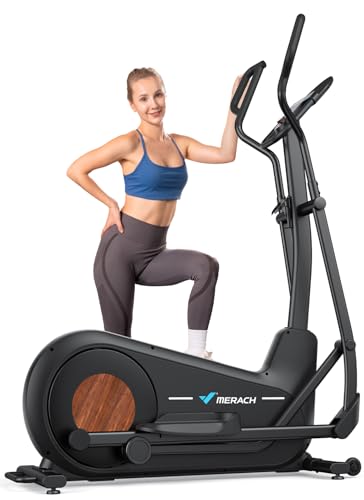
| MERACH Elliptical | High weight capacity with a long stride | $599.99 |
| Gazelle Glider | Lateral and cardiovascular movement variety | $519.99 |
How We Picked
We narrowed this list by weighting four criteria: stride length relative to the user’s height (too short creates a choppier gait and limits hip extension), resistance range and system type (magnetic drives generally stay quieter and smoother than friction-based options), frame stability at the stated weight capacity, and whether the arm exercisers or pulse sensors add functional training value rather than serving as marketing extras. Price-to-spec ratio was a final tiebreaker when two machines sat in the same tier.
The 8 Best Hybrid Exercise Machines in 2026
THERUN Recumbent Elliptical
Designed for users who want elliptical-style leg drive without standing fully upright, the THERUN pairs a 15.8-inch stride with adjustable arm and leg exercisers in a recumbent configuration. The adjustable seat lets you dial in leg extension, and the eight resistance levels cover light recovery sessions through moderate cardio. The gray housing blends into a living room better than chrome-heavy competitors.
- Recumbent position reduces lower-back strain while still engaging both upper and lower body simultaneously.
- Adjustable seat accommodates a range of heights without compromising stride quality.
- Eight resistance levels may plateau for users who progress quickly past intermediate intensity.
CURSOR Elliptical
The CURSOR is a compact upright elliptical with a magnetic drive, an LCD monitor, and a choice between 12-inch and 14-inch stride configurations. At under $200, it claims a 350-pound weight capacity, which is generous for the price bracket. Owners highlight the quiet operation as the standout feature for shared living spaces.
- Hyper-quiet magnetic system makes it one of the least disruptive machines in its price class.
- Two stride options let shorter and mid-height users find a closer fit.
- 350-pound capacity limits heavier users who need more structural headroom.
Sunny Health & Fitness Upright Magnetic Elliptical
Sunny Health & Fitness has built a reputation on no-frills reliability, and this upright magnetic elliptical continues that tradition. The pulse sensor handles grip gives heart-rate feedback without requiring a separate chest strap, and the magnetic resistance system is inherently low-maintenance. It lacks a long spec sheet, which is the point for buyers who want a straightforward cardio tool.
- Pulse sensor keeps heart-rate monitoring simple and strap-free.
- Magnetic drive requires almost no upkeep beyond occasional dusting.
- Fewer programmable options and no built-in apps compared to pricier competitors.
VANSWE Recumbent Elliptical Cross Trainer
The VANSWE targets the same seated-workout audience as the THERUN but with a slightly different frame geometry and cross-trainer naming. The arm exercisers allow a pulling motion that complements the leg drive, making it a genuine full-body machine for users who cannot or prefer not to stand. It sits at a mid-range price that positions it against standing ellipticals with fewer features.
- Seated position removes balance concerns entirely, ideal for users with joint or stability issues.
- Arm exercisers provide meaningful upper-body load rather than passive rail-holding.
- Larger floor footprint than compact standing models, which matters in small apartments.
Niceday Elliptical with 18-Inch Stride
At $749.99, the Niceday commands the highest price in this group, and its 18-inch stride is the justification. Taller users who feel cramped on 12- or 14-inch machines get a more natural walking arc here. The premium build and longer stride target a specific body type, so shorter buyers will not benefit from the extra inches.
- 18-inch stride delivers the most natural gait cycle in this lineup for users over 5’8″.
- Premium build quality and smooth resistance translate to a quieter, more stable workout.
- Price is the highest here, and the long stride is wasted on shorter riders.
Dripex Elliptical
The Dripex squeezes sixteen resistance levels and a 13.2-pound flywheel into a sub-$190 frame, making it the spec-sheet value leader. The LCD monitor with pulse reading adds basic feedback, and the magnetic drive keeps noise low. For budget-conscious buyers who want resistance range above all else, this is the first option to consider.
- Sixteen resistance levels and a weighted flywheel at this price are unusual and practical for progression.
- Pulse monitor and LCD screen provide functional feedback without a subscription.
- Compact frame may feel less stable at the highest resistance settings during intense intervals.
MERACH Elliptical
MERACH combines a 19-inch stride with a 400-pound weight capacity and sixteen resistance levels, making it the most inclusive hybrid exercise machine in this group for larger or taller users. The hyper-quiet magnetic drive system handles the power demands of the longer stride without adding noise, and the high capacity gives structural confidence.
- 400-pound capacity and 19-inch stride together serve a user segment most competitors ignore.
- Sixteen resistance levels paired with magnetic drive keep transitions smooth and quiet.
- The wide footprint and tall profile demand more dedicated floor space than compact alternatives.
Gazelle Glider
The Gazelle takes a different mechanical approach: instead of a fixed elliptical arc, the Glider plate lets you shift between lateral, forward, and sprinter-style movements. This versatility makes it appealing for users bored with repetitive elliptical patterns or those who want variety in a single session. The price sits mid-range, but the movement options are unmatched here.
- Multiple plate positions (Pacer, Sprinter, standard) offer genuine movement variety in one machine.
- Lateral motion engages the glutes and inner thighs differently than standard ellipticals.
- Not a traditional elliptical path, so users who specifically want an elliptical gait may feel underwhelmed.
Buying Guide
Stride Length Is Non-Negotiable
Every elliptical and cross-trainer has a fixed stride arc, and if that arc is shorter than your natural walking or running gait, you will feel it in every hip and knee. As a rough rule, users under 5’5″ do fine on 12- to 14-inch strides; those between 5’6″ and 5’10” want 15 to 17 inches; anyone taller benefits from 18 inches or more. The difference between 15.8 inches and 19 inches is the difference between a slightly shorted step and a fully extended leg drive.
Resistance Count Only Matters If the System Stays Smooth
Sixteen levels sound better than eight on a spec sheet, but magnetic resistance quality varies enormously between price tiers. A flywheel that weighs too little (under ten pounds) tends to feel jerky when you crank the level up. Look for machines that pair magnetic systems with a meaningful flywheel mass—anything over twelve pounds is a reasonable starting point for smooth, quiet power delivery.
Decide Whether You Actually Need the Arm Exercisers
Some buyers want a true full-body machine; others want leg-driven cardio and will ignore the handles. Recumbent models like the THERUN and VANSWE make arm engagement the default, while upright ellipticals let you skip the handles entirely. If your goal is upper-body work, verify that the arm exercisers provide actual resistance rather than just a swing path, because several budget models offer free-moving rails that do nothing for your shoulders.
Our Verdict
The MERACH is the strongest all-around hybrid exercise machine in this group: a 19-inch stride, sixteen resistance levels, 400-pound capacity, and a quiet magnetic drive make it the most versatile single pick for the widest range of body types and fitness goals. For buyers who need the lowest entry price without sacrificing resistance range, the Dripex at $188.98 is the clear budget choice. However, if your primary concern is seated comfort—whether for rehabilitation, balance issues, or simple preference—the VANSWE recumbent cross trainer is the better fit regardless of its higher price.
FAQ
What makes a machine “hybrid” versus a standard elliptical?
A hybrid exercise machine typically combines the elliptical leg motion with meaningful upper-body engagement through arm exercisers or handles that resist against your push-pull. Standard ellipticals often include static rails for balance without offering actual upper-body workload, so the distinction matters if you want full-body conditioning in one session.
Is magnetic resistance always quieter than friction-based?
Yes, in practice. Magnetic systems use no physical contact between the resistance mechanism and the flywheel, eliminating the rubbing and groaning that friction pads produce over time. The trade-off is that magnetic units are more expensive to manufacture, which is why they appear in mid-range and premium machines rather than the cheapest tier.
Can I use a hybrid elliptical for rehabilitation?
Recumbent models like the THERUN and VANSWE remove balance demands from the equation and support your back, making them suitable for lower-body rehabilitation under professional guidance. Standing ellipticals still require you to support your own weight upright, which may be inappropriate during certain recovery phases.
Do I need a chest strap if the machine has a pulse sensor?
Grip pulse sensors give a reasonable estimate during steady-state effort but can drop signal during high-intensity intervals or if your hands move. For casual tracking, the built-in sensor is sufficient; for structured training zones or heart-rate-based workouts, a chest strap paired with a watch or app remains more accurate.