Key takeaways
- 24GB GDDR7 VRAM handles 4K gaming, creation, and local AI with ease.
- Flagship performance that rivals desktop rigs in a portable form.
- Premium displays like OLED and Mini LED at high refresh rates.
- Portability options, from the slim Razer Blade 16 to external GPU enclosures.
What's inside
The mobile RTX 5090 is the most powerful laptop GPU you can buy, and its 24GB of GDDR7 VRAM is a big part of the story. That generous memory pool is what lets these machines handle 4K textures, ray tracing, high-resolution content creation, and local AI workloads that would choke lesser cards, all from a portable chassis.
In this review we dig into why RTX 5090 laptop VRAM matters, how it translates into real-world performance, and which flagship machines deliver it best. From the Alienware Area-51 to the Razer Blade 16 and ASUS ROG Strix SCAR 18, we’ll help you understand what that 24GB buffer actually buys you.
As an Amazon Associate we earn from qualifying purchases at no extra cost to you. Product prices and availability are accurate as of the date shown and are subject to change.


🎮 Get More From Your Setup — Free
Prime Gaming gives you free PC games every month, in-game loot, and a free Twitch channel sub — plus fast free shipping on all the gear above. New members get a 30-day free trial.
Watch: Rtx 5090 Laptop Vram: Review & Buyer’s Guide — Video Review
Design & Build
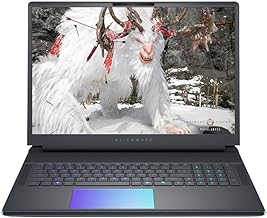
RTX 5090 laptops are premium, statement machines. The Alienware 18 Area-51 and ASUS ROG Strix SCAR 18 go big with 18-inch high-refresh displays and elaborate cooling to feed their power-hungry GPUs. The Lenovo Legion Pro 7i and MSI Stealth 18 HX AI balance performance with refined chassis and stunning OLED or Mini LED panels. The standout for portability is the Razer Blade 16 (2026), which crams an RTX 5090 into a remarkably slim CNC aluminum body with a 16-inch QHD+ 240Hz OLED. The ASUS ROG XG Mobile even delivers desktop RTX 5090 power in an external Thunderbolt 5 enclosure.
Performance
The 24GB of GDDR7 VRAM is the enabler for everything these laptops do well. In gaming, it prevents the texture-streaming stutters that plague lower-VRAM cards at 4K and ultra settings, and it gives ray tracing and DLSS 4 room to breathe. For creators, that buffer handles large video timelines, high-resolution 3D scenes, and demanding renders without spilling into system memory. And for local AI work, 24GB lets you run sizable models that simply won’t fit on 8GB or 16GB GPUs. Paired with Intel Ultra 9 or Ryzen AI processors and 32GB to 64GB of DDR5, these machines are true desktop replacements.
Pros & Cons
- 24GB GDDR7 VRAM handles 4K gaming, creation, and local AI with ease.
- Flagship performance that rivals desktop rigs in a portable form.
- Premium displays like OLED and Mini LED at high refresh rates.
- Portability options, from the slim Razer Blade 16 to external GPU enclosures.
- Very high prices place these firmly in halo territory.
- Short battery life and significant heat under full load.
- Overkill for many gamers who play at 1080p or 1440p.
Alternatives to Consider
If 24GB of VRAM exceeds your needs, an RTX 5080 laptop like a Razer Blade 18 config offers flagship-adjacent performance for less. Gamers focused on 1440p can save substantially with an RTX 5070 Ti machine that still delivers excellent frame rates. And if you want desktop RTX 5090 power without committing to a giant laptop, the ASUS ROG XG Mobile external GPU pairs with a thinner notebook over Thunderbolt 5.
Frequently Asked Questions
How much VRAM does the RTX 5090 laptop GPU have?
The mobile RTX 5090 features 24GB of GDDR7 VRAM, the largest buffer in NVIDIA’s laptop lineup, which is ideal for 4K gaming, content creation, and local AI workloads.
Do I actually need 24GB of VRAM for gaming?
For pure gaming at 1440p, no, a lower-VRAM card suffices. The 24GB buffer pays off at 4K with max textures and ray tracing, and especially for creative and AI tasks.
Which RTX 5090 laptop is best for portability?
The Razer Blade 16 (2026) is the standout, fitting an RTX 5090 into a slim OLED machine. For maximum screen and cooling, the 18-inch Alienware and ROG Strix SCAR models lead instead.
Can these laptops run local AI models?
Yes. The 24GB of VRAM lets RTX 5090 laptops load sizable AI models locally that won’t fit on 8GB or 16GB GPUs, making them appealing for developers and researchers on the move.
Verdict
The RTX 5090’s 24GB of GDDR7 VRAM is what elevates these laptops from fast to genuinely future-proof, unlocking 4K gaming, heavy creation, and local AI in one portable package. The Razer Blade 16 wins for portability while the Alienware Area-51 and ROG Strix SCAR 18 lead on raw screen and cooling. If you need this much power, the VRAM is the reason to buy in.