Key takeaways
- Cooling performance: Large 280mm and 360mm AIOs generally lead on peak cooling for the hottest CPUs, while premium dual-tower air coolers close the gap and match smaller AIOs on most mainstream chips.
- Price and value: High-end air coolers like the Thermalright Peerless Assassin deliver flagship-rivaling performance for a fraction of an AIO’s cost, making air the clear value winner.
- Reliability: Air coolers have no pump or liquid to fail and effectively last the life of the PC, whereas an AIO adds a pump as a potential long-term point of failure.
- Noise: Both can run quietly, but AIOs move heat to radiator fans away from the socket, while large air coolers spin slowly and silently; results depend heavily on the specific model and fan curve.
- Clearance and fit: Tall air coolers can block tall RAM or hit case side panels, while AIOs free up space around the socket at the cost of needing radiator mounting room in the case.
- Aesthetics: AIOs offer a cleaner look around the CPU and often feature RGB or display-equipped pump heads, whereas a big air cooler is a more utilitarian, if increasingly attractive, centerpiece.
The choice between an all-in-one liquid cooler and a high-end air cooler is one of the most enduring debates in PC building, and in 2026 it is closer than ever. Modern air coolers have grown so capable that they rival many liquid units, while AIOs have become more reliable and quieter, so the decision now hinges on your case, your CPU, aesthetics, and how much you value simplicity versus cooling headroom.
Getting this right matters because your cooler determines not only temperatures but also noise, clearance with memory and cases, long-term reliability, and the look of your build. Whether you are taming a power-hungry flagship CPU or building a quiet, no-fuss everyday machine, understanding the real trade-offs between AIO and air cooling helps you spend sensibly and keep your system running cool for years.
Our top picks


As an Amazon Associate we earn from qualifying purchases at no extra cost to you. Ratings are shown as listed on Amazon.
⚡ Save on Your Next PC — Amazon Prime
Prime members get fast free shipping on the systems above, plus early access to Prime Day & Black Friday PC deals. New members get a 30-day free trial.
Watch: AIO vs Air Cooler: Which Is Best in 2026? — Video Review
Quick Verdict
Choose an AIO liquid cooler if you have a hot flagship CPU, want the cleanest look, or have limited clearance around the socket; choose a high-end air cooler if you value maximum reliability, simplicity, and value, since top air coolers handle the majority of CPUs superbly at a lower price with fewer potential points of failure.
Key Differences
- Cooling performance: Large 280mm and 360mm AIOs generally lead on peak cooling for the hottest CPUs, while premium dual-tower air coolers close the gap and match smaller AIOs on most mainstream chips.
- Price and value: High-end air coolers like the Thermalright Peerless Assassin deliver flagship-rivaling performance for a fraction of an AIO’s cost, making air the clear value winner.
- Reliability: Air coolers have no pump or liquid to fail and effectively last the life of the PC, whereas an AIO adds a pump as a potential long-term point of failure.
- Noise: Both can run quietly, but AIOs move heat to radiator fans away from the socket, while large air coolers spin slowly and silently; results depend heavily on the specific model and fan curve.
- Clearance and fit: Tall air coolers can block tall RAM or hit case side panels, while AIOs free up space around the socket at the cost of needing radiator mounting room in the case.
- Aesthetics: AIOs offer a cleaner look around the CPU and often feature RGB or display-equipped pump heads, whereas a big air cooler is a more utilitarian, if increasingly attractive, centerpiece.
AIO Liquid Coolers: Peak Cooling and a Clean Look
An all-in-one liquid cooler is the pick when you are running a hot, high-wattage CPU or want the tidiest build possible. Units like the ARCTIC Liquid Freezer III Pro 360 move heat from a compact pump block to a large radiator, delivering the cooling headroom that flagship processors demand under sustained heavy loads. By keeping the bulk of the cooler away from the socket, an AIO also frees up clearance for tall memory and makes the area around the CPU look clean and uncluttered.
AIOs are especially attractive for showcase builds, since many feature RGB lighting or small screens on the pump head that become a focal point behind a glass side panel. Larger 280mm and 360mm radiators can often run their fans slowly and quietly while still taming heat, which suits overclocked or power-hungry systems. The trade-offs are a higher price and the pump as a long-term point of failure, but for hot chips and clean aesthetics, a quality AIO is hard to beat.
High-End Air Coolers: Reliability and Unbeatable Value
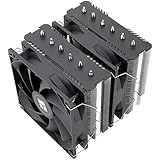
A premium air cooler is the smart choice for most builders, offering flagship-rivaling performance with rock-solid reliability at a low price. Dual-tower designs such as the Thermalright Peerless Assassin 120 SE and Phantom Spirit 120SE, along with quieter options like the be quiet! Pure Rock Pro 3, use multiple heat pipes and large fin stacks to keep even demanding CPUs comfortably cool. For the vast majority of processors, they deliver all the cooling you need and often run whisper-quiet.
Their greatest strength is simplicity: with no pump or liquid, there is nothing to leak or wear out, so a good air cooler effectively lasts the life of the system. They are also dramatically cheaper than comparable AIOs, freeing budget for other components. The main considerations are physical size, since tall coolers can interfere with tall RAM or narrow cases, and a slightly less clean look. For value, dependability, and no-fuss cooling, high-end air is tough to argue with.
Which Should You Buy?
- For a hot flagship or overclocked CPU: pick a large AIO like a 360mm unit for the extra cooling headroom under heavy sustained loads.
- For maximum reliability and value: pick a high-end air cooler, since it has no pump to fail and costs far less.
- For a clean, showcase build: pick an AIO for the uncluttered socket area and RGB or display-equipped pump head.
- For a tight budget on a mainstream CPU: pick a dual-tower air cooler like the Peerless Assassin for flagship-rivaling cooling at a low price.
- For small cases with RAM clearance concerns: check dimensions carefully; an AIO frees socket space, but confirm radiator fit, while a low-profile air cooler may suit compact builds better.
Frequently Asked Questions
Is an AIO or air cooler better for cooling?
For the hottest flagship CPUs a large 280mm or 360mm AIO usually offers the most cooling headroom, but premium dual-tower air coolers match smaller AIOs and handle most mainstream processors superbly, so for many builds the difference is minor.
Are air coolers more reliable than AIOs?
Generally yes. Air coolers have no pump or liquid, so there is nothing to leak or wear out, and they effectively last the life of the PC. An AIO adds a pump that is a potential long-term point of failure, though quality units are dependable.
Do high-end air coolers really rival AIOs?
For most CPUs, yes. Coolers like the Thermalright Peerless Assassin deliver performance close to mid-size AIOs at a fraction of the cost. The gap only widens meaningfully with the hottest, highest-wattage chips under sustained load.
What about clearance and case fit?
Tall air coolers can block tall RAM or hit narrow case side panels, so check height and memory clearance. AIOs free up socket space but require room to mount the radiator, so verify your case supports the radiator size you want.
Final Verdict
In 2026 you cannot go wrong either way, but the right pick depends on your build. An AIO is the choice for hot flagship CPUs, showcase aesthetics, or tight socket clearance, offering peak cooling and a clean look. A high-end air cooler wins on reliability, simplicity, and value, handling most processors beautifully with nothing to fail. For the majority of builders a premium air cooler is the sensible default, with a quality AIO reserved for the hottest chips or the cleanest-looking rigs.