Key takeaways
- Bandwidth: DDR5 starts around 4800MHz and commonly runs 6000–6400MHz, roughly doubling the theoretical throughput of typical 3200–3600MHz DDR4 kits.
- Latency: DDR4 wins on raw CAS latency (CL16 vs CL30+ nanoseconds are closer than they look), so real-world gaming gaps are often single-digit percentages, not the 2x the bandwidth implies.
- Platform: DDR5 is mandatory on AM5 and current Intel boards; DDR4 only works on AM4 and older LGA1700 — the sockets are physically keyed differently and are not interchangeable.
- Price: DDR4 kits are mature and cheap, while DDR5 has fallen dramatically from launch and a 32GB kit is now affordable enough that the premium rarely justifies a dead-end platform.
- Features: DDR5 moves power management onto the module (on-DIMM PMIC) and supports on-die ECC and higher future capacities, giving it far more headroom as apps grow hungrier.
- Longevity: DDR5 is the memory standard for the rest of this platform generation, so a DDR4 build is effectively a final upgrade rather than a foundation you can extend later.
Memory is one of those parts nobody thinks about until a build refuses to boot, and in 2026 the DDR5-versus-DDR4 question is no longer academic. Every current-generation platform — Intel’s latest Core chips and AMD’s AM5 socket — has committed to DDR5, while DDR4 clings on through mature, discounted AM4 and older LGA1700 boards that still deliver excellent gaming frames for the money.
Choosing between them isn’t about which spec sheet looks prettier; it’s about which socket your CPU sits in and how long you want the platform to stay relevant. Pick wrong and you either overspend on bandwidth a budget chip can’t use, or you box yourself into a dead-end socket right as game engines start leaning on faster memory. Here’s how the two actually differ where it counts.
Our top picks


As an Amazon Associate we earn from qualifying purchases at no extra cost to you. Ratings are shown as listed on Amazon.
⚡ Save on Your Next PC — Amazon Prime
Prime members get fast free shipping on the systems above, plus early access to Prime Day & Black Friday PC deals. New members get a 30-day free trial.
Watch: DDR5 vs DDR4 RAM: Does It Matter in 2026? — Video Review
Quick Verdict
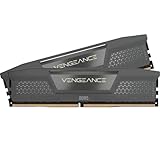
DDR5 is the clear pick for any new AM5 or current Intel build you plan to keep for years — a 6000MHz kit like the G.SKILL Flare X5 or CORSAIR Vengeance DDR5 is the sweet spot. DDR4 still makes total sense on an existing AM4 board or a bargain LGA1700 combo, where a solid 3600MHz kit stretches your budget toward the GPU that actually moves your frame rate.
Key Differences
- Bandwidth: DDR5 starts around 4800MHz and commonly runs 6000–6400MHz, roughly doubling the theoretical throughput of typical 3200–3600MHz DDR4 kits.
- Latency: DDR4 wins on raw CAS latency (CL16 vs CL30+ nanoseconds are closer than they look), so real-world gaming gaps are often single-digit percentages, not the 2x the bandwidth implies.
- Platform: DDR5 is mandatory on AM5 and current Intel boards; DDR4 only works on AM4 and older LGA1700 — the sockets are physically keyed differently and are not interchangeable.
- Price: DDR4 kits are mature and cheap, while DDR5 has fallen dramatically from launch and a 32GB kit is now affordable enough that the premium rarely justifies a dead-end platform.
- Features: DDR5 moves power management onto the module (on-DIMM PMIC) and supports on-die ECC and higher future capacities, giving it far more headroom as apps grow hungrier.
- Longevity: DDR5 is the memory standard for the rest of this platform generation, so a DDR4 build is effectively a final upgrade rather than a foundation you can extend later.
DDR5 RAM: The Future-Proof Standard
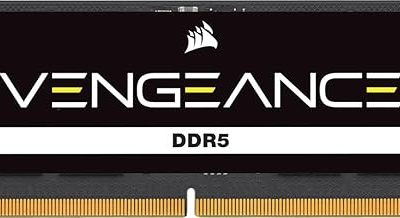
DDR5 is where the industry has settled, and in 2026 that momentum matters more than any single benchmark. Kits like the CORSAIR Vengeance DDR5 32GB and the AMD-EXPO-tuned G.SKILL Flare X5 6000MT/s run comfortably on AM5, feeding the memory-sensitive Ryzen chips their preferred sweet spot and unlocking the tightened timings that separate a good build from a great one.
Beyond speed, DDR5 brings structural advantages: on-module power regulation, on-die ECC for cleaner high-frequency operation, and a roadmap toward 48GB and 64GB single sticks. If you’re assembling a new machine you intend to keep through several GPU upgrades, DDR5 is the only choice that keeps the door open. It’s the right call for gamers, creators, and anyone building on a current socket.
DDR4 RAM: The Value Veteran
DDR4 refuses to die because it’s genuinely good enough for the vast majority of gamers. A tuned 3600MHz CL16 kit on an AM4 Ryzen or a discounted 12th-gen Intel board delivers frame rates within a whisker of DDR5 in most titles, and the savings can be redirected straight into a faster graphics card — which does far more for your gaming experience than memory bandwidth ever will.
The catch is that DDR4 is a terminal investment. You’re buying into a platform that won’t see new CPUs, so there’s no upgrade path beyond a final chip swap. If you already own an AM4 board, or you’re chasing the lowest possible cost-per-frame for a 1080p or 1440p rig, DDR4 is the smart, unglamorous pick. Just go in knowing it’s the last stop on that road.
Which Should You Buy?
- For For a brand-new AM5 or current-Intel build: pick DDR5 because it’s mandatory on the socket and future CPU drops will only push memory demands higher.
- For For an existing AM4 machine: pick DDR4 because your board physically can’t take DDR5 and a fast 3600MHz kit is the best bang-for-buck upgrade.
- For For memory-sensitive Ryzen gaming: pick DDR5 at 6000MHz with EXPO because that frequency lines up perfectly with the CPU’s fabric for peak frames.
- For For the tightest possible budget: pick DDR4 and put every dollar you save toward a stronger GPU, which moves your frame rate far more than RAM speed.
- For For creators and heavy multitaskers: pick DDR5 because the extra bandwidth and larger future capacities genuinely help rendering, compiling, and running many apps at once.
Frequently Asked Questions
Is DDR5 actually faster for gaming in 2026?
Yes, but the margin is modest — usually low single digits to low double digits at typical resolutions, since gaming is far more GPU-bound than memory-bound. DDR5’s advantage grows at 1080p with a very fast GPU and in CPU-heavy titles.
Can I put DDR5 in a DDR4 motherboard?
No. The two standards use different physical notch positions and voltage regulation, so a DDR5 stick won’t fit a DDR4 slot. The memory type is dictated entirely by your motherboard and CPU platform.
How much RAM do I need in 2026?
32GB (2x16GB) is the current sweet spot for gaming and light creative work. 16GB still runs most games but leaves little headroom, while 64GB is worth it only for heavy content creation, virtualization, or professional workloads.
Does DDR5 latency hurt performance?
DDR5’s higher CAS numbers look alarming but the faster clock offsets much of the penalty, so effective latency is close to DDR4. The extra bandwidth generally outweighs the latency gap in real workloads.
Final Verdict
For any new build in 2026, DDR5 is the answer — it’s the platform standard, prices have normalized, and a 6000MHz kit sets you up for the entire generation. Reserve DDR4 for the specific case where you already own an AM4 or older board and want maximum value; there it’s still a savvy, budget-stretching choice, just understand you’re buying the last upgrade that socket will ever get.