Key takeaways
- Prioritize the GPU above everything: At this budget, the graphics card is the single biggest determinant of playable frame rates. A discrete card like an RX 580 or RTX 2060 will outperform a faster CPU paired with weak graphics every time.
- Treat 16GB of RAM as the floor: Modern titles routinely exceed 8GB of system memory. Anything less means stuttering in open-world games, and DDR4 is cheap enough that 16GB should be standard even here.
- Insist on an SSD boot drive: A 256GB or 512GB NVMe or SATA SSD transforms load times and general responsiveness. Mechanical-only configurations feel dated the moment you power them on.
- Check the power supply and upgrade path: Budget builds often ship with unbranded PSUs and limited headroom. Confirm there’s a standard ATX layout and enough wattage to accept a better GPU later, since that’s the upgrade you’ll want first.
- Understand what “Renewed” actually means: Refurbished units can offer excellent value, but verify the warranty terms and accept that you’re buying older-generation silicon. Match the deal to your tolerance for risk, not just the price tag.
What's inside
Shopping for a gaming PC under $500 in 2026 means navigating a market full of vague spec sheets, recycled office towers wearing RGB fans, and listings that quietly swap a discrete GPU for integrated graphics. The frustration is real: two machines can carry nearly identical marketing language and deliver wildly different frame rates, and the difference usually comes down to one component the listing barely mentions.
This guide cuts through that. We’ve focused on prebuilts that genuinely land near or under the $500 mark, prioritizing real gaming GPUs, adequate RAM, and SSD storage over cosmetic extras. Below you’ll find our current picks, a practical buying checklist, and honest assessments of what each system can and can’t do at 1080p.
As an Amazon Associate we earn from qualifying purchases at no extra cost to you. Product prices and availability are accurate as of the date shown and are subject to change.




⚡ Save on Your Next PC — Amazon Prime
Prime members get fast free shipping on the systems above, plus early access to Prime Day & Black Friday PC deals. New members get a 30-day free trial.
Watch: Best Gaming PC Under $500 — Video Review
How to Choose Gaming PC Under $500
- Prioritize the GPU above everything: At this budget, the graphics card is the single biggest determinant of playable frame rates. A discrete card like an RX 580 or RTX 2060 will outperform a faster CPU paired with weak graphics every time.
- Treat 16GB of RAM as the floor: Modern titles routinely exceed 8GB of system memory. Anything less means stuttering in open-world games, and DDR4 is cheap enough that 16GB should be standard even here.
- Insist on an SSD boot drive: A 256GB or 512GB NVMe or SATA SSD transforms load times and general responsiveness. Mechanical-only configurations feel dated the moment you power them on.
- Check the power supply and upgrade path: Budget builds often ship with unbranded PSUs and limited headroom. Confirm there’s a standard ATX layout and enough wattage to accept a better GPU later, since that’s the upgrade you’ll want first.
- Understand what “Renewed” actually means: Refurbished units can offer excellent value, but verify the warranty terms and accept that you’re buying older-generation silicon. Match the deal to your tolerance for risk, not just the price tag.
The Best Picks Reviewed
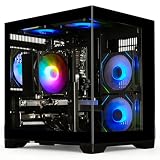
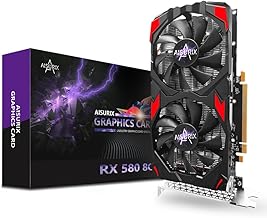
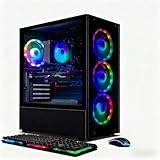
STGAubron Core i7 with RX 580 8GB
The RX 580 remains a genuinely capable 1080p card, and pairing it with a Core i7, 16GB of RAM, and a 512GB SSD makes this one of the more balanced configurations in the sub-$500 space. Expect comfortable high settings in esports titles and medium-to-high in most AAA games released through roughly 2023.
STGAubron Ryzen 5 2600 with RTX 2060 6GB
If you want ray tracing and DLSS support on a budget, the RTX 2060 is the entry point, and it pairs sensibly with a six-core Ryzen 5 2600. This is the pick for buyers who care about newer titles and are willing to lean on upscaling to hold 60fps.
YAWYORE Ryzen 5 5600GT with 1TB NVMe
This one leans on Zen 3 integrated graphics rather than a discrete card, which limits it to lighter and older titles at modest settings. The upside is a modern platform, 16GB of RAM, and a spacious 1TB NVMe drive, making it a sound base for adding a GPU down the line.
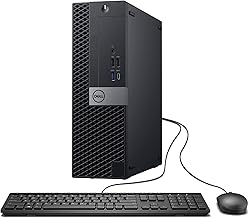
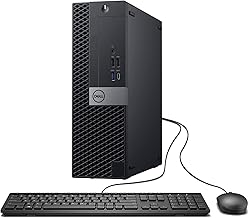
Dell Gaming Tower with GT 1030 (Renewed)
The 7th-gen i5-7500 and GT 1030 combination is best understood as a light gaming and general-purpose machine rather than a modern AAA performer. It’s a reasonable renewed buy for emulation, older libraries, and esports at reduced settings, especially with 16GB of RAM and an SSD included.
suevery Prebuilt Gaming Desktop
This is a straightforward budget tower that competes primarily on price, and the specification varies by listing configuration. Verify the exact GPU and storage before purchasing, and treat it as an entry point to be upgraded rather than a finished build.
Frequently Asked Questions
Can a $500 gaming PC really run modern games?
Yes, at 1080p with realistic expectations. Esports titles like Valorant, CS2, and Fortnite will run comfortably above 60fps on the discrete-GPU picks here, while recent AAA releases typically require medium settings, upscaling, or both.
Should I buy a prebuilt or build my own at this price?
Building your own usually delivers better components per dollar, but budget prebuilts benefit from bulk pricing on older GPUs and often undercut a DIY parts list at this tier. If you’re new to PC hardware or want a warranty and a working machine out of the box, a prebuilt is the pragmatic choice.
Is a renewed or refurbished gaming PC safe to buy?
Generally yes, provided it’s sold through a program with a defined return window and warranty. The main tradeoff is component age rather than reliability, so weigh the discount against how long you expect the machine to stay relevant.
What should I upgrade first on a budget gaming PC?
The graphics card, almost without exception. Confirm your power supply has the wattage and connectors to support a newer card, then consider additional storage; CPU upgrades rarely offer good value on these platforms.
Final Thoughts
For most buyers, the STGAubron build with the RX 580 offers the best all-round balance of GPU muscle, memory, and storage at this budget, while the RTX 2060 configuration is the smarter pick if DLSS and ray tracing matter to you. Those planning to upgrade incrementally should look at the YAWYORE Ryzen 5 5600GT, which provides a modern platform ready for a discrete graphics card whenever your budget allows.