Key takeaways
- GPU first, always: At this budget the graphics card determines nearly everything about your experience. An RTX 5070 is the realistic sweet spot for 1440p high settings; an RTX 5070 Ti is a genuine bonus if you can find it in range. Be skeptical of anything built around a 4GB or 8GB last-gen card at full price.
- Don’t overpay for the CPU: A Ryzen 7 9700X, R7-8700F, or Core Ultra 7 265F will not bottleneck a 5070-class card in real games. Spending extra for a higher-tier chip at this budget usually means the GPU got downgraded to pay for it — a bad trade.
- 32GB DDR5 is the new baseline: 16GB still runs most titles, but modern open-world games, background apps, and streaming overlays eat memory fast. If two systems are close in price and one has 32GB, take it. DDR5 speed matters less than capacity here.
- Check storage capacity, not just type: Nearly everything ships with an NVMe SSD now, but 512GB fills up after three or four modern installs. Aim for 1TB minimum, and confirm there’s a free M.2 slot so you can expand later without cloning your OS drive.
- Look past the spec sheet: Power supply wattage and certification, case airflow, and warranty length separate a machine that lasts five years from one that throttles in year two. Established brands typically cost a bit more for exactly this reason — factor it into your value math.
What's inside
Shopping for a gaming PC under $1,500 in 2026 is trickier than it looks. The RTX 50-series has settled into the mainstream, DDR5 is standard, and prebuilt prices swing wildly week to week — which means two machines with nearly identical spec sheets can differ by $400 depending on brand markup, storage tier, and how much the builder skimped on the power supply or case airflow. Add in older listings that still float around with last-gen GPUs at current-gen prices, and it’s easy to overpay for hardware that will feel dated within a year.
This guide cuts through that. We’ve focused on systems that land realistically inside a $1,500 ceiling, prioritizing GPU strength first (since that’s what actually drives frame rates), then CPU balance, memory capacity, and storage. Below you’ll find our current picks, a short buying checklist, honest reviews of each machine, and answers to the questions we get asked most. Prices on prebuilts move constantly, so always confirm the live listing before you commit.
As an Amazon Associate we earn from qualifying purchases at no extra cost to you. Product prices and availability are accurate as of the date shown and are subject to change.




⚡ Save on Your Next PC — Amazon Prime
Prime members get fast free shipping on the systems above, plus early access to Prime Day & Black Friday PC deals. New members get a 30-day free trial.
Watch: Best Gaming PC Under $1500 — Video Review
How to Choose Gaming PC Under $1500
- GPU first, always: At this budget the graphics card determines nearly everything about your experience. An RTX 5070 is the realistic sweet spot for 1440p high settings; an RTX 5070 Ti is a genuine bonus if you can find it in range. Be skeptical of anything built around a 4GB or 8GB last-gen card at full price.
- Don’t overpay for the CPU: A Ryzen 7 9700X, R7-8700F, or Core Ultra 7 265F will not bottleneck a 5070-class card in real games. Spending extra for a higher-tier chip at this budget usually means the GPU got downgraded to pay for it — a bad trade.
- 32GB DDR5 is the new baseline: 16GB still runs most titles, but modern open-world games, background apps, and streaming overlays eat memory fast. If two systems are close in price and one has 32GB, take it. DDR5 speed matters less than capacity here.
- Check storage capacity, not just type: Nearly everything ships with an NVMe SSD now, but 512GB fills up after three or four modern installs. Aim for 1TB minimum, and confirm there’s a free M.2 slot so you can expand later without cloning your OS drive.
- Look past the spec sheet: Power supply wattage and certification, case airflow, and warranty length separate a machine that lasts five years from one that throttles in year two. Established brands typically cost a bit more for exactly this reason — factor it into your value math.
The Best Picks Reviewed
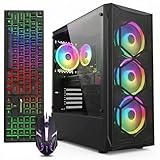
KOTIN RTX 5070 / Ryzen 7 9700X
This is the value benchmark for the category: a current-gen RTX 5070 paired with a Ryzen 7 9700X, 32GB of DDR5, and a 1TB SSD is a genuinely balanced 1440p configuration with no obvious weak link. Boutique-builder support is thinner than a major OEM’s, so it’s the pick for buyers comfortable troubleshooting on their own.
MSI Codex Z2 (A8NVP-436US)
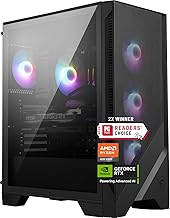
MSI pairs the same RTX 5070 with an R7-8700F and doubles the storage to a 2TB NVMe drive, which is the single most useful upgrade at this tier if you keep a large library installed. You also get front USB Type-C and a well-ventilated chassis, making this the most complete out-of-box package on the list.
Lenovo Legion Tower 5i
The Legion Tower 5i is the performance leader here thanks to its RTX 5070 Ti, which delivers a meaningful step up at 1440p and makes 4K playable in many titles with upscaling enabled. It’s the most likely of these systems to push past $1,500 depending on configuration, so watch the listing carefully — at the right price it’s the best long-term buy.
Alienware Aurora
Dell’s Aurora brings an RTX 5070 and Core Ultra 7 265F in a well-engineered chassis with proper thermal design and real service support behind it. You pay a brand premium for that polish, so it makes the most sense for buyers who value warranty coverage and a phone number to call over squeezing out the last few percent of performance per dollar.
CyberPowerPC Ryzen 5 5500 / RX 6500 XT
This is a budget entry point, not a $1,500 machine — the Ryzen 5 5500 and 4GB RX 6500 XT are aimed at 1080p esports titles like Valorant, CS2, and Rocket League rather than modern AAA releases. Buy it only if your actual budget is far below the cap; otherwise the spare money is much better spent on an RTX 5070 system.
Frequently Asked Questions
Is an RTX 5070 enough for 1440p gaming in 2026?
Yes. The RTX 5070 handles 1440p at high settings in essentially every current title, often well above 100 FPS in competitive games, with DLSS available to push demanding ray-traced titles higher. It’s the most sensible GPU target at this budget.
Should I buy a prebuilt or build my own?
Building your own can still save $100–200 and gives you full control over the power supply and case. But prebuilts at this tier now ship with competitive component pricing plus a single-point warranty, so if you don’t want to troubleshoot compatibility or RMA parts individually, a prebuilt is a reasonable call.
How much RAM do I actually need?
32GB is the comfortable answer for 2026 and gives you headroom for streaming, browser tabs, and Discord running alongside a demanding game. 16GB still works for most single-tasking gaming, but it’s increasingly the spec you’ll want to upgrade first.
Do these systems come with a monitor, keyboard, or mouse?
Generally no — configurations vary and peripherals are usually sold separately, though some listings bundle a basic keyboard and mouse. Budget an additional $150–300 for a decent 1440p high-refresh monitor, since pairing an RTX 5070 with an old 1080p 60Hz panel wastes most of what you paid for.
Final Thoughts
If you want the strongest raw performance and can stretch to the top of the budget, the Lenovo Legion Tower 5i and its RTX 5070 Ti is the pick that will stay relevant longest. For the best all-around package at a more comfortable price, the MSI Codex Z2 wins on its 2TB drive and solid chassis, while the KOTIN RTX 5070 build delivers the most raw hardware per dollar for buyers willing to trade brand-name support for value. Any of the three will handle 1440p gaming well into the next GPU cycle — just verify current pricing before you check out.