Key takeaways
- Ray tracing: NVIDIA holds a clear lead in heavy ray-traced and path-traced games.
- Upscaling: DLSS is generally regarded as more mature and higher quality than AMD’s FSR, though FSR keeps closing the gap.
- Frame generation: NVIDIA’s multi-frame generation on RTX 50 cards can multiply frame rates further than AMD’s implementation.
- Raw rasterization value: AMD frequently offers more traditional performance per dollar at the mid-range.
- VRAM: AMD often provides more video memory at a given price, which helps at high resolutions and with heavy textures.
- Software features: NVIDIA’s ecosystem includes extras like broadcast and creator tools that appeal to streamers.
What's inside
Choosing a graphics card in 2026 means picking a side in the NVIDIA versus AMD battle, and the stakes have never been higher. NVIDIA’s GeForce RTX 50 series leans on AI features like DLSS and multi-frame generation plus class-leading ray tracing, while AMD’s Radeon RX 9000 series counters with strong raw rasterization performance and aggressive pricing that often delivers more frames per dollar. The right pick depends on the games you play and the features you value.
This comparison breaks down how the two brands stack up on raw performance, ray tracing, upscaling, efficiency, and value in 2026. Whether you are buying a standalone card or a prebuilt system built around an RTX or Radeon GPU, understanding these differences will help you spend your money where it counts for your kind of gaming.
As an Amazon Associate we earn from qualifying purchases at no extra cost to you. Product prices and availability are accurate as of the date shown and are subject to change.




⚡ Save on Your Next PC — Amazon Prime
Prime members get fast free shipping on the systems above, plus early access to Prime Day & Black Friday PC deals. New members get a 30-day free trial.
Watch: NVIDIA vs AMD GPUs in 2026 — Video Review
Quick Verdict
NVIDIA remains the choice for cutting-edge features, leading ray tracing, and the most mature upscaling and frame generation, making it ideal if you play the latest visually demanding titles and want every technology enabled. AMD delivers outstanding rasterization value, often matching or beating NVIDIA in traditional performance at a lower price, which makes it the smart pick for high frame rates on a budget. Pick NVIDIA for features and ray tracing, AMD for pure price-to-performance.
Key Differences
- Ray tracing: NVIDIA holds a clear lead in heavy ray-traced and path-traced games.
- Upscaling: DLSS is generally regarded as more mature and higher quality than AMD’s FSR, though FSR keeps closing the gap.
- Frame generation: NVIDIA’s multi-frame generation on RTX 50 cards can multiply frame rates further than AMD’s implementation.
- Raw rasterization value: AMD frequently offers more traditional performance per dollar at the mid-range.
- VRAM: AMD often provides more video memory at a given price, which helps at high resolutions and with heavy textures.
- Software features: NVIDIA’s ecosystem includes extras like broadcast and creator tools that appeal to streamers.
NVIDIA GeForce for Gaming
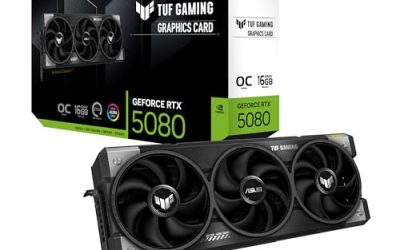
NVIDIA’s RTX 50 series, from the RTX 5070 up to the RTX 5080 and beyond, is the technology leader. If you want the best ray tracing, the highest-quality DLSS upscaling, and multi-frame generation that can push triple-digit frame rates in demanding games, GeForce is the platform to beat. Prebuilt systems built around RTX 5070 or 5080 cards deliver a premium, feature-complete experience with every modern rendering trick available.
The trade-off is price. NVIDIA typically commands a premium at each tier, and some cards offer less VRAM than similarly priced Radeon rivals. For gamers who prioritize the latest features, ray tracing, and content creation alongside gaming, that premium is often worth it, but value-focused buyers may feel the pinch.
AMD Radeon for Gaming
AMD’s Radeon RX 9000 series, including cards like the RX 9070 XT, focuses on delivering excellent traditional rasterization performance at prices that undercut NVIDIA. For gamers chasing high frame rates at 1440p or 4K in the vast majority of titles that are not ray-tracing showcases, Radeon offers a compelling amount of raw power and VRAM for the money. FSR upscaling and frame generation add smoothness across a broad range of hardware.
Where AMD trails is in the heaviest ray-traced and path-traced games and in upscaling image quality, where DLSS still holds an edge. But for the buyer who wants the most frames per dollar and plenty of VRAM for future-proofing, Radeon makes a very strong case in 2026.
Which Should You Buy?
- Choose NVIDIA if: ray tracing and the best-in-class upscaling and frame generation are important to you.
- Choose NVIDIA if: you stream or create content and want its broadcast and creator software.
- Choose AMD if: you want the most raw rasterization performance per dollar.
- Choose AMD if: you value extra VRAM for high resolutions and longevity.
- Either works if: you play mostly esports and competitive titles where both brands deliver very high frame rates.
Frequently Asked Questions
Is NVIDIA or AMD better for ray tracing?
NVIDIA holds a meaningful lead in ray tracing, especially in the most demanding path-traced titles. AMD has improved a lot, but if heavy ray tracing is a priority, GeForce is the stronger choice in 2026.
Does AMD offer better value than NVIDIA?
Often yes, in traditional rasterized performance. AMD frequently delivers more frames per dollar and more VRAM at a given price. NVIDIA’s premium buys you superior ray tracing, DLSS quality, and frame generation, which may justify the extra cost depending on your games.
Is DLSS really better than FSR?
DLSS is generally considered to produce cleaner image quality, particularly at lower base resolutions, thanks to its AI hardware. FSR has narrowed the gap significantly and runs on more hardware, so the practical difference depends on the game and settings.
How much VRAM do I need in 2026?
For 1440p gaming, 12GB is a comfortable minimum, and 16GB is ideal for 4K and heavy textures. AMD’s tendency to include more VRAM at each price tier is a genuine advantage for future-proofing your card.
Final Verdict
The NVIDIA versus AMD choice in 2026 comes down to features versus value. NVIDIA GeForce is the pick for the best ray tracing, upscaling, and frame generation, plus a rich creator ecosystem, if you are willing to pay a premium. AMD Radeon rewards value-focused gamers with strong rasterization, generous VRAM, and lower prices. Decide which matters more, cutting-edge features or maximum frames per dollar, and buy accordingly.