Key takeaways
- Refresh rate: 144Hz is the competitive baseline, 180Hz to 240Hz is the sweet spot, and higher only helps if your GPU can push the frames.
- Response time: look for 1ms MPRT or GtG to minimize ghosting and smearing during fast movement.
- Resolution: 1080p is easiest to run at high frame rates, while 1440p adds sharpness if your GPU can keep up.
- Panel type: IPS delivers better color and viewing angles, while fast VA and TN panels can hit high speeds affordably.
- Adaptive sync: FreeSync or G-Sync compatibility eliminates screen tearing for a cleaner competitive image.
What's inside
In a fast-paced shooter, the monitor is not just where you watch the action, it is a competitive weapon. A high refresh rate shows you more frames per second, which means smoother tracking, quicker target acquisition, and less motion blur when you flick to a target. For FPS players, a fast, responsive display can be the difference between winning a duel and respawning.
The good news for 2026 is that high-refresh gaming monitors have never been more affordable, with 180Hz and even 240Hz panels available at prices that once bought a basic 60Hz screen. We compared FPS-focused monitors on refresh rate, response time, resolution, and value. Here is how to choose, followed by five standout picks for competitive play.
As an Amazon Associate we earn from qualifying purchases at no extra cost to you. Product prices and availability are accurate as of the date shown and are subject to change.





⚡ Save on Your Next PC — Amazon Prime
Prime members get fast free shipping on the systems above, plus early access to Prime Day & Black Friday PC deals. New members get a 30-day free trial.
Watch: Best Gaming Monitor for FPS — Video Review
How to Choose
- Refresh rate: 144Hz is the competitive baseline, 180Hz to 240Hz is the sweet spot, and higher only helps if your GPU can push the frames.
- Response time: look for 1ms MPRT or GtG to minimize ghosting and smearing during fast movement.
- Resolution: 1080p is easiest to run at high frame rates, while 1440p adds sharpness if your GPU can keep up.
- Panel type: IPS delivers better color and viewing angles, while fast VA and TN panels can hit high speeds affordably.
- Adaptive sync: FreeSync or G-Sync compatibility eliminates screen tearing for a cleaner competitive image.
The Best Picks Reviewed
SANSUI 24.5-Inch 240Hz Gaming Monitor
Purpose-built for FPS, this 24.5-inch panel runs at up to 300Hz and 240Hz in FHD 1080p, an ideal size and speed for competitive shooters. The blistering refresh rate keeps fast targets crisp, and the value pricing makes 240Hz genuinely accessible.
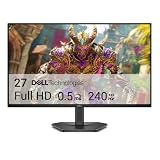
Dell 27 240Hz Gaming Monitor (SE2726HG)
This 27-inch FHD IPS display pairs a 240Hz refresh rate with AMD FreeSync Premium and dual HDMI plus DisplayPort inputs. The IPS panel adds color quality on top of the speed, and the trusted Dell build makes it a reliable competitive pick.
Samsung 27 Odyssey G5 QHD Gaming Monitor
For players who want sharper visuals, the Odyssey G5 steps up to QHD 1440p resolution while keeping gaming-grade responsiveness. It is the pick for FPS fans with a capable GPU who do not want to sacrifice detail for speed.
LG 32GS60QC UltraGear Curved 180Hz Monitor
This 32-inch curved QHD panel runs at 180Hz with a 1ms response and even includes a built-in FPS counter and crosshair. The immersive 1000R curve and competitive features make it a great choice for players who want size and speed together.
SANSUI 27-Inch Curved 240Hz Gaming Monitor
A budget-friendly 27-inch curved option, this 1080p panel delivers 240Hz, HDR, and 130% sRGB coverage on a metal stand. The high refresh rate and immersive curve at an aggressive price make it a strong entry point into fast FPS gaming.
Frequently Asked Questions
Is 240Hz worth it for FPS games?
If your GPU can push frame rates near 240fps in your games, the extra smoothness and reduced motion blur are noticeable and helpful in competitive play. If your system tops out around 144fps, a 144Hz or 180Hz monitor is the smarter, more balanced buy.
What resolution is best for competitive shooters?
1080p remains the competitive favorite because it is easy to run at very high frame rates and keeps targets large and clear on smaller screens. 1440p offers a sharper image and is a great choice if your GPU can sustain high frames at that resolution.
Does response time matter more than refresh rate?
Both matter, but they solve different problems. Refresh rate controls how many frames you see per second, while response time controls how quickly pixels change to prevent ghosting. For FPS, aim for a high refresh rate and a 1ms response together.
Do I need FreeSync or G-Sync for FPS gaming?
Adaptive sync is not required but strongly recommended, as it eliminates screen tearing without the input lag of traditional V-Sync. Most modern gaming monitors support FreeSync, and many are also G-Sync compatible, so you get a cleaner image either way.
Final Thoughts
For competitive FPS, prioritize refresh rate and response time, then decide how much resolution your GPU can handle. A 24.5-inch 240Hz 1080p panel is the classic esports choice, while a 27-inch or 32-inch QHD display balances speed with sharper visuals. Match the monitor to your graphics card, enable adaptive sync, and you will see, and hit, targets faster than ever.