Key takeaways
- Resolution: 3440×1440 (UWQHD) is the sweet spot; 32:9 super-ultrawides like the 49-inch Samsung double it for max immersion but demand a strong GPU.
- Panel type: QD-OLED (Alienware AW3425DW) offers perfect blacks and stunning color; fast IPS/VA costs less with great motion.
- Refresh rate: 165-240Hz keeps competitive play sharp; even 180Hz feels fluid for most.
- Curve radius: A 1500R-1800R curve wraps the extra width comfortably into your vision at desk distance.
- GPU pairing: UWQHD pushes ~34% more pixels than 1440p; plan on an RTX 5070-class card or better for high frame rates.
What's inside
Ultrawide monitors trade the black bars of 16:9 for a sweeping 21:9 field of view that pulls you into racing sims, open worlds, and flight games. The 3440×1440 (UWQHD) resolution has become the enthusiast standard, offering more horizontal real estate than 1440p without the GPU tax of 4K. In 2026, curved panels and QD-OLED have made these screens more immersive than ever.
We ranked ultrawides on panel quality, refresh rate, curve, and value, from a sub-$250 high-refresh bargain to a jaw-dropping QD-OLED and a super-ultrawide. Here are the best ultrawide gaming monitors of 2026.
As an Amazon Associate we earn from qualifying purchases at no extra cost to you. Product prices and availability are accurate as of the date shown and are subject to change.


⚡ Save on Your Next PC — Amazon Prime
Prime members get fast free shipping on the systems above, plus early access to Prime Day & Black Friday PC deals. New members get a 30-day free trial.
Watch: Best Ultrawide Gaming Monitor — Video Review
How to Choose
- Resolution: 3440×1440 (UWQHD) is the sweet spot; 32:9 super-ultrawides like the 49-inch Samsung double it for max immersion but demand a strong GPU.
- Panel type: QD-OLED (Alienware AW3425DW) offers perfect blacks and stunning color; fast IPS/VA costs less with great motion.
- Refresh rate: 165-240Hz keeps competitive play sharp; even 180Hz feels fluid for most.
- Curve radius: A 1500R-1800R curve wraps the extra width comfortably into your vision at desk distance.
- GPU pairing: UWQHD pushes ~34% more pixels than 1440p; plan on an RTX 5070-class card or better for high frame rates.
The Best Picks Reviewed
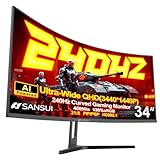
SANSUI 34″ Curved 240Hz UWQHD
The value champion near $240. You get a genuine 3440×1440 curved panel at a blistering 240Hz for a price that undercuts every big brand. For gamers who want to try ultrawide without spending big, this is the entry point that does not feel like a compromise.
Alienware AW3425DWM 34″ WQHD 180Hz
Around $350, this is the balanced brand-name pick. A 1500R curve, 180Hz, 1ms response, and FreeSync Premium deliver a polished, reliable ultrawide experience with Alienware’s build quality.
Alienware AW3425DW 34″ QD-OLED 240Hz
The premium showcase near $750. QD-OLED’s perfect blacks, 0.03ms response, and 240Hz make single-player games look breathtaking and competitive play razor-sharp. If budget allows, this is the endgame 34-inch ultrawide.
Samsung Odyssey G7 40″ (G75F) WUHD Curved
Near $700, this 40-inch WUHD panel adds vertical space over standard ultrawides, great for productivity plus gaming. A larger canvas for those who want desktop real estate too.
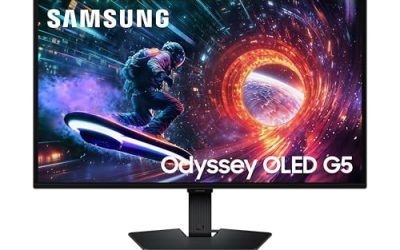
Super-ultrawide: Samsung Odyssey G93SC 49″ QD-OLED
Around $1,000, the 32:9 QD-OLED giant replaces a dual-monitor setup and immerses you completely in sims and racers. It needs a powerful GPU, but nothing else feels quite like it.
Frequently Asked Questions
Is 3440×1440 hard to run?
It pushes about a third more pixels than 1440p, so plan on an RTX 5070-class GPU or better for high refresh rates. It is far easier to drive than 4K, though.
Do all games support ultrawide?
Most modern titles do, but some older or competitive games are locked to 16:9 or add black bars. Check community resources if a specific game is your priority.
Is a curved ultrawide better than flat?
At 34 inches and wider, a curve (around 1500R) helps by keeping the screen edges at a consistent distance from your eyes, reducing distortion and improving immersion.
Is QD-OLED worth the premium?
For immersive single-player and HDR gaming, absolutely: the contrast and color are transformative. Competitive-only players on a budget can get excellent results from a fast IPS/VA ultrawide.
Final Thoughts
The SANSUI 34″ 240Hz is the value pick that gets most gamers into ultrawide affordably, while the Alienware AW3425DW QD-OLED is the no-compromise showcase. Want to go all-in? The 49-inch Samsung super-ultrawide is a dual-monitor replacement. Pair any with a capable GPU and enjoy the wider view.