Our Top Picks
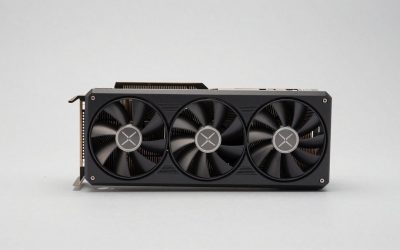
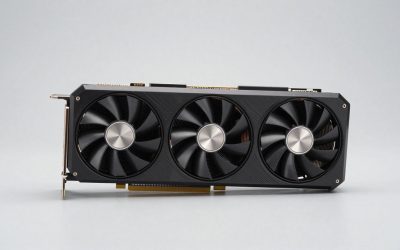
 GIGABYTE GeForce RTX 4070 Super WINDFORCE OC 12G2" x 5" x 10.3"10.27 x 4.96 x 0.1 inches2.8 PoundsCheck on Amazon
Choose the RX 7900 XTX if you game at 4K or high-refresh 1440p with ray tracing mostly off, because it is clearly the faster rasterization card and its 24 GB of VRAM will not run short. Choose the RTX 4070 Super if you value ray tracing, DLSS image quality, frame generation, and a far smaller power budget, since it delivers most of the XTX’s experience at 1440p on a 650 W power supply.
Different Weight Classes, Overlapping Prices
On launch pricing these cards were never rivals: the RX 7900 XTX was AMD’s $999 flagship, and the RTX 4070 Super was Nvidia’s $599 upper-midrange card. Both are now previous-generation parts, superseded by the Radeon RX 9000 and GeForce RTX 50 series, and they meet in the used and clearance market where their prices overlap more than their spec sheets suggest. That is why this comparison comes up so often.

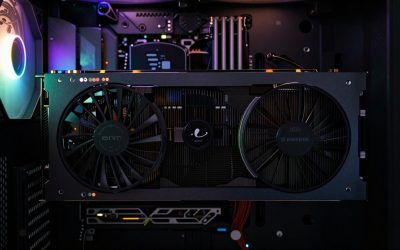
ASRock Radeon RX 7900 XTX Phantom Gaming 24GB OC Graphics Card, 2615 MHz Boost Clock, 24GB GDDR6, DisplayPort 2.1, HDMI 2.1, Triple Fan Cooling
Chosen because it specifies 2615 MHz Boost Clock and 24GB GDDR6.
View on AmazonGIGABYTE GeForce RTX 4070 Super WINDFORCE OC 12G Graphics Card, 3X WINDFORCE Fans, 12GB 192-bit GDDR6X, GV-N407SWF3OC-12GD Video Card
Chosen because it specifies 3X WINDFORCE Fans and 12GB 192-bit GDDR6X.
View on Amazon
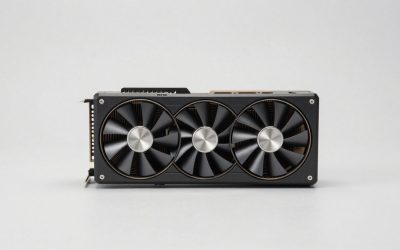
NVIDIA - GeForce RTX 4070 Super 12GB GDDR6X Graphics Card - Titanium/Black
Chosen because it specifies GeForce RTX 4070 Super 12GB GDDR6X Graphics Card and Titanium/Black.
View on AmazonKey Specifications
| Specification | Radeon RX 7900 XTX | GeForce RTX 4070 Super |
|---|---|---|
| Architecture | RDNA 3.0 | Ada Lovelace |
| Release date | 3 November 2022 | 8 January 2024 |
| Launch MSRP | $999 | $599 |
| Shader / CUDA cores | 6144 | 7168 |
| Boost clock | 2498 MHz | 2475 MHz |
| Process | 5 nm | 5 nm |
| Board power (TDP) | 355 W | 220 W |
| VRAM | 24 GB GDDR6 | 12 GB GDDR6X |
| Memory bus | 384-bit | 192-bit |
| Bandwidth | 960.0 GB/s | 504.2 GB/s |
| Cache | 6 MB L2 + 96 MB L3 | 48 MB L2 |
| Interface | PCIe 4.0 x16 | PCIe 4.0 x16 |
| Power connectors | 2x 8-pin | 1x 16-pin |
| Length / width | 287 mm / 2-slot | 267 mm / 2-slot |
| Outputs | 1x HDMI 2.1a, 2x DP 2.1, 1x USB Type-C | 1x HDMI 2.1, 3x DP 1.4a |
Note that shader counts between AMD and Nvidia are not directly comparable. The figures that matter more are memory bandwidth (the XTX has nearly twice as much) and board power (the XTX draws about 135 W more).
Rasterization: The XTX’s Home Turf
Without ray tracing, the RX 7900 XTX is the faster card at every resolution, and its lead grows as resolution rises. Review data from TechPowerUp and aggregated game averages put the XTX roughly 15 to 25 percent ahead at 1440p and roughly 20 to 30 percent ahead at 4K. At 1080p the gap narrows, because both cards are frequently CPU-limited there.
- 1080p: both cards are overkill for most games; the gap often shrinks to single digits.
- 1440p: the XTX leads, but the 4070 Super already delivers high-refresh frame rates in most titles.
- 4K: the XTX’s 384-bit bus and 24 GB buffer make it the more comfortable native 4K card.
In demanding modern games at native 4K with high settings, the XTX commonly lands somewhere around 60 to 100 FPS while the 4070 Super is closer to 45 to 80 FPS, though these ranges shift a lot with settings, CPU, and patches.
Ray Tracing and Path Tracing
Turn on ray tracing and the story changes. RDNA 3’s ray accelerators are a generation behind Ada’s RT cores, so the XTX’s big raster lead mostly disappears. In typical ray-traced games, published reviews show the two cards roughly level, with the XTX ahead in lighter RT implementations and the 4070 Super ahead in heavier ones. In full path tracing modes, such as Cyberpunk 2077’s Overdrive mode or Alan Wake 2’s path tracing, the 4070 Super pulls clearly ahead, especially once DLSS Ray Reconstruction is factored in.
If your must-play list includes heavily ray-traced single-player games, the cheaper Nvidia card often delivers the better experience despite being slower on paper.
Upscaling and Frame Generation
Software support is a big part of the decision with these two cards:
- RTX 4070 Super: DLSS 4 Super Resolution with the transformer model, DLSS Frame Generation (single generated frame per rendered frame), Ray Reconstruction, and Reflex. RTX 40 cards do not get DLSS 4’s Multi Frame Generation, which is reserved for RTX 50.
- RX 7900 XTX: FSR 3.1-class upscaling and frame generation, driver-level Fluid Motion Frames, and Anti-Lag. AMD launched its ML-based FSR 4 for RDNA 4 cards, so the XTX does not officially get the newest upscaler.
DLSS’s broader game support and better image quality at Balanced and Performance modes mean the 4070 Super can often run a lower internal resolution with less visible penalty. That narrows the effective performance gap in games where you would use upscaling anyway.
VRAM: 24 GB Versus 12 GB
The 4070 Super’s 12 GB is adequate for 1440p in almost every game today, and workable at 4K with DLSS. However, a handful of titles with maximum textures, heavy ray tracing, and frame generation enabled at 4K can push past 12 GB. The XTX’s 24 GB is more than any current game needs, which makes it the lower-risk card for long-term 4K use, heavy modding, and local AI or 3D workloads that benefit from a large buffer.
Power, PSU, and Connectors
This is the clearest practical difference. Using the rule of GPU power plus CPU power plus about 150 W of headroom:
- RX 7900 XTX with a 125 W CPU: 355 + 125 + 150 = 630 W. Choose a quality 750 to 850 W unit, since high-end Radeon cards can have sharp transient spikes.
- RTX 4070 Super with a 125 W CPU: 220 + 125 + 150 = 495 W. A quality 650 W unit is comfortable.
The XTX uses two standard 8-pin connectors, which works with nearly any PSU. The 4070 Super uses a single 16-pin connector; most cards ship with an adapter for 8-pin cables, and native ATX 3.x supplies provide the cable directly. Make sure the 16-pin plug is fully seated.
The XTX also produces considerably more heat. Many partner XTX cards are larger than the 287 mm reference length and wider than 2 slots, so check clearance and airflow carefully. The 4070 Super, at 267 mm in its reference form, fits a wider range of mid-tower and some compact cases.
Value Calculation
Taking the 4070 Super as 100 and the XTX as about 120 at 1440p raster (the midpoint of the 15 to 25 percent range):
- RX 7900 XTX: $999 / 120 = about $8.33 per performance point.
- RTX 4070 Super: $599 / 100 = about $5.99 per performance point.
At launch pricing, the 4070 Super was the better value per frame by roughly 28 percent, before accounting for its RT and DLSS advantages. Today both are mainly used-market purchases. A used RX 7900 XTX usually sells for roughly $650 to $800, and a used RTX 4070 Super for roughly $450 to $550. At those levels the gap in price is around 40 to 50 percent, while the raster gap is 15 to 30 percent, so the 4070 Super still tends to win on value unless you specifically need 4K raster or 24 GB.
It is also worth comparing both against current cards. Today’s RTX 5070 and RX 9070-class cards compete in the same performance bracket with newer features and warranties, which puts pressure on used prices for both.
Buyer’s Matrix
| Priority | Pick |
|---|---|
| Native 4K, raster-focused games | RX 7900 XTX |
| High-refresh 1440p competitive shooters | RX 7900 XTX (more raw FPS) |
| Path tracing and heavy RT single-player games | RTX 4070 Super |
| Best upscaling image quality | RTX 4070 Super |
| 650 W PSU or small case | RTX 4070 Super |
| Large VRAM for mods, AI, or creative work | RX 7900 XTX |
| Lowest total cost on the used market | RTX 4070 Super |
Frequently Asked Questions
How much faster is the RX 7900 XTX than the RTX 4070 Super?
In rasterized games, review data places the XTX roughly 15 to 25 percent ahead at 1440p and about 20 to 30 percent ahead at 4K. At 1080p the gap is smaller because both cards are often CPU-limited. With heavy ray tracing, the 4070 Super can match or beat it.
Does the RTX 4070 Super get DLSS 4 Multi Frame Generation?
No. Multi Frame Generation is limited to RTX 50 series cards. The RTX 4070 Super does support DLSS 4’s transformer-based Super Resolution, standard DLSS Frame Generation, and Ray Reconstruction.
Is 12 GB of VRAM enough on the 4070 Super?
It is enough for 1440p in nearly all games and generally fine at 4K with DLSS. A few titles at 4K with maximum textures, ray tracing, and frame generation can exceed it. The 7900 XTX’s 24 GB avoids that concern entirely.
What power supply does the RX 7900 XTX need?
A quality 750 to 850 W power supply with at least two separate 8-pin PCIe cables is the safe range. That covers the card’s 355 W rating, a typical gaming CPU, and transient spikes. Overclocked partner models may need the higher end.
Can the RX 7900 XTX use FSR 4?
AMD launched FSR 4’s machine-learning upscaler for RDNA 4 cards in the RX 9000 series. The 7900 XTX officially uses FSR 3.1-class upscaling and frame generation. Those still provide good performance gains but trail DLSS and FSR 4 in image quality.
Should I buy either card new today?
Both are previous-generation cards, and current models such as the RTX 5070 and Radeon RX 9070 series cover similar performance with newer features. Either card can still be a good buy used at a fair price. Compare used prices directly against those current cards before deciding.