The best Ethernet surge protectors are chosen by line speed, cable exposure, PoE power, enclosure rating, and grounding, not by claims that a small inline box can prevent every lightning-related failure. For a supported outdoor 1/2.5GbE cable run, Ubiquiti ETH-SP-G2 is a simple and inexpensive choice. For a 10GbE-capable home or gaming network, the DITEK DTK-MRJPOE and the Eaton Tripp Lite B110-SP-10G are stronger matches on documented data rate. If your Ethernet cable goes outside or between buildings, have the wiring and bonding plan assessed by a qualified installer; a surge protector is only one part of electrical and data-line protection, not an exemption from safe installation practices.
Quick verdict: choose by the cable run
Best accessible outdoor networking pick — Ubiquiti ETH-SP-G2. The current US listing states protection for up to 2.5GbE and PoE, IPX5 weatherproofing, and a low listed unit price. It requires appropriate installation and grounding; it is not rated for a 10GbE data path.
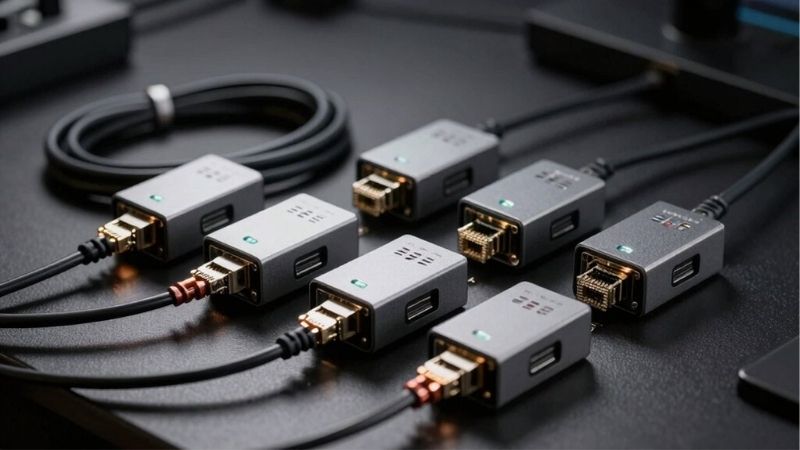
Best standard 10GbE/PoE point-of-use unit — DITEK DTK-MRJPOE. Manufacturer literature specifies up to 10GbE and PoE support with unshielded RJ45 connectors. It is useful near a wired access point, switch or other equipment, but its protection cannot compensate for improper building bonding.
Best shielded 10GbE option — DITEK DTK-MRJPOES. Choose the shielded RJ45 design for a network using appropriately shielded twisted-pair cable and verified grounding/bonding. DITEK states that a separate ground may not be needed in its specified shielded cable arrangement; that is not permission to assume every installation has a safe ground path.
Best non-PoE-focused 10G metal-case choice — Eaton Tripp Lite B110-SP-10G. The official specifications list up to 10Gbps and an included grounding wire, with a metal enclosure. Confirm PoE requirements separately rather than assuming the 10G speed rating guarantees support for every power-delivery standard.
Best weather-exposed 10GbE PoE installation — DITEK DTK-MRJPOEX. Its NEMA 4X enclosure and 10GbE-oriented design suit exposed PoE runs where a basic indoor module is unsuitable. It costs more and should be selected for the installation environment, not for a theoretical gaming-performance advantage.
Best sealed 1GbE high-power PoE run — Eaton Tripp Lite B110-SP-CAT-OD2. IP68 and 802.3af/at/bt support are useful for outdoor cameras and access points; the official data rate is only 1Gbps, and the punch-down terminations make it less convenient than a simple RJ45 coupler for an ordinary desktop connection.
Comparison: exact models, rated speed and US purchase evidence
| Product / exact model | Documented data rating and protection context | Best installation | Observed US price, checked Oct. 29, 2026 | Stock status, checked Oct. 29, 2026 | Main drawback |
|---|---|---|---|---|---|
| Ubiquiti ETH-SP-G2 | Data-line protection up to 2.5Gbps; PoE; IPX5 | Outdoor Ethernet entering a protected network | $12.50, Ubiquiti US | Add to Cart shown | Not a 10GbE solution; grounding is critical |
| DITEK DTK-MRJPOE | Up to 10GbE; PoE; unshielded RJ45 | Indoor point-of-use, PoE or non-PoE cabling | $58.00, B&H US | In stock | No weatherproof enclosure |
| DITEK DTK-MRJPOES | Up to 10GbE; shielded RJ45/PoE | Shielded wired links and PoE | $56.97, B&H US | In stock | Grounding depends on shield/bond integrity |
| Eaton Tripp Lite B110-SP-10G | Up to 10Gbps; metal housing; included grounding wire | Interior 10G RJ45 network equipment | Price not verified from US seller | Unclear | Verify power delivery and current stock |
| DITEK DTK-MRJPOEX | Up to 10GbE; NEMA 4X outdoor enclosure; PoE | Exposed outdoor access point/camera cable | $73.99, B&H US | In stock | Larger, more installation work |
| Eaton Tripp Lite B110-SP-CAT-OD2 | 1Gbps; IP68; 802.3af/at/bt; 110 punch-down terminals | Sealed outdoor high-power PoE wiring | Price not verified from US seller | Unclear | Only 1Gbps; non-plug-and-play termination |
These are product-page observations for the stated variants, not guaranteed checkout prices or assurances of protection in every surge event. Four selections had clear US in-stock/orderable signals; the remaining two require seller confirmation. A device’s highest supported Ethernet speed is not an independent throughput or latency test, and we did not perform surge-current testing, leakage tests, or laboratory comparison of the products. Product ratings describe the manufacturers’ stated capability under their defined conditions.
How we selected Ethernet surge protectors
We looked for a real data-line surge protective device rather than an ordinary AC power strip with a marketing label or an RJ45 female-to-female coupler without published protective components. The decisive evidence comes from the manufacturer: supported Ethernet speed, PoE standards, shield compatibility, enclosure rating and the grounding/bonding scheme. We then checked US seller listings for an identifiable matching model. Where a product is being phased out or a listing is ambiguous, it should not be presented as a currently purchasable top choice.
We excluded APC PNET1GB from the current top picks because Schneider Electric identifies that model as discontinued. Legacy gigabit protection can still exist in surplus inventories, but the absence of reliable current production complicates purchase advice. We also avoided assuming that a product labeled “Cat8” necessarily passes 10GbE: Eaton’s B110-SP-CAT-OD2 explicitly lists 1Gbps network compatibility despite accepting certain higher-category cable types. Cable category, data transmission rate and PoE power are separate attributes.
A final screening factor is the application. Ethernet cable between two devices in the same room, within the same bonding environment, is very different from copper cable strung to a shed, pole-mounted wireless link, detached garage or outdoor camera. The latter can experience dangerous voltage differences and requires a properly engineered pathway. In some between-building situations, fiber-optic cabling is the safer design because it does not carry a conductive copper Ethernet connection between electrical grounds. Seek professional design advice for such a route.
Best accessible outdoor option: Ubiquiti ETH-SP-G2
The ETH-SP-G2 is attractive because its US product page is unusually explicit about both the protective purpose and the interface. Ubiquiti specifies two RJ45 female ports, support for PoE, IPX5 weatherproofing, a surge-related discharge-current figure, and data-line protection up to 2.5Gbps. That last number is important for modern gaming networks: older product descriptions sometimes called it merely “Gigabit Ethernet,” while the currently published technical specification reports 2.5GbE compatibility. Always confirm the model and specification in the listing being purchased.
A low-priced inline device can be a sensible component on an outdoor Wi-Fi bridge or access point cable, but only if the ground path is installed according to Ubiquiti’s guide and applicable codes. An unbonded protector, a poorly attached cable shield or an inappropriate grounding point can leave the equipment inadequately protected. Its weather rating is not a license to leave connectors immersed, and installation location still matters. In a high-risk outdoor project, a qualified installer may specify protectors at appropriate points of entry and equipment ends, not just one unit placed near the PC.
Buy it if the network run is compatible with the manufacturer’s 2.5GbE limit, you need a compact outdoor-rated device, and you can provide proper bonding. Skip it if the link negotiates at 5 or 10GbE, or if you expect a plug-in accessory to solve building grounding. Check PoE power compatibility for the powered device and follow the exact installation guide before connecting valuable gear.
Best straightforward 10GbE PoE unit: DITEK DTK-MRJPOE
DTK-MRJPOE brings a clearly documented data-rate advantage for a home network using multi-gigabit switches and 10GbE NAS connections. DITEK’s latest relevant datasheet describes up to 10GbE, all-pair protection, PoE compatibility, and female RJ45 connections. It also lists an external ground connection and provides electrical ratings under the applicable test conditions. A 10GbE qualification is useful because an old 100/1000Mbps-only protector can become an unnecessary link-speed bottleneck.
For a gaming desktop, the value of preserving 10GbE is not improved internet ping. It is avoiding an artificial reduction of the local connection’s data rate, particularly when the same cable carries large file transfers to local storage. For outdoor or long building-entry cabling, the actual security value is surge suppression that is installed as part of a larger grounding and equipment-protection plan. This DITEK model has a compact indoor-style housing; it is not a substitute for a weatherproof outdoor enclosure.
B&H displayed this exact product in stock at $58.00. That price is higher than Ubiquiti’s inexpensive unit, but the products do not offer the same link-speed scope. Buy it if 10GbE capability and PoE support are genuinely needed and the installation is appropriately protected from weather. Skip it if your only problem is unstable online latency with an entirely indoor 1GbE patch cable; troubleshoot the connection rather than assuming a surge protector changes packet timing.
Best shielded 10GbE wiring: DITEK DTK-MRJPOES
The final “S” distinguishes this model from the unshielded MRJPOE version. DTK-MRJPOES is designed around shielded Ethernet cabling and supported PoE arrangements. DITEK documents up to 10GbE and uses a shielding/grounding strategy that can rely on correctly installed shielded twisted pair under specified circumstances. That is a meaningful installation distinction, not simply a cosmetic SKU suffix.
Shielded cable does not automatically create a correct grounding network. The network installer must understand where the shield bonds, whether the connected equipment provides a compliant path, and how the protective device is integrated. Using an unverified shield as if it were an equipment-ground conductor can create a false sense of security. For gamers buying a cable off a marketplace listing, there is rarely a good reason to upgrade the entire room to shielded cable solely to use this protector.
B&H’s US page showed $56.97 and an in-stock state. Buy it if your network already has professionally planned shielded cabling and the manufacturer-approved installation matches that design. Skip it if you are unsure whether your cable and connectors are shielded or how they terminate. Choose based on the system’s existing wiring and qualified installer guidance, not a small price difference between DITEK variants.
Best metal-case 10G interior model: Eaton B110-SP-10G
Eaton’s Tripp Lite B110-SP-10G provides an alternative to the DITEK units with a metal enclosure and an included grounding wire. Its official technical page explicitly states up to 10Gbps over supported copper Ethernet cabling and specifies the protector’s response and surge-test conditions. The unit uses female RJ45 connectors at both ends and can be surface-mounted. For a home networking rack or a fixed wired gaming room, those physical characteristics may be easier to integrate than an outdoor camera enclosure.
The key caveat is do not infer universal PoE support from a speed rating. Its official product description emphasizes 10Gbps Ethernet, while other Eaton models expressly list particular IEEE PoE standards. Before installing this on a high-power access point feed, confirm the exact SKU’s supported mode and power budget with Eaton. Also, like other grounded suppressors, it needs a valid bonding path. A piece of wire attached to an arbitrary screw is not a verified protective earth.
We found technical documentation for the exact model but did not verify a live current US seller price and stock state; it therefore remains a conditional choice rather than a claimed ready-to-buy bargain. Buy it if the metal enclosure, 10G support and documented interior installation match your site. Skip it if the purchase needs immediately verified availability or a specific PoE pass-through capability that the consulted product document does not affirm.
Best weather-exposed 10G PoE protection: DITEK DTK-MRJPOEX
The DTK-MRJPOEX targets outdoor runs rather than equipment sitting inside a clean network closet. DITEK specifies a NEMA 4X weather-resistant enclosure with liquid-tight cord grips, up to 10GbE throughput and support for PoE-oriented equipment. This makes it particularly relevant to a detached outdoor access point, wireless bridge or camera where moisture ingress would make an exposed indoor protector unreliable.
A sealed box does not remove the need to design surge current paths, ground potential and cable entry. Outdoor installation often involves local electrical codes, mechanical strain relief, correct cable diameter and corrosion exposure. A cable between independent structures needs special attention: a copper data path can be hazardous where electrical grounds diverge. When feasible, fiber plus suitable media converters and professionally designed power can reduce the risk of bringing a conductive inter-building path into a gaming room.
B&H listed the model at $73.99 in stock when checked. Buy it if your main problem is protecting a properly designed outdoor PoE installation without sacrificing a 10GbE-capable line. Skip it if you are only wiring a desk to a nearby switch: its enclosure and installation burden may offer little practical benefit for that benign short indoor run.
Best sealed high-power 1GbE unit: Eaton B110-SP-CAT-OD2
The B110-SP-CAT-OD2 has one of the easiest spec traps in this category. Eaton documents an IP68-rated outdoor housing and support for PoE standards including 802.3af, 802.3at and 802.3bt, but the network data rate is specified as 1Gbps. Even though the product accepts cable categories up to Cat8 under its wiring guidance, that does not turn it into a 10GbE protector. A buyer planning a multi-gigabit wireless access point must distinguish the powered device’s electrical needs from the Ethernet data path.
It also uses 110 punch-down termination rather than simple female RJ45 connectors at both ends, which changes the installation tools and skill required. This can be appropriate for a fixed outdoor deployment but unnecessarily inconvenient for a gaming desktop. A proper outdoor enclosure, cable entry, termination practices and grounding remain essential. The IP rating is an environmental property of an installed enclosure, not a guarantee that a haphazard open connection stays watertight.
We verified the model’s Eaton specification but not a current exact-model US seller checkout price/stock. Buy it if a 1Gbps link and higher-power PoE requirements match the wiring plan and your installer can terminate it correctly. Skip it if you require 2.5/5/10GbE or want a tool-free RJ45-to-RJ45 accessory.
Where an Ethernet surge protector actually belongs
A short indoor patch cable is a different risk case
If the router and PC are plugged into the same room’s outlets and connected by a short Ethernet patch lead, the main issue during a storm may be the power distribution and incoming utility services, not a high-exposure outdoor copper run. A correctly installed whole-house surge protective device, an appropriate UPS or properly rated power strip, and safe building wiring can matter more than adding random inline modules. A data-line surge protector does not replace power-line protection.
Outdoor cable runs need system-level design
Copper running to a pole, rooftop access point, yard camera or detached structure can bring voltage differences toward your network equipment. The right design considers grounding electrode systems, bonding, cable routing, protective devices at entry points and environmental sealing. Local code and an experienced low-voltage/electrical contractor should determine the arrangement. Never install a makeshift earth ground or bond to a random plumbing or mains conductor. If the run crosses between buildings, ask about using fiber to break the conductive data connection.
Keep the interface rating ahead of the link requirement
A 1Gbps protector is not a good match for a 2.5GbE link you want to preserve. Likewise, a 2.5GbE protection rating is not proof of 10GbE support. Decide from the slowest active component in the path: NIC, cable, protector, switch and upstream connection. After installation, check the negotiated link rate on both devices and test normal traffic. Treat a speed reduction as a compatibility or installation problem, not a reason to ignore the published rating.
Grounding, PoE and warranty checks
Proper bonding is the central safety constraint. Some protectors use a dedicated ground screw or cable; others may have specific manufacturer-approved shielded-cable arrangements. The fact that two RJ45 plugs fit does not establish a safe earth route. Consult the exact installation diagram and a qualified professional for exposed cable or lightning-risk applications. No consumer data-line protector guarantees protection against a nearby or direct lightning strike, and electrical hazards can remain even if the protector itself survives.
PoE compatibility matters whenever a device is powered through the network cable. Check the relevant 802.3af/at/bt class, maximum power delivery, voltage range and any vendor-specific passive-PoE requirements. Do not assume every 10GbE model passes 90 or 100 watts. Conversely, a unit that handles 802.3bt power might still be specified for only 1Gbps data, as illustrated by the Eaton OD2. These are independent requirements.
Review replacement and warranty expectations, too. After a damaging surge, a protector may need inspection or replacement even if the link still lights up. Some warranties cover only the protective device under specified conditions and do not promise reimbursement for every router, console or PC attached to it. Keep seller receipts, follow grounding documentation and avoid relying on implied connected-equipment guarantees that were not verified.
A safe pre-purchase checklist
- Decide whether the cable stays entirely inside one protected building or enters/exits an exterior space. For cross-building copper runs, consult a qualified installer about fiber and bonding.
- Confirm the actual port speeds of the switch and device. Choose a protector whose published data-rate support meets or exceeds the desired link rate.
- If PoE is in the path, verify the exact power mode, class and voltage support. “10G” by itself is not a PoE specification.
- Check shielded versus unshielded cabling, connectors, grounding method and whether the model requires punch-down termination or weatherproof cable glands.
- Select an enclosure rated for the installation environment. IPX5, IP68, NEMA 4X and ordinary indoor housings are not interchangeable certifications.
- Review the current US seller inventory, return terms and manufacturer installation guidance. Do not proceed with installation when you cannot provide the required approved bonding connection.
Frequently asked questions
Will an Ethernet surge protector lower gaming ping?
Not inherently. A correctly specified passive data-line protector should preserve normal communication, but it does not optimize ISP routing, Wi-Fi signal quality or game server selection. Its purpose is electrical protection, not latency acceleration.
Can a Cat8 cable make a 1Gbps surge protector support 10Gbps?
No. The protector’s own documented network compatibility is the relevant limit. Eaton’s B110-SP-CAT-OD2 accepts high-category cable in its wiring guidance yet is rated for 1Gbps data. Always read both fields.
Do I need an Ethernet surge protector for every gaming PC?
No. Risk depends on installation and exposure. A short indoor patch cable normally presents a different problem from an exposed outdoor line. Consider whole-building surge planning and appropriate power protection, and have exterior copper routes evaluated professionally.
Is a protector safe without a ground wire?
Only if the manufacturer specifies a compliant installation method for that exact product and network construction. Some shielded designs use shield continuity under defined conditions; that is not a universal substitute for proper grounding or building bonding.
Are 10GbE protectors automatically compatible with high-power PoE?
No. Ethernet data rate and power standards are different specifications. Confirm IEEE PoE standards, maximum watts, voltage and vendor-specific passive-PoE behavior independently.
Final thoughts
Ubiquiti ETH-SP-G2 is a low-cost option for appropriately installed outdoor 2.5GbE-or-slower links. DITEK DTK-MRJPOE and MRJPOES address different unshielded and shielded 10GbE needs, while Eaton B110-SP-10G is a documented metal-case 10G choice pending live stock verification. DITEK DTK-MRJPOEX is for weather-exposed PoE, and Eaton B110-SP-CAT-OD2 suits properly terminated 1GbE high-power PoE installations. Above all, buy the correct speed and electrical installation design—not an imagined guarantee that a small box makes copper cabling lightning-proof.