Key takeaways
- VRAM capacity: 8GB remains workable at 1080p, but 16GB is the safer buy in 2026 if you play at 1440p, use high-resolution texture packs, or want the card to stay relevant for several years. Texture settings are the first thing you’ll be forced to lower when VRAM runs out.
- Target resolution and refresh rate: Match the card to your monitor, not to benchmark charts. A 1080p 144Hz panel and a 1440p 165Hz panel demand meaningfully different levels of GPU horsepower, and overbuying for a display you don’t own is wasted money.
- Upscaling and frame generation: DLSS 4 on NVIDIA cards and FSR on AMD cards can transform playability in demanding titles. Check which technologies the games you actually play support, since this often matters more than a small raw performance gap.
- Cooling and physical size: Dual-fan 2.5-slot designs suit compact and mid-tower cases, while triple-fan coolers run quieter under sustained load but need more clearance. Measure your case before you buy, and check GPU length against any front-mounted radiators or drive cages.
- Power supply and connectors: Mid-range cards in this bracket are relatively modest consumers, but verify your PSU wattage and available connectors. A quality 550W to 650W unit is a sensible baseline, and skimping here undermines the whole build.
What's inside
Shopping for a graphics card under $500 in 2026 means navigating a market where VRAM capacity, generational feature support, and real-world frame rates rarely line up in the way spec sheets suggest. An 8GB card that benchmarks beautifully at 1080p can stutter badly the moment you enable ray tracing or load high-resolution texture packs, while a card with plenty of memory may be held back by a narrow bus or an underwhelming cooler. Add fluctuating street pricing and it becomes genuinely difficult to know which card actually delivers the most gaming performance per dollar.
This guide cuts through that noise. We’ve focused on cards that realistically sit at or below the $500 mark, evaluating them on 1080p and 1440p gaming performance, VRAM headroom for modern titles, upscaling and frame-generation support, thermal behaviour under sustained load, and build quality. Below you’ll find our top picks, a practical buying checklist, and answers to the questions we see most often from readers building or upgrading a gaming PC on a mid-range budget.
As an Amazon Associate we earn from qualifying purchases at no extra cost to you. Product prices and availability are accurate as of the date shown and are subject to change.




⚡ Save on Your Next PC — Amazon Prime
Prime members get fast free shipping on the systems above, plus early access to Prime Day & Black Friday PC deals. New members get a 30-day free trial.
Watch: Best Graphics Card Under $500 — Video Review
How to Choose Graphics Card Under $500
- VRAM capacity: 8GB remains workable at 1080p, but 16GB is the safer buy in 2026 if you play at 1440p, use high-resolution texture packs, or want the card to stay relevant for several years. Texture settings are the first thing you’ll be forced to lower when VRAM runs out.
- Target resolution and refresh rate: Match the card to your monitor, not to benchmark charts. A 1080p 144Hz panel and a 1440p 165Hz panel demand meaningfully different levels of GPU horsepower, and overbuying for a display you don’t own is wasted money.
- Upscaling and frame generation: DLSS 4 on NVIDIA cards and FSR on AMD cards can transform playability in demanding titles. Check which technologies the games you actually play support, since this often matters more than a small raw performance gap.
- Cooling and physical size: Dual-fan 2.5-slot designs suit compact and mid-tower cases, while triple-fan coolers run quieter under sustained load but need more clearance. Measure your case before you buy, and check GPU length against any front-mounted radiators or drive cages.
- Power supply and connectors: Mid-range cards in this bracket are relatively modest consumers, but verify your PSU wattage and available connectors. A quality 550W to 650W unit is a sensible baseline, and skimping here undermines the whole build.
The Best Picks Reviewed
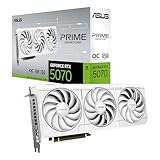
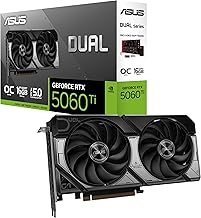
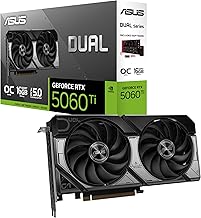
ASUS Dual GeForce RTX 5060 Ti 16GB OC Edition
This is the strongest all-round value pick in the sub-$500 bracket, pairing 16GB of GDDR7 with DLSS 4 support to deliver genuinely comfortable 1440p gaming with room to spare on texture settings. The 2.5-slot Axial-tech cooler with 0dB technology stays silent at desktop and keeps thermals in check during long sessions, and ASUS backs it with a three-year warranty.
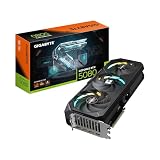
XFX Swift Radeon RX 9060 XT 16GB
XFX’s triple-fan RDNA 4 card is the value champion for anyone who prioritises VRAM capacity and raw rasterisation performance over ray tracing, offering 16GB of GDDR6 at a price that typically undercuts comparable NVIDIA options. The larger cooler runs noticeably cooler and quieter under load than most dual-fan designs, though you’ll want to confirm case clearance first.
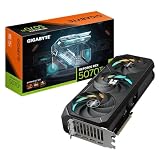
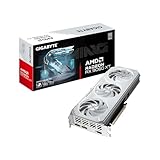
GIGABYTE Radeon RX 9060 XT Gaming OC ICE 16G
The ICE variant delivers the same 16GB RDNA 4 package in a slimmer two-slot form factor with Hawk fans, server-grade thermal gel, and a reinforced frame, making it an excellent fit for compact builds where the triple-fan alternatives simply won’t go. Performance sits within a few percent of larger 9060 XT cards, and the white finish is a bonus for themed builds.
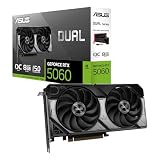
ASUS Dual GeForce RTX 5060 8GB OC Edition
For strictly 1080p gaming on a tighter budget, the RTX 5060 remains a sensible entry point, bringing DLSS 4, PCIe 5.0, and modern display outputs in a well-cooled 2.5-slot package. The 8GB frame buffer is the obvious limitation, so treat this as a 1080p card rather than a 1440p one and budget accordingly.
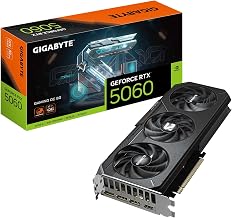
GIGABYTE GeForce RTX 5060 WINDFORCE OC 8G
GIGABYTE’s WINDFORCE take on the RTX 5060 is typically the cheapest route to DLSS 4 and GDDR7 memory, with a straightforward dual-fan cooler that does its job without fuss. It’s the pick for budget-focused 1080p builds where every dollar counts, provided you accept the same 8GB VRAM ceiling.
Frequently Asked Questions
Is 8GB of VRAM still enough in 2026?
At 1080p with sensible settings, yes, 8GB remains playable in the vast majority of titles. At 1440p or with high-resolution texture packs and ray tracing enabled, 8GB increasingly forces compromises, which is why we favour 16GB cards for anyone who wants longer-term headroom.
Should I choose NVIDIA or AMD in this price range?
Choose NVIDIA if ray tracing performance and DLSS 4 support matter to you, or if you use creative applications that lean on CUDA. Choose AMD if you want maximum VRAM and rasterisation performance per dollar, which is where the RX 9060 XT cards make a compelling case.
What power supply do I need?
A quality 550W to 650W unit from a reputable brand is sufficient for every card on this list when paired with a mainstream CPU. Check that your PSU has the required PCIe power connectors and avoid low-cost no-name units, which are a common cause of instability.
Can these cards handle 1440p gaming?
The 16GB options, namely the RTX 5060 Ti and both RX 9060 XT variants, handle 1440p comfortably in most titles, particularly with upscaling enabled. The 8GB RTX 5060 cards are better suited to 1080p, where they perform very well for the money.
Final Thoughts
If you want the best balance of performance, features, and longevity under $500, the ASUS Dual RTX 5060 Ti 16GB is our overall recommendation, combining DLSS 4 with the VRAM headroom to stay relevant well beyond this generation. Value hunters should look closely at the XFX Swift RX 9060 XT, which delivers 16GB and strong rasterisation performance for less, while compact builders will be well served by the GIGABYTE RX 9060 XT Gaming OC ICE and its slim two-slot design.