Key takeaways
- Gaming headset vs earbuds compared honestly: microphone quality, comfort over long sessions, isolation, portability and latency, matched to real setups.
As an Amazon Associate we earn from qualifying purchases.
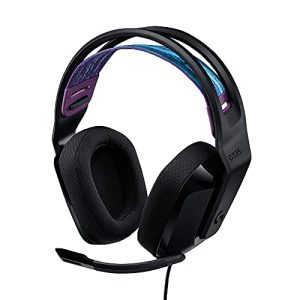
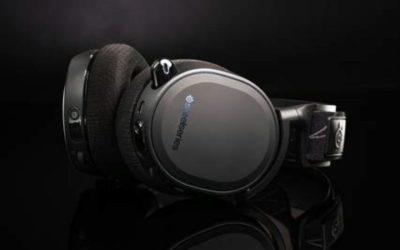
Both a gaming headset and a set of gaming earbuds will put game audio in your ears and your voice in front of your friends, so the choice between them is not about which one works — it is about which one fits the way you actually play. They make opposite trade-offs. A headset surrounds your ears with large drivers, a proper boom microphone and a frame built for hours at a desk. Earbuds disappear into your ears, travel anywhere, and ask almost nothing of your desk or your bag. This comparison walks through the dimensions that genuinely separate them, then matches each one to the setups and habits it serves best, so you can pick based on your room, your games and your routine rather than on fashion.
At a Glance
| Feature | Gaming Headset | Gaming Earbuds |
|---|---|---|
| Microphone | Boom mic close to the mouth, clearer voice | Small inline or case mics, voice sits further away |
| Long-session comfort | Weight spread over head and ears, pads cushion | Almost no weight, but pressure inside the ear canal |
| Sound isolation | Closed earcups block and contain sound | Sealed tips block noise, some sound leaks less |
| Soundstage | Larger drivers, wider perceived space | Compact, more intimate and centred sound |
| Portability | Bulky, desk-bound, needs storage space | Pocketable case, travels anywhere |
| Latency routes | Wired, USB dongle wireless, some Bluetooth | Wired, Bluetooth, some low-latency dongle models |
| Battery concerns | Wireless models need charging every days | Case and buds both need charging |
| Glasses wearers | Pads can press frames into the head | No contact with frames at all |
| Shared-room use | Contains sound, keeps your session private | Less imposing, easy to keep one ear free |
Microphone quality
This is the headset’s clearest win, and it is a matter of geometry. A boom microphone sits a short distance from your mouth, in the same position every session, which produces a louder, clearer and more consistent voice while rejecting keyboard noise and room sound. Your teammates hear you, not your desk. Earbud microphones live in a stem or an inline pod far from your mouth, so your voice arrives quieter and thinner, mixed with everything happening around you. Gaming earbuds have improved, and detachable or extended mic designs narrow the gap, but physics keeps the boom ahead. If your evenings are built around coordinated voice chat, this single dimension may settle the whole comparison.
Comfort across long sessions
The two designs spread their burdens differently. A headset distributes weight across a headband and large cushioned earcups, which most players can wear for several hours, though clamping force, heat build-up inside closed cups and pressure on glasses frames are the common complaints by hour three. Earbuds weigh almost nothing and never touch your hair or glasses, which is a genuine relief in warm rooms and for players who hate the headband feeling. Their pressure point is the ear canal itself: an imperfect tip fit creates a slow ache that some people never adapt to, while others forget the buds entirely. Neither is universally more comfortable — the honest answer is that headsets fatigue the outside of your head and earbuds fatigue the inside of your ear, and your own anatomy decides which you tolerate better.
Sound isolation and awareness
Closed-back headsets and well-sealed earbuds both isolate, but they shape your awareness differently. A headset seals the whole ear, muting household noise and keeping your game audio from leaking to the room, which suits late-night play in shared homes. Earbuds with properly fitted tips can isolate impressively too, sometimes blocking more high-pitched household noise, and they offer one trick headsets cannot match: wearing a single bud keeps one ear fully open to doorbells, family members and the real world. That flexibility matters for players who game in living rooms where they are also half on duty. Against that, earbuds offer no middle setting — in or out — while a headset can at least be rested around the neck with the game still faintly audible between matches.
Sound quality and soundstage
A headset’s larger drivers and the air volume inside its earcups give it a natural head start in bass weight and in soundstage — the sense that sounds occupy positions in a space around you rather than inside your skull. Footsteps, reloads and distant vehicles tend to separate more clearly, which is why headsets remain the default for players who rely on positional audio. Earbuds answer with precision and intimacy: a well-sealed bud delivers detail very directly, and many players find in-ear sound easier to read for near-field cues like nearby movement. The gap is real but narrower than the size difference suggests, and it reverses for some listeners. What earbuds rarely match is the relaxed, out-of-head spaciousness that makes long single-player sessions feel cinematic on a good headset.
Portability and everyday life
Earbuds win this dimension without a contest. They live in a pocketable case, move between your PC, console controller, phone and commute without thought, and need no desk hook, stand or shelf space. A headset is furniture: it occupies the desk, travels awkwardly in a bag, and effectively belongs to one setup. This matters more than it first appears, because audio gear earns its value through use. A player who games in two rooms, travels with a handheld console, or wants one audio device for the entire day will get far more hours from earbuds. A player with a single permanent desk setup gives up nothing by choosing the headset, since portability was never going to be used anyway.
Latency and connection routes
Both formats can be effectively lag-free, but the routes differ. Wired versions of either are instant and identical in practice. For wireless play, gaming headsets commonly use a dedicated USB dongle connection designed for low latency, which is the safe default at a desk or console. Earbuds lean more heavily on Bluetooth, whose standard connection can add enough delay to make fast games feel subtly disconnected, although gaming earbuds increasingly offer a low-latency mode or a dongle of their own. The practical rule is to check the specific connection your setup will actually use: a dongle or a cable means latency is a non-issue for both formats, while standard Bluetooth means earbuds deserve extra scrutiny before you commit.
Which Should You Choose?
Your evenings revolve around team voice chat
Choose the headset. Coordinated play lives and dies on callouts, and the boom microphone’s clarity advantage shows up in every single match. The larger drivers and sealed cups also help you pick footsteps and directional cues out of a busy soundscape while your own voice stays clean for the team. This is the setup the headset format was designed around, and earbuds remain the compromise here rather than the equal.
You game in several places and travel light
Choose the earbuds. If your week splits between a desk, a sofa, a handheld console and a commute, one pocketable case that serves all of them beats a bulky headset that lives in one room. You give up some microphone polish and some soundstage, and in exchange your audio is simply always with you. For players whose gaming is woven through the day rather than anchored to one desk, that availability is worth more than the headset’s refinements.
You wear glasses or game in a warm room
Choose the earbuds, or at least try them first. Nothing presses your frames into your temples, nothing traps heat around your ears, and long summer sessions stop being an endurance test. The one thing to verify is tip fit, since earbuds that seal poorly lose both comfort and bass. Players who cannot tolerate anything in the ear canal should look the other way, toward headsets with soft pads and gentle clamping force.
You play long, settled sessions at one desk
Choose the headset. When a single setup hosts multi-hour sessions, the headset’s weaknesses disappear — portability is irrelevant, and its battery or cable is already managed — while its strengths compound: the better microphone, the wider sound, the cushioned fit built for duration. A desk-bound player choosing earbuds is paying for travel convenience they will never use, with comfort and voice quality as the currency.
Common Mistakes
- Judging earbuds by phone-call microphone quality: gaming models vary widely, and the format deserves a fair check before being dismissed.
- Assuming headsets are always more comfortable: clamping force, heat and glasses pressure make them the worse option for many heads.
- Buying Bluetooth-only earbuds for fast games without checking for a low-latency mode or dongle option.
- Choosing one format for every situation when your week clearly splits between a fixed desk and travel.
- Ignoring ear tip fit: the wrong tips cost earbuds their isolation, bass and comfort all at once.
Frequently Asked Questions
Are earbuds good enough for competitive games?
For listening, largely yes: sealed earbuds deliver clear directional audio and strong isolation, and plenty of competitive players use in-ear monitors on stage. The genuine compromises are microphone clarity for your teammates and fit consistency during long tournaments. If your competitive play depends on constant, precise callouts, a headset’s boom microphone remains the safer tool for the team as a whole.
Do earbuds damage your ears more than headsets?
Neither format is inherently harmful; volume and session length decide the risk, not the shape of the device. Earbuds sit closer to the eardrum, so a given volume setting delivers more intensity, and good isolation tempts no one — the danger is turning up to overpower noise. Ironically, well-sealed earbuds and isolating headsets both protect you by letting you play quieter in a noisy room.
Can I use regular earbuds I already own for gaming?
Yes, and it is a sensible way to test the format before spending anything. Any wired earbuds with a microphone can plug into a controller or PC and handle game audio and basic chat. You may find the microphone ordinary and the fit imperfect for long sessions, but a week of real play will tell you more about whether earbuds suit your ears than any comparison article can.
Is it worth owning both?
For players with a fixed desk and a mobile gaming life, genuinely yes — and it is a common end state rather than an extravagance. The headset serves the desk, where its microphone and comfort shine across long sessions, while earbuds cover the sofa, the handheld console and the road. Each format is then used only where it is strongest, and neither purchase is asked to compromise.
FAQ
Are earbuds good enough for competitive games?
Do earbuds damage your ears more than headsets?
Can I use regular earbuds I already own for gaming?
Is it worth owning both?
More from Amazon
Programs that pair well with the guide above. Offers and eligibility are set by Amazon and may change.
Free shipping on eligible items, Prime Video and more. Eligible new members can start with a free trial.
Start a Prime free trialAd-free music streaming. Eligible new subscribers can start with a free trial.
Try Music Unlimited freeA Prime membership for ages 18-24 with a trial period. Eligibility is set by Amazon.
See Prime for Young AdultsAudiobooks and podcasts to listen to on the go. Eligible new members can start with a free trial.
Try Audible freeAs an Amazon Associate we earn from qualifying purchases.