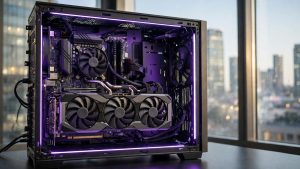
Our Top Picks
A gaming laptop’s internal drive fills up faster than most buyers expect, and the real decision is what job the external drive will do. If it only archives installers and recordings, almost any portable SSD works. If you plan to install and launch games from it, the interface class matters far more: drives on USB 3.2 Gen 2 state read speeds up to 1050MB/s, while Gen 2×2 models claim up to 2,000MB/s but only reach that figure when the laptop itself has a matching 20Gbps port.
This roundup suits laptop gamers who carry a game library between home, dorm rooms and friends’ desks, plus anyone tired of deleting titles to make room for new ones. Every pick below was chosen from the product names and specifications on its Amazon listing: two speed classes, capacities of 1TB and 2TB, two rugged IP65 designs for bags and travel, and one gaming-positioned drive with RGB lighting.
Quick Picks
As an Amazon Associate we earn from qualifying purchases
| Product | Best for | Key spec from title |
|---|---|---|
| Samsung T7 Shield 2TB | Rugged game library that travels in a bag | USB 3.2 Gen2, read up to 1050MB/s, IP65 |
| SanDisk Extreme Portable SSD 1TB | A lighter 1TB library for one or two dozen games | USB 3.2 Gen 2, read up to 1050MB/s, IP65 |
| Crucial X9 Pro 2TB | Balanced capacity with matched read and write speeds | Read and write up to 1050MB/s |
| Samsung T9 2TB | Fastest transfers on laptops with a 20Gbps USB port | USB 3.2 Gen 2×2, read up to 2,000MB/s |
| WD_BLACK P40 Game Drive SSD 2TB | A gaming-styled drive shared with consoles | Speeds up to 2,000MB/s, RGB lighting |
How to Choose
Match the interface to your laptop’s fastest USB port
The interface decides the ceiling before the drive itself does. USB 3.2 Gen 2 runs at 10 Gbps, and the drives built on it here state read speeds up to 1050MB/s. USB 3.2 Gen 2×2 doubles the link to 20Gbps, which is what allows the T9 and P40 to state figures up to 2,000MB/s. Many gaming laptops ship without a Gen 2×2 port at all, so check your model’s port specification first. A Gen 2×2 drive still works on a slower port, but it falls back to the slower link speed.
Decide whether you will play from the drive or just store on it
A drive that only holds backups, clips and installers asks little of its controller, so sustained speed barely matters. Playing directly from the drive is different: game loads, updates and shader compilation all read and write at once, which favours models whose listings state both read and write figures. The Crucial X9 Pro states up to 1050MB/s for both directions. If the drive is purely an overflow archive, a 1TB Gen 2 model covers the job without paying for a faster interface your library will never use.
Size the capacity to your library, not your wishlist
Modern game installs are large, and a 1TB drive disappears quickly once three or four big titles land on it. The SanDisk Extreme at 1TB suits a rotating handful of games you actually play. The 2TB models in this roundup — the T7 Shield, X9 Pro, T9 and P40 — hold a broader library with room for recordings and mods. Remember that each capacity of the same drive is a separate listing with its own code, so confirm the capacity on the listing page matches the one you intended before ordering.
Weigh ruggedness if the drive lives in a backpack
A drive that never leaves the desk needs no protection rating at all. One that travels daily between lectures, work and gaming sessions faces drops, dust and rain. Two picks here, the Samsung T7 Shield and the SanDisk Extreme Portable SSD, carry an IP65 rating in their listings, which speaks to dust and water resistance for that kind of life. The other three state no such rating in the captured listing content, so treat them as desk-and-careful-bag drives rather than assuming similar protection.
The 5 Best Options
Samsung T7 Shield 2TB
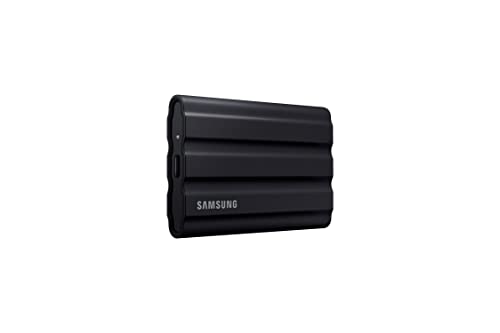
Samsung positions this drive, in its own listing title, for photographers, content creators and gaming, and the Shield version is the one built for movement. The IP65 rating and 2TB capacity make it the natural library drive for a laptop gamer whose machine travels: it holds a serious collection, survives the bag it rides in, and its stated read speed up to 1050MB/s over USB 3.2 Gen2 is the standard Gen 2 figure, so it performs the same on almost any modern gaming laptop without needing a special port.
Specs
- Capacity: 2TB
- Interface: USB 3.2 Gen2
- Read speed: up to 1050MB/s
- Rating: IP65
- Model: MU-PE2T0S/AM
Best for: Laptop gamers who carry their library in a backpack and want one rugged 2TB drive.
Watch out for: This listing is the 2TB Black version only; the 1TB and 4TB versions and other colours are separate listings, so confirm capacity and colour on the page before ordering.
ASIN: B09VLHR4JC
SanDisk Extreme Portable SSD 1TB
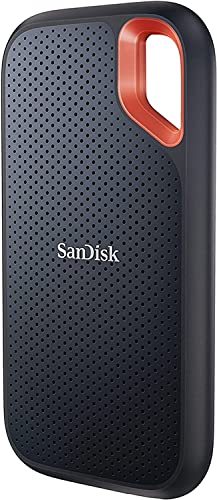
The SanDisk Extreme is the smaller commitment in this roundup: 1TB, the same stated read speed up to 1050MB/s as the other Gen 2 drives, and an IP65 rating for a drive that gets tossed into a bag. It suits the player who keeps a tight rotation of current games on the external drive and moves finished titles back to cold storage elsewhere. Because the capacity is the constraint here, it works best as an active library rather than a permanent archive of everything you own.
Specs
- Capacity: 1TB
- Interface: USB-C, USB 3.2 Gen 2
- Read speed: up to 1050MB/s
- Rating: IP65
- Model: SDSSDE61-1T00-G25
Best for: Gamers who want a rugged 1TB drive for a rotating set of current games.
Watch out for: Used and third-party listings for this same drive circulate under different codes; make sure the page you order from is the new retail listing for this exact model.
ASIN: B08GTYFC37
Crucial X9 Pro 2TB

Most listings in this class headline a read figure and stay quiet about writes, so the X9 Pro stands out for stating up to 1050MB/s for both read and write in its title. That symmetry matters for a drive that receives large game installs and updates regularly, not just one that streams assets during play. At 2TB over a USB 3.2 USB-C connection, with the listing stating a 10 Gbps data transfer rate, it is the balanced pick: full Gen 2 speed in both directions, generous capacity, no special host port required.
Specs
- Capacity: 2TB
- Interface: USB 3.2 USB-C
- Read speed: up to 1050MB/s
- Write speed: up to 1050MB/s
- Data transfer rate: 10 Gbps, as listed
Best for: Laptop gamers who install and patch games on the external drive often and want stated write speed to match read speed.
Watch out for: A separate X9 Pro for Mac listing exists and is not this drive; check the listing title does not say “for Mac” before ordering, and note the 4TB version is a different listing again.
ASIN: B0C9WHSZZN
Samsung T9 2TB
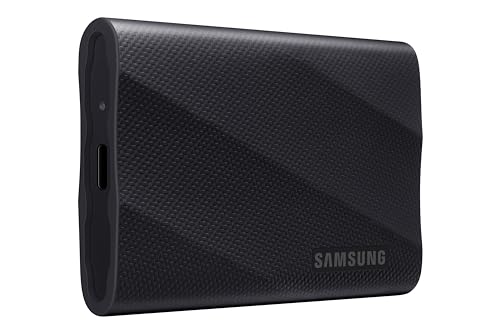
The T9 is the speed play of the group, stating sequential read speeds up to 2,000MB/s over USB 3.2 Gen 2×2, and Samsung’s title positions it for gaming, students and professionals. On a laptop that actually has a 20Gbps USB port, that interface headroom shortens big library moves and install transfers noticeably compared with the Gen 2 drives above. On a laptop without one, the T9 behaves like a Gen 2 drive, which is why this pick is aimed squarely at owners of newer machines whose port specification confirms Gen 2×2 support.
Specs
- Capacity: 2TB
- Interface: USB 3.2 Gen 2×2
- Sequential read speed: up to 2,000MB/s
- Model: MU-PG2T0B/AM
Best for: Owners of newer gaming laptops with a confirmed USB 3.2 Gen 2×2 port who move large libraries often.
Watch out for: The listing’s own footnote states full speed requires a USB 3.2 Gen 2×2 host with UASP; a gaming laptop without a 20Gbps USB port will not reach the stated figure.
ASIN: B0CHFS9K14
WD_BLACK P40 Game Drive SSD 2TB

WD_BLACK builds this drive specifically as a game drive, and its title states compatibility with PlayStation, Xbox, PC and Mac, which makes it the pick for a library shared between a gaming laptop and a console. The title states speeds up to 2,000MB/s over its Gen 2×2 interface, and RGB lighting gives it the gaming-desk look the other drives here skip. At 2TB it matches the largest capacities in this roundup, so a shared cross-platform library does not mean constant deleting on either machine.
Specs
- Capacity: 2TB
- Interface: USB 3.2 Gen 2×2
- Speed: up to 2,000MB/s, as stated in the listing title
- Lighting: RGB
- Compatibility as listed: PlayStation, Xbox, PC and Mac
- Model: WDBAWY0020BBK-WESN
Best for: Gamers splitting one 2TB library between a PC gaming laptop and a console.
Watch out for: One spec field on this listing states a higher read figure than the listing title does; go by the title figure of up to 2,000MB/s, and note the 1TB version is a separate listing.
ASIN: B09ZRWT134
Which One Fits Your Situation
Your laptop has no 20Gbps USB port
Stay with the Gen 2 drives, because your port caps every drive at the same ceiling. The T7 Shield and X9 Pro both give you 2TB at the full stated Gen 2 speed, and the SanDisk Extreme covers a smaller 1TB library. Spending on a Gen 2×2 model buys you nothing until the laptop itself changes, so put the difference toward capacity instead.
You move between home, campus and friends’ desks
Pick one of the IP65 drives. The T7 Shield’s 2TB suits a full library that travels daily, while the 1TB SanDisk Extreme is the lighter commitment for a rotating handful of games. Both carry their rating in the listing itself, which matters when the drive’s real home is a backpack pocket rather than a desk drawer.
Your library is shared with a console
The WD_BLACK P40 is the only drive here whose listing title names PlayStation and Xbox alongside PC and Mac, and its 2TB capacity holds a shared library without constant pruning. Confirm your laptop’s port supports Gen 2×2 if you want its full stated speed on the PC side; on a Gen 2 port it still works, just at the lower ceiling.
You install and patch games constantly
The Crucial X9 Pro is the one listing here that states a write figure equal to its read figure, up to 1050MB/s each way. Large installs, day-one patches and library reshuffles all lean on write speed, so for a drive that receives as much as it serves, that stated symmetry is worth more than a higher read-only headline.
Common Mistakes
- Buying a Gen 2×2 drive for a laptop with no 20Gbps port, then blaming the drive for Gen 2 speeds.
- Ordering the wrong capacity because each capacity of the same model is a separate listing with its own code.
- Comparing read figures across listings without checking whether one states read only and another states read and write.
- Assuming every portable SSD is rugged when only some listings here state an IP65 rating.
- Buying a used or third-party listing of the SanDisk Extreme when the new retail listing is the one to order.
Frequently Asked Questions
Can I play games directly from an external SSD on a gaming laptop?
Yes, and that is the main reason to choose one of the faster drives here. Games installed on a USB 3.2 Gen 2 drive load from it during play, so the stated read speed matters. Keep the drive connected directly to the laptop rather than through an unpowered hub, and leave spare capacity free so updates have room to install.
Will a USB 3.2 Gen 2×2 drive work on my older gaming laptop?
It will work, but at the speed of the port you plug it into. The Samsung T9’s listing footnote makes the condition explicit: the full stated figure requires a Gen 2×2 host with UASP. On a Gen 2 port the drive falls back to that link’s ceiling, so check your laptop’s port specification before paying for the faster class.
How much capacity do I actually need for a game library?
Work backwards from the games you genuinely rotate. A 1TB drive like the SanDisk Extreme holds a focused set of current titles, while the 2TB models here suit a broader library plus recordings and mods. Because each capacity is a separate listing, decide before ordering rather than assuming a size option on the page is the same product.
Does an IP65 rating matter for a drive that stays on my desk?
Not really. The rating on the T7 Shield and SanDisk Extreme listings speaks to dust and water resistance, which earns its keep in bags and travel. A desk-bound drive gains nothing from it, so if your external SSD never leaves home, judge the desk picks on interface, capacity and stated speeds instead of protection.
FAQ
Can I play games directly from an external SSD on a gaming laptop?
Will a USB 3.2 Gen 2×2 drive work on my older gaming laptop?
How much capacity do I actually need for a game library?
Does an IP65 rating matter for a drive that stays on my desk?
More from Amazon
Programs that pair well with the guide above. Offers and eligibility are set by Amazon and may change.
Free shipping on eligible items, Prime Video and more. Eligible new members can start with a free trial.
Start a Prime free trialAd-free music streaming. Eligible new subscribers can start with a free trial.
Try Music Unlimited freeA Prime membership for ages 18-24 with a trial period. Eligibility is set by Amazon.
See Prime for Young AdultsAudiobooks and podcasts to listen to on the go. Eligible new members can start with a free trial.
Try Audible freeAs an Amazon Associate we earn from qualifying purchases.