Key takeaways
- GPU first: The graphics card determines what resolution and frame rates you can expect. Prioritize the newest, most capable GPU your budget allows over CPU speed or RAM size.
- 16GB RAM minimum: Most modern games and background apps (Discord, streaming software, browsers) need at least 16GB to avoid stutter; 32GB is worth it if you plan to stream or multitask heavily.
- NVMe SSD storage: A 512GB–1TB NVMe drive means faster load times than older SATA SSDs or hard drives, though you may need an upgrade or external drive as your game library grows.
- CPU balance: Pair a mid-range CPU (Ryzen 5/7 or Intel i5/i7) with your GPU so it doesn’t bottleneck performance; you don’t need a top-tier chip for 1080p gaming.
- Connectivity and upgrade room: WiFi 6 and Bluetooth 5.0 are now standard expectations, and a case with airflow and open slots lets you upgrade the GPU or RAM later instead of replacing the whole PC.
Buying your first gaming PC can feel overwhelming. Between confusing spec sheets, GPU shortages, and marketing jargon like “up to” clock speeds, it’s easy to overpay for underwhelming performance or accidentally buy a machine that can’t handle the games you actually want to play.
This guide breaks down six popular prebuilt gaming desktops for beginners, what specs actually matter for entry-level gaming, and which machines offer the best balance of price and performance heading into 2026.
Our top picks



As an Amazon Associate we earn from qualifying purchases at no extra cost to you. Ratings are shown as listed on Amazon.
🎮 Get More From Your Setup — Free
Prime Gaming gives you free PC games every month, in-game loot, and a free Twitch channel sub — plus fast free shipping on all the gear above. New members get a 30-day free trial.
Watch: Best Gaming PC For Beginners — Video Review
How to Choose a Gaming PC For Beginners (2026)
- GPU first: The graphics card determines what resolution and frame rates you can expect. Prioritize the newest, most capable GPU your budget allows over CPU speed or RAM size.
- 16GB RAM minimum: Most modern games and background apps (Discord, streaming software, browsers) need at least 16GB to avoid stutter; 32GB is worth it if you plan to stream or multitask heavily.
- NVMe SSD storage: A 512GB–1TB NVMe drive means faster load times than older SATA SSDs or hard drives, though you may need an upgrade or external drive as your game library grows.
- CPU balance: Pair a mid-range CPU (Ryzen 5/7 or Intel i5/i7) with your GPU so it doesn’t bottleneck performance; you don’t need a top-tier chip for 1080p gaming.
- Connectivity and upgrade room: WiFi 6 and Bluetooth 5.0 are now standard expectations, and a case with airflow and open slots lets you upgrade the GPU or RAM later instead of replacing the whole PC.
The Best Gaming PC For Beginners (2026)s Reviewed
STGAubron Core i7 / RX 580
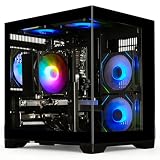
A strong value pick thanks to the Core i7 CPU pairing well with the RX 580 8G, making it capable of smooth 1080p gaming while also handling video editing or stream encoding without breaking a sweat.
Ryzen 5 4500 / RTX 3050
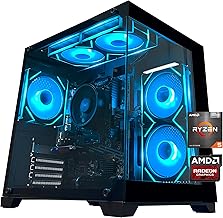
The RTX 3050 brings modern ray tracing support and better efficiency than older GPUs, making this one of the more future-proof entry-level options for beginners who want to dabble in newer titles.
Ryzen 5 / RX 560 4G (White)
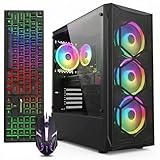
This is a budget-focused build best suited for esports titles, older AAA games, and everyday productivity rather than demanding new releases, but the clean white aesthetic and WiFi 6 support add nice touches at this price point.
HP RGB Desktop (Renewed)
Built around an aging i5-6500 and GTX 750 Ti, this renewed HP is really a light-gaming and general-use machine rather than a serious gaming rig, though it’s a reasonable low-cost way to get RGB styling and a Windows 11 Pro desktop for casual play.
STGAubron Core i5 / RX 560 4G
A dependable entry point into PC gaming, the i5 CPU keeps things responsive for everyday use and esports titles, while the RX 560 4G handles 1080p gaming at modest settings.
Frequently Asked Questions
Do I need a monitor, keyboard, and mouse separately?
Most prebuilt gaming desktops, including the ones in this guide, are sold as the tower only. Plan to budget separately for a monitor and peripherals unless the listing specifically states otherwise.
Is a Ryzen 5 or Core i5 good enough for beginners?
Yes. For 1080p gaming, a mid-range Ryzen 5 or Core i5 paired with a capable GPU is more than sufficient; you generally won’t see a performance boost from a pricier CPU unless you’re doing heavy multitasking or content creation.
Should I buy a renewed or refurbished gaming PC?
Renewed machines like the HP model here can save money, but they typically use older hardware and shorter warranties, so they’re best for casual gaming and everyday tasks rather than running the newest titles at high settings.
How much should a beginner spend on a first gaming PC?
Most solid beginner builds fall in the $600–$1,200 range. Spending less often means compromising on the GPU, which is the component that most affects your actual gaming experience.
Final Thoughts
For most beginners, the STGAubron Core i7/RX 580 and Ryzen 5 4500/RTX 3050 builds offer the best overall balance of price and performance, while the YAWYORE Ryzen 7 5700X/RTX 5060 is the top choice for anyone willing to spend more upfront for serious future-proofing.