Key takeaways
- Prioritize the GPU: Your graphics card sets your frame rate ceiling. At this budget, an RTX 5070 is the sweet spot for 1440p high settings, while an RTX 5060 Ti handles 1080p ultra comfortably. Don’t trade GPU tier for storage capacity.
- Match the CPU, don’t overspend on it: A Ryzen 7 8700F, 9700X, or Core Ultra 7 has more than enough headroom for gaming. Anything beyond that is money better spent elsewhere unless you stream or edit video alongside gaming.
- 16GB DDR5 is the floor, 32GB is comfortable: Most 2026 titles run fine on 16GB, but 32GB gives you breathing room for background apps, mods, and the next few years of releases. It’s also one of the easiest upgrades to do yourself later.
- Check the storage math: Modern games routinely eat 100–150GB each. A 1TB NVMe drive fills faster than you’d think — verify there’s a free M.2 slot so you can add a second drive without replacing the first.
- Look past the case: RGB lighting and tempered glass don’t affect performance. What does: adequate airflow, a reputable power supply with headroom for a GPU upgrade, and front-panel USB-C if you use modern peripherals or VR.
What's inside
Shopping for a gaming PC under $2,000 in 2026 is trickier than it looks. Spec sheets are crowded with similar-sounding parts, and two machines at the same price can deliver wildly different frame rates depending on which GPU the builder chose to prioritize. The temptation is to chase the biggest number on the box — 32GB of RAM, a 2TB SSD, a flashy case — while the graphics card, the single component that determines whether you hit 60fps or 144fps, quietly gets downgraded.
This guide cuts through that. We’ve focused on prebuilt desktops that stay realistically inside a $2,000 budget and evaluated them on the metric that actually matters: playable performance per dollar at 1080p and 1440p. Below you’ll find our current picks, a short buying checklist, and honest notes on where each machine makes its compromises.
As an Amazon Associate we earn from qualifying purchases at no extra cost to you. Product prices and availability are accurate as of the date shown and are subject to change.



⚡ Save on Your Next PC — Amazon Prime
Prime members get fast free shipping on the systems above, plus early access to Prime Day & Black Friday PC deals. New members get a 30-day free trial.
Watch: Best Gaming PC Under $2000 — Video Review
How to Choose Gaming PC Under $2000
- Prioritize the GPU: Your graphics card sets your frame rate ceiling. At this budget, an RTX 5070 is the sweet spot for 1440p high settings, while an RTX 5060 Ti handles 1080p ultra comfortably. Don’t trade GPU tier for storage capacity.
- Match the CPU, don’t overspend on it: A Ryzen 7 8700F, 9700X, or Core Ultra 7 has more than enough headroom for gaming. Anything beyond that is money better spent elsewhere unless you stream or edit video alongside gaming.
- 16GB DDR5 is the floor, 32GB is comfortable: Most 2026 titles run fine on 16GB, but 32GB gives you breathing room for background apps, mods, and the next few years of releases. It’s also one of the easiest upgrades to do yourself later.
- Check the storage math: Modern games routinely eat 100–150GB each. A 1TB NVMe drive fills faster than you’d think — verify there’s a free M.2 slot so you can add a second drive without replacing the first.
- Look past the case: RGB lighting and tempered glass don’t affect performance. What does: adequate airflow, a reputable power supply with headroom for a GPU upgrade, and front-panel USB-C if you use modern peripherals or VR.
The Best Picks Reviewed
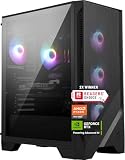
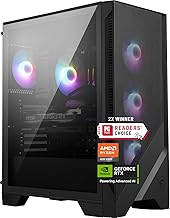
MSI Codex Z2 (R7-8700F, RTX 5070)
This is the most complete package on the list — an RTX 5070 paired with 32GB of DDR5 and a genuinely useful 2TB NVMe drive, plus front USB-C and VR readiness out of the box. If you want one machine that handles 1440p high-refresh gaming without immediate upgrades, start here.
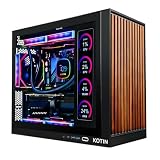
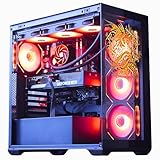
KOTIN Prebuilt (RTX 5070, Ryzen 7 9700X)
The Ryzen 7 9700X is a step up in CPU horsepower over most rivals in this bracket, and pairing it with an RTX 5070 and 32GB DDR5 makes this a strong pick for anyone who streams or multitasks while gaming. The 1TB SSD is the only obvious compromise, and it’s an easy one to fix.
Alienware Aurora (RTX 5070, Core Ultra 7 265F)
Alienware’s appeal here is support and build quality rather than raw spec advantage — you get a well-cooled chassis, proper warranty coverage, and a Core Ultra 7 that holds its own in mixed workloads. Worth the premium if you’d rather have a phone number to call than save $150.
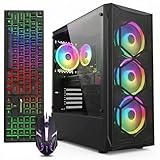
KOTIN Gaming PC (Ryzen 7 8700F, RTX 5060 Ti)
The value play of the group. An RTX 5060 Ti won’t match a 5070 at 1440p, but at 1080p it’s more than enough for maxed settings in most titles, and the 8700F is a capable partner. Budget for a RAM upgrade from 16GB down the line.
YAWYORE Gaming PC (Ryzen 7 5700X, RTX 5060)
The entry point into this roundup, built around the still-respectable Ryzen 7 5700X and an RTX 5060. It’s aimed squarely at 1080p esports and mainstream titles, where it delivers well above its price — just don’t expect it to stretch to 1440p ultra.
Frequently Asked Questions
Is $2,000 enough for a 1440p gaming PC in 2026?
Comfortably, yes. Any of the RTX 5070-equipped systems here will run current titles at 1440p high settings with strong frame rates, especially with upscaling enabled. You’d only need to spend more if you’re targeting 4K or very high refresh rates.
Should I buy a prebuilt or build my own?
Building your own can save money and gives you full control over parts, but prebuilts have closed much of that gap and come with a single warranty covering the whole system. If you’re not confident troubleshooting hardware, a prebuilt is the safer choice.
How long will one of these last before it needs upgrading?
Expect three to four years of comfortable 1080p or 1440p gaming from the RTX 5070 systems, and closer to two or three from the RTX 5060 and 5060 Ti models. Adding RAM or storage extends that; a GPU swap resets the clock entirely.
Do I need 32GB of RAM for gaming?
Not strictly — 16GB still handles the vast majority of games without issue. But 32GB removes any concern about background applications, browser tabs, or memory-hungry modded games, and DDR5 prices make it a reasonable insurance policy.
Final Thoughts
For most buyers, the MSI Codex Z2 is the pick to beat — it combines an RTX 5070 with 32GB of RAM and 2TB of storage, leaving little to upgrade on day one. If CPU performance matters more to you, the KOTIN Ryzen 7 9700X build offers the strongest processor in the group at a similar price. And if you’re working with a tighter budget or gaming primarily at 1080p, the KOTIN RTX 5060 Ti system delivers the best value in this roundup without asking you to compromise on the parts that count.