Key takeaways
- Gaming cache: AMD’s 3D V-Cache X3D chips deliver a large lead in many CPU-bound games, sometimes 15 to 20 percent higher frame rates.
- Platform longevity: AMD’s AM5 socket is committed to years of upgrades, while Intel more often requires a new board for a new CPU generation.
- Productivity: Intel’s high core and thread counts frequently edge ahead in video editing, streaming, and heavy multitasking.
- Efficiency: AMD’s X3D chips run cool and sip power under gaming loads; Intel’s top chips can draw more under sustained all-core work.
- Value: Intel often wins at the budget and prebuilt end, while AMD commands a premium for its gaming flagships.
- Memory: Both are on DDR5 now, but AMD’s cache reduces its sensitivity to memory tuning for gaming.
The Intel versus AMD debate is the oldest rivalry in PC gaming, and in 2026 it is closer and more interesting than ever. AMD’s Ryzen chips with 3D V-Cache have redefined what a gaming CPU looks like, while Intel’s latest Core processors counter with strong multi-core performance and competitive efficiency. Choosing between them is no longer about picking the obvious winner but about matching a platform to how you actually play and what else you do with your PC.
This comparison cuts through the marketing to look at real gaming performance, platform longevity, efficiency, and value. Whether you are eyeing a prebuilt like an Intel Core i5 machine or an AMD Ryzen system, or planning your own build, this breakdown will help you decide which team deserves your money in 2026.
Our top picks
 Prebuilt Gaming PC Desktop
- 【Sleek Design & Efficient Cooling】 Features an A-pillar-free…
- 【Powerful Multi-Core Performance, Smooth Multitasking】 Equipped with the…
- 【Entry-Level Gaming Graphics】Powered by AMD Radeon R7 350…
 Blackout Computers Gaming PC Intel 12th Gen
- 802.11 AC WIFI | Bluetooth 5.0 | Graphic…
- AMD Radeon RX 580 8GB GDDR5 Graphics Card…
- 4 RGB Fans for Maximum Air Flow |…
 NIMO 15.6" IPS FHD-Light Gaming-Laptop
- [High-Performance Processing] Powered by the AMD Ryzen 5…
- [Future-Proof Expandability] Designed for longevity, the N153 allows…
- [Enhanced Privacy & Security] Protect your sensitive data…
| Product | Key specs | |
|---|---|---|
| Prebuilt Gaming PC Desktop | 【Sleek Design & Efficient Cooling】 Features an A-pillar-free… 【Powerful Multi-Core Performance, Smooth Multitasking】 Equipped with the… 【Entry-Level Gaming Graphics】Powered by AMD Radeon R7 350… | Check price |
| Blackout Computers Gaming PC Intel 12th Gen | 802.11 AC WIFI | Bluetooth 5.0 | Graphic… AMD Radeon RX 580 8GB GDDR5 Graphics Card… 4 RGB Fans for Maximum Air Flow |… | Check price |
| NIMO 15.6" IPS FHD-Light Gaming-Laptop | [High-Performance Processing] Powered by the AMD Ryzen 5… [Future-Proof Expandability] Designed for longevity, the N153 allows… [Enhanced Privacy & Security] Protect your sensitive data… | Check price |
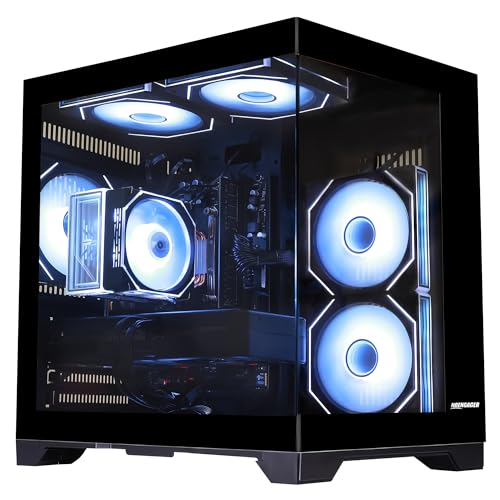 Prebuilt Gaming PC Desktop | High-Performance Gaming PC powered by Intel Core i5-14400F… 32GB DDR4 RAM 3200MHz ensures lag-free multitasking and… Built-in WiFi & Bluetooth for stable wireless connectivity,… | Check price |
 ASUS TUF A16 RTX 5060 Gaming Laptop | Equipped with AMD Ryzen 7 260 processor and… IMMERSIVE 165Hz DISPLAY - Features a 16" FHD+… Built to withstand daily wear and tear with… | Check price |
 NOVATECH Phantom 2.0 | AMD RX580 Graphics card delivers smooth visuals and… GET MORE DONE, FASTER: Powered by an Intel… UPGRADE YOUR SETUP’S LOOK: Encased in a high-quality… | Check price |
 Corsair Vengeance RGB RS DDR5 16GB | Disclaimer: Maximum Speed requires overclocking/PC BIOS adjustments AMD EXPO & Intel XMP 3.0 Compatible Only:… Dynamic RGB Lighting: Individually addressable RGB lighting delivers… | Check price |
 GMKtec M5 Ultra Gaming Mini PC AMD | Office Gaming Mini PC - UPGRADED GMKtec Nucbox… 32GB DDR4 RAM & 1TB PCIe SSD -… DUAL NIC LAN 2.5G RJ45 - Fast Network… | Check price |
As an Amazon Associate we earn from qualifying purchases at no extra cost to you.
⚡ Save on Your Next PC — Amazon Prime
Prime members get fast free shipping on the systems above, plus early access to Prime Day & Black Friday PC deals. New members get a 30-day free trial.
Watch: Intel vs AMD for Gaming in 2026 — Video Review
Quick Verdict
For pure gaming, AMD’s Ryzen X3D chips generally take the crown thanks to their massive cache, which feeds games hungry for fast memory access. Intel remains extremely competitive and often pulls ahead in mixed workloads and productivity, while its platform can be cheaper at the mid-range. If gaming is your top priority and budget allows, AMD is the safer pick; if you want an all-rounder or the best value prebuilt, Intel is very much in the fight.
Key Differences
- Gaming cache: AMD’s 3D V-Cache X3D chips deliver a large lead in many CPU-bound games, sometimes 15 to 20 percent higher frame rates.
- Platform longevity: AMD’s AM5 socket is committed to years of upgrades, while Intel more often requires a new board for a new CPU generation.
- Productivity: Intel’s high core and thread counts frequently edge ahead in video editing, streaming, and heavy multitasking.
- Efficiency: AMD’s X3D chips run cool and sip power under gaming loads; Intel’s top chips can draw more under sustained all-core work.
- Value: Intel often wins at the budget and prebuilt end, while AMD commands a premium for its gaming flagships.
- Memory: Both are on DDR5 now, but AMD’s cache reduces its sensitivity to memory tuning for gaming.
Intel for Gaming
Intel’s modern Core processors bring a hybrid design with performance and efficiency cores, delivering strong frame rates and excellent multitasking. In prebuilt systems like an Intel Core i5-14400F machine paired with a capable GPU, you get smooth 1440p gaming and enough multi-core muscle for streaming and content creation without breaking the bank. Intel’s platforms also tend to have mature, stable memory support and broad motherboard availability at every price point.
The main trade-offs are platform longevity, since Intel changes sockets more frequently, and power draw at the very top end. For a gamer who also edits video, runs many apps at once, or wants a well-priced ready-to-go system, Intel remains a compelling and often smarter-value choice in 2026.
AMD for Gaming
AMD’s Ryzen lineup, especially the X3D variants with stacked 3D V-Cache, is purpose-built for gaming. That extra cache dramatically boosts performance in simulation, strategy, and esports titles that hammer the CPU, often producing the highest frame rates available. Chips like the Ryzen 7 7800X3D found in gaming prebuilts have become the enthusiast default for a reason, and they do it while running remarkably cool and power-efficient.
The AM5 platform is another major draw, with AMD pledging long-term socket support so you can drop in a next-generation CPU later without replacing your motherboard. The cost is that AMD’s gaming flagships carry a premium, and for productivity-heavy users Intel can offer more cores for the money.
Which Should You Buy?
- Choose AMD if: gaming frame rates are your absolute priority and you want the strongest CPU-bound performance.
- Choose AMD if: you value a long-lived platform you can upgrade for years without a new motherboard.
- Choose Intel if: you want the best value in a prebuilt or budget build.
- Choose Intel if: you mix gaming with heavy streaming, editing, or multitasking that loves extra threads.
- Either works if: you are GPU-bound at 4K, where the CPU difference shrinks and both deliver excellent results.
Frequently Asked Questions
Is AMD really better than Intel for gaming in 2026?
For pure gaming, AMD’s X3D chips generally lead thanks to their large cache, especially in CPU-heavy titles at lower resolutions. Intel remains very close and can win in productivity, so the best choice depends on whether gaming or mixed workloads matter more to you.
Does the CPU matter if I play at 4K?
Less than you might think. At 4K the GPU does most of the work, so the gap between a strong Intel and AMD chip narrows considerably. CPU choice matters most at 1080p and 1440p and in simulation or esports titles that are CPU-bound.
Which platform lasts longer for upgrades?
AMD’s AM5 socket has a longer committed upgrade path, letting you swap in future Ryzen chips on the same board. Intel tends to change sockets more often, which can mean a new motherboard when you upgrade the CPU.
Is Intel more power-hungry than AMD?
Under heavy all-core workloads, Intel’s top chips can draw more power and run hotter. Under typical gaming loads the difference is smaller, and AMD’s X3D chips are notably efficient, which is a plus for cooling and noise.
Final Verdict
In 2026 there is no bad choice here, only the right choice for you. If maximum gaming frame rates and a future-proof upgrade path top your list, AMD’s X3D Ryzen chips are the enthusiast pick. If you want the best value, especially in a prebuilt, or you balance gaming with serious productivity and multitasking, Intel is a smart and cost-effective option. Match the platform to your priorities and either brand will deliver a superb gaming experience.