Key takeaways
- Headroom: 32GB leaves ample free memory for background apps; 16GB can fill up in heavy modern titles plus a browser.
- Multitasking: Streaming, recording, or having many tabs open is far smoother with 32GB.
- Stutter risk: When 16GB fills, data swaps to disk, causing hitches that 32GB avoids.
- Future-proofing: As games grow, 32GB extends how long your build stays comfortable.
- Cost: 16GB kits are cheaper, making them attractive for tight budgets and secondary rigs.
- Diminishing returns: Beyond 32GB, most gamers see little to no benefit today.
What's inside
For years, 16GB of RAM was the undisputed sweet spot for gaming. In 2026, that consensus is finally shifting. Modern open-world titles, heavier operating system overhead, and the habit of gaming with a browser, Discord, and a stream all running at once are pushing memory usage higher than ever. The question of whether to build with 16GB or step up to 32GB is now a real decision with meaningful consequences for smoothness and stutter.
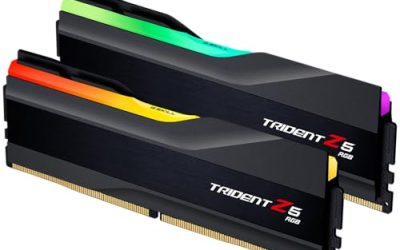
This comparison examines what 16GB and 32GB of RAM actually deliver in 2026 gaming, when the extra memory matters, and when it is money better spent elsewhere. Whether you are eyeing a 16GB dual-channel kit or a 32GB set like a CORSAIR Vengeance or G.SKILL Trident Z pair, this breakdown will help you decide how much memory your build really needs.
As an Amazon Associate we earn from qualifying purchases at no extra cost to you. Product prices and availability are accurate as of the date shown and are subject to change.



⚡ Save on Your Next PC — Amazon Prime
Prime members get fast free shipping on the systems above, plus early access to Prime Day & Black Friday PC deals. New members get a 30-day free trial.
Watch: 32GB vs 16GB RAM for Gaming — Video Review
Quick Verdict
In 2026, 32GB has become the recommended sweet spot for new gaming builds, giving you comfortable headroom for demanding titles and multitasking without stutter. 16GB is still perfectly playable for most single games run on their own, and it remains a fine budget choice, but it increasingly leaves no margin when you run games alongside browsers, Discord, and background apps. If you are building fresh, 32GB is the smart, future-proof pick.
Key Differences
- Headroom: 32GB leaves ample free memory for background apps; 16GB can fill up in heavy modern titles plus a browser.
- Multitasking: Streaming, recording, or having many tabs open is far smoother with 32GB.
- Stutter risk: When 16GB fills, data swaps to disk, causing hitches that 32GB avoids.
- Future-proofing: As games grow, 32GB extends how long your build stays comfortable.
- Cost: 16GB kits are cheaper, making them attractive for tight budgets and secondary rigs.
- Diminishing returns: Beyond 32GB, most gamers see little to no benefit today.
16GB RAM for Gaming
16GB is not dead. If you play one game at a time, close background apps, and run esports or older titles, a solid 16GB dual-channel kit like a CORSAIR Vengeance LPX or Silicon Power Value DDR4 set still delivers a great experience with no meaningful frame rate loss. It is the budget-friendly choice, and for many players who do not stream or heavily multitask, it remains genuinely sufficient in 2026.
The catch is that 16GB now leaves little breathing room. Load a demanding open-world game while a browser with a dozen tabs, Discord, and a game launcher sit in the background, and you can brush against the limit, triggering stutter as the system pages memory to storage. For a no-compromise modern setup, 16GB has become the floor rather than the target.
32GB RAM for Gaming
32GB is the new comfort zone. A dual-channel 32GB kit, whether a DDR4 set like G.SKILL Trident Z RGB at 3600MT/s or a DDR5 kit like Silicon Power or Crucial at 6000MT/s, gives you plenty of memory to run the most demanding 2026 games while streaming, recording, and multitasking without ever worrying about running out. That headroom translates directly into fewer stutters and a smoother overall experience.
For streamers, content creators, and anyone who keeps a busy desktop, 32GB is close to essential. It also future-proofs your build as games continue to demand more. The only downside is cost, and for a pure budget gaming box that runs one game at a time, the extra 16GB may not be strictly necessary today.
Which Should You Buy?
- Choose 32GB if: you are building a new gaming PC and want future-proof headroom.
- Choose 32GB if: you stream, record, or keep browsers and Discord open while gaming.
- Choose 16GB if: you are on a tight budget and play one game at a time.
- Choose 16GB if: you are building a secondary or esports-focused rig with light multitasking.
- Prioritize speed and dual-channel: two matched sticks in dual channel matter more than raw capacity for gaming performance.
Frequently Asked Questions
Is 16GB of RAM still enough for gaming in 2026?
For a single game with background apps closed, yes, 16GB still runs most titles well. The problem appears when you multitask heavily, where 16GB can fill up and cause stutter. For a no-compromise build, 32GB is the safer target.
Will 32GB of RAM increase my FPS?
Not directly, if 16GB was already enough for the game. Where 32GB helps is by preventing the stutter and slowdowns that happen when memory fills up during heavy multitasking, giving a smoother experience rather than a higher average frame rate.
Does RAM speed matter more than capacity?
Both matter, but for gaming, running dual-channel at a good speed is very important. Once you have enough capacity, faster RAM with lower latency, especially on AMD systems, can improve frame rates. Beyond sufficient capacity, speed and dual-channel setup give the bigger gains.
Should I get DDR4 or DDR5?
It depends on your platform. Newer AMD AM5 and modern Intel boards use DDR5, which is the forward-looking choice. If you are on an existing DDR4 platform, a fast 32GB DDR4 kit is still very capable and cost-effective for gaming.
Final Verdict
The RAM debate has tipped in 2026: 32GB is now the recommended sweet spot for any new gaming build, delivering the headroom to game and multitask without stutter and staying comfortable as titles grow more demanding. 16GB remains a legitimate budget choice for single-game sessions and lighter setups, but it is the floor rather than the goal. Build with 32GB if you can, prioritize a matched dual-channel kit, and your memory will never be the bottleneck.