Key takeaways
- Target resolution: Match the card to your monitor. 8GB cards handle 1080p beautifully; step up to 12–16GB if you game at 1440p or use high-res textures.
- VRAM headroom: Modern titles are hungry for memory. Extra VRAM protects you against stutter as games grow more demanding over the next few years.
- Upscaling support: DLSS 4 on RTX cards and FSR on Radeon can dramatically boost frame rates, so factor the software ecosystem into your choice.
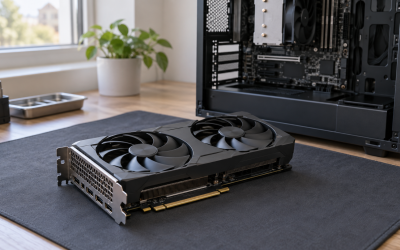
- Power and case fit: Check your PSU wattage and case clearance. Many modern mid-range cards use a 2.5-slot cooler that needs breathing room.
- Ports and outputs: Confirm HDMI 2.1 or DisplayPort 2.1 for high-refresh monitors, especially if you plan to game above 144Hz.
The mid-range graphics card is where most gamers should spend their money. This is the segment that delivers smooth 1080p and capable 1440p performance without the eye-watering prices of flagship cards, and the 2026 lineup is the strongest it’s been in years thanks to new architectures from both NVIDIA and AMD.
I’ve sorted through the current field to find the cards that actually make sense for real budgets and real games. Below you’ll find a buying framework followed by five standout picks spanning NVIDIA’s RTX 50-series, AMD’s RX 9000, and a few still-relevant previous-gen options.
Our top picks

 ASUS Dual NVIDIA GeForce RTX 5060 8GB
- Product Group: Personal Computer
- Binding: Personal Computers

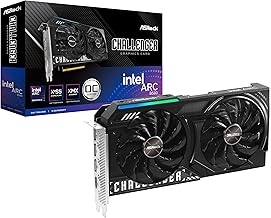
 ASUS Dual NVIDIA GeForce RTX 5060 Ti
- Product Group: Personal Computer
- Binding: Personal Computers

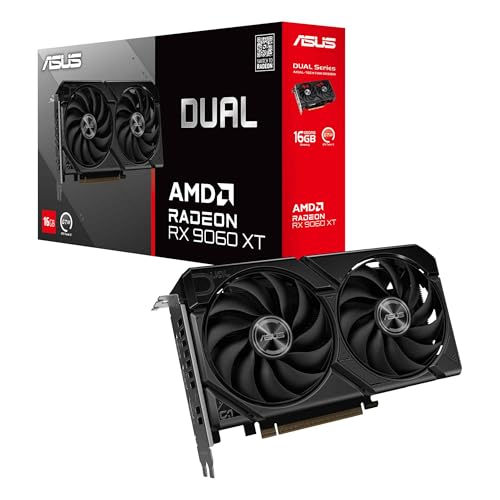 ASUS Dual Radeon RX 9060 XT 16GB
- Product Group: Personal Computer
- Binding: Personal Computers

As an Amazon Associate we earn from qualifying purchases at no extra cost to you. Ratings are shown as listed on Amazon.
🎮 Get More From Your Setup — Free
Prime Gaming gives you free PC games every month, in-game loot, and a free Twitch channel sub — plus fast free shipping on all the gear above. New members get a 30-day free trial.
Watch: Best Mid Range Gpu — Video Review
How to Choose a Mid-Range GPU
- Target resolution: Match the card to your monitor. 8GB cards handle 1080p beautifully; step up to 12–16GB if you game at 1440p or use high-res textures.
- VRAM headroom: Modern titles are hungry for memory. Extra VRAM protects you against stutter as games grow more demanding over the next few years.
- Upscaling support: DLSS 4 on RTX cards and FSR on Radeon can dramatically boost frame rates, so factor the software ecosystem into your choice.
- Power and case fit: Check your PSU wattage and case clearance. Many modern mid-range cards use a 2.5-slot cooler that needs breathing room.
- Ports and outputs: Confirm HDMI 2.1 or DisplayPort 2.1 for high-refresh monitors, especially if you plan to game above 144Hz.
The Best Mid-Range GPUs Reviewed
ASUS Prime Radeon RX 9070 XT 16GB OC
The RX 9070 XT is AMD’s strongest value proposition in the segment, pairing 16GB of GDDR6 with enough muscle for high-refresh 1440p. The Prime OC cooler stays quiet under load, and PCIe 5.0 with DP 2.1 keeps it future-facing. For memory-hungry games, this is the mid-range card to beat.
ASUS Dual RTX 5060 Ti 16GB OC
The RTX 5060 Ti with 16GB is the sweet spot for gamers who want DLSS 4 and solid 1440p frames without overspending. The extra VRAM over the standard 5060 gives it real longevity, and the compact Dual cooler fits most builds. A confident all-rounder.
ASUS Dual RTX 5060 8GB OC
For 1080p high-refresh gaming, the RTX 5060 8GB delivers excellent frames per dollar and full access to DLSS 4. The 8GB buffer is enough at 1080p, and the efficient design sips power. It’s the pragmatic pick for mainstream 1080p players.
GIGABYTE RTX 5060 WINDFORCE OC 8G
GIGABYTE’s WINDFORCE take on the RTX 5060 emphasizes cool, quiet operation with a robust triple-function cooling setup. Performance mirrors other 5060s, so this comes down to thermals and acoustics, where it does well. A dependable 1080p workhorse.
GIGABYTE RTX 3060 Gaming OC 12G
The RTX 3060 12GB remains a smart budget buy when discounted. Its generous 12GB of VRAM outpaces some newer 8GB cards for texture-heavy games, and the WINDFORCE cooling keeps it composed. Skip ray tracing at high settings and it still delivers a great 1080p experience.
Frequently Asked Questions
Is 8GB of VRAM still enough in 2026?
At 1080p, yes, for the vast majority of games. At 1440p or with ultra textures, 12–16GB cards give you meaningfully more headroom and fewer stutters down the line.
DLSS or FSR, does it matter?
Both boost frame rates by upscaling, but DLSS 4 on NVIDIA cards currently has an edge in image quality and adoption. AMD’s FSR is improving fast and is open across more hardware.
Do I need a new power supply?
Most mid-range cards run comfortably on a quality 550–650W PSU, but always check the manufacturer’s recommendation and your connector types before buying.
Is a previous-gen card worth it?
Absolutely, if the price is right. A discounted RTX 3060 12GB can outvalue a full-price new card for 1080p gaming.
Final Thoughts
For most 1440p gamers, the ASUS Prime RX 9070 XT and the RTX 5060 Ti 16GB are the two cards to shortlist, offering the best blend of VRAM and performance. If you game at 1080p and want to spend less, the RTX 5060 8GB is the value champion of the group.