Our Top Picks
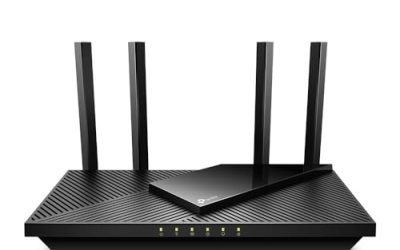
 TP-Link Dual-Band AX3000 Wi-Fi 6 Wireless Gigabit InternetAX300012.99 x 9.45 x 2.87 inches1.66 poundsCheck on Amazon
 TP-Link AXE5400 Tri-Band WiFi 6E RouterWiFi 6E, Tri-Band AXE540012.91 x 10.43 x 4.72 inches1.5 poundsCheck on Amazon
 NETGEAR Nighthawk 6-Stream AX5400 WiFi 6 Router25.4 cm x 76.2 cm x 10.2 cm14.7 x 10 x 4.6 inches2.5 poundsCheck on Amazon
The best mid range routers sit in a sweet spot that suits most households: they cost far less than flagship models, yet they carry the Wi-Fi 6 and Wi-Fi 6E hardware that keeps a busy home network moving. A mid range router is the right call when the router supplied by an internet provider struggles with several people streaming, gaming, and working from home at the same time, or when its wireless signal fades in the far rooms of the house. This guide compares five standalone routers that fit that middle tier, explains what each one does well, and shows how to match one to the size of a home and the speed of its broadband connection.
A mid range router is not a single fixed specification. The label covers dual-band Wi-Fi 6 models rated AX3000, faster dual-band models rated AX5400 and AX5700, and tri-band Wi-Fi 6E models that add a 6 GHz band. What they share is a balance of throughput, coverage, and wired connectivity that covers a typical family home without the extra antennas, multi-gig ports, and mesh nodes of a premium system. The five picks below all connect to a separate modem or to the broadband socket through a modem, and each one is a standalone router rather than a mesh kit, so a single unit covers the home on its own.
Before choosing, it helps to know the speed of the broadband line coming into the home. A router cannot deliver more than the connection it receives, so a household on a gigabit line gains more from a router with a 2.5 gigabit WAN port and a faster processor than a household on a slower line. Equally, a large home with thick walls benefits more from extra antennas and a higher stated coverage figure than a small flat does. The sections below walk through those trade-offs in order, then lay out the five picks side by side.
How to Choose a Mid Range Router
1. Wi-Fi generation and speed class
Wi-Fi 6 is the baseline worth looking for in a mid range router. It handles many connected devices more efficiently than Wi-Fi 5, thanks to OFDMA and MU-MIMO, which let the router talk to several devices in the same transmission window instead of one at a time. Speed classes such as AX3000, AX5400, and AX5700 describe combined theoretical throughput across the bands, not the speed any single device will see. An AX3000 router suits a household with a moderate broadband line and a dozen or so devices, while an AX5400 or AX5700 router suits a faster line, heavier streaming, and more simultaneous users. Wi-Fi 6E adds a 6 GHz band that is less crowded than the 5 GHz band, which helps in flats and dense neighbourhoods, but only devices with Wi-Fi 6E radios can use that band.
2. Coverage and antenna layout
Stated coverage figures describe ideal conditions, so treat them as a rough guide rather than a promise. A router with four to six external antennas and beamforming, which steers the wireless signal toward connected devices, generally holds a stronger link through walls than a compact router with internal antennas. For a single-floor home, one well-placed router in a central spot usually covers the whole floor. For a two-storey home, placing the router high up and near the centre of the house matters more than any single specification. If the far bedroom still drops out, look for a router that supports a mesh system from the same maker, so an extra node can be added later without replacing the router.
3. Wired ports and WAN speed
Wireless speed gets the attention, but wired ports decide how well gaming consoles, desktop PCs, and televisions perform. Four gigabit LAN ports cover the usual wired devices in a living room or office, and a USB port adds shared storage or a printer. The WAN port deserves a close look: a gigabit WAN port caps the wired internet speed at one gigabit, while a 2.5 gigabit WAN port lets a faster broadband line pass through at full speed. Households on a gigabit or faster line should favour a router with a 2.5 gigabit port, while households on slower lines will not notice the difference.
4. Processor and device capacity
A router is a small computer, and its processor and memory decide how smoothly it juggles dozens of connections. A quad-core processor handles a house full of phones, laptops, consoles, smart televisions, and smart home gadgets with fewer slowdowns than a dual-core chip, especially when security features and parental controls are switched on. Makers state a maximum device count, but the practical limit is lower when several devices stream video at once. A household with more than twenty connected devices should favour a router with a faster processor and a higher stated device capacity.
5. Gaming and traffic management
Gamers benefit from quality of service controls that prioritise gaming traffic over background downloads, and from a dedicated gaming port that gives a wired console or PC first claim on bandwidth. A router with a gaming mode that can open the right ports for a console, and with a mobile game mode that reduces latency for phones, suits a household where online play shares the network with streaming and video calls. These features do not replace a fast broadband line or a wired connection, but they reduce the lag spikes that appear when someone else starts a large download mid-match.
6. Security and parental controls
Built-in security software that blocks malicious sites and scans for intrusions adds a layer of protection for every device on the network, including smart home gadgets that cannot run their own security software. Parental controls that set time limits and filter content by device are useful in a family home. Some makers include these features free for the life of the router, while others put the deeper controls behind a subscription. Check what is included free before buying, and favour a router whose core security features do not need an ongoing payment.
7. Setup, app, and future expansion
A clear setup app that walks through installation in a few minutes saves a frustrating evening, and a well-designed app makes it easy to pause the internet for a device, set up a guest network, and check which devices are connected. Mesh compatibility is the main route to future expansion: a router that can join a mesh system from the same maker can later cover a larger home with extra nodes, while a router without that support would need replacing. Firmware updates matter too, so favour makers with a record of regular updates for their routers.
Top Picks
TP-Link Archer AX55
The Archer AX55 is a dual-band Wi-Fi 6 router rated AX3000, with combined wireless throughput of up to 2402 Mbps on the 5 GHz band and 574 Mbps on the 2.4 GHz band. It carries four gigabit LAN ports, one gigabit WAN port, and a USB 3.0 port for shared storage or a printer. Four external antennas with beamforming handle coverage, and the router supports OFDMA and MU-MIMO for busy households. It works with the TP-Link Tether app for setup and management, includes HomeShield security features, and supports EasyMesh, so it can join a mesh network with compatible TP-Link hardware later.
Who it is for: households on a moderate broadband line that want a straightforward Wi-Fi 6 upgrade from an older router or a provider-supplied unit, with enough wired ports for a console, a PC, and a television.
Caveats: the gigabit WAN port caps wired internet speed at one gigabit, so it does not suit a broadband line faster than that. It has no 6 GHz band, and its AX3000 rating sits at the lower end of this roundup, so a home with many simultaneous 4K streams may want a faster pick below.
TP-Link Archer AX73

The Archer AX73 steps up to a dual-band Wi-Fi 6 rating of AX5400, with up to 4804 Mbps on the 5 GHz band and 574 Mbps on the 2.4 GHz band. A 1.5 GHz tri-core processor drives the router, and six external antennas with beamforming support a stated coverage of up to 2,000 square feet. It has one gigabit WAN port, four gigabit LAN ports with link aggregation on two of them, and a USB 3.0 port. HomeShield security and parental controls are included, and OneMesh support lets it form a mesh network with compatible TP-Link extenders and routers.
Who it is for: larger single-floor homes and busy households that stream on several screens at once, with a router that can sit at the centre of the house and reach the far rooms.
Caveats: like the AX55, it has a gigabit WAN port rather than a multi-gig port, so it cannot pass through a broadband line faster than one gigabit at full speed. Its six antennas make it a wide unit, so measure the shelf space before placing it. Availability should be confirmed on the live listing before buying, as older cached copies of the product page have shown conflicting availability signals.
TP-Link Archer AXE75
TP-Link Archer AXE75 on Amazon
The Archer AXE75 is the only tri-band pick in this roundup, adding a 6 GHz band to the familiar 2.4 GHz and 5 GHz bands for a combined AXE5400 rating. The 6 GHz band gives Wi-Fi 6E devices a clean, uncongested channel, which helps in flats and dense streets where neighbouring networks crowd the 5 GHz band. A 1.7 GHz quad-core processor powers the router, and the headline wired feature is a 2.5 gigabit WAN port, so a broadband line faster than one gigabit can pass through at full speed. It also has four gigabit LAN ports, a USB 3.0 port, six antennas, VPN server and client support, WPA3 security, and OneMesh compatibility.
Who it is for: households on a gigabit or faster broadband line, especially in crowded wireless neighbourhoods, and homes with Wi-Fi 6E laptops and phones that can use the 6 GHz band.
Caveats: devices without Wi-Fi 6E radios cannot use the 6 GHz band, so the benefit depends on the devices in the home. Only the WAN port runs at 2.5 gigabit speed; the LAN ports are gigabit. Confirm current availability on the live listing before buying, as older cached copies of the product page have shown conflicting availability signals.
NETGEAR Nighthawk RAX50
NETGEAR Nighthawk RAX50 on Amazon
The Nighthawk RAX50 is a dual-band Wi-Fi 6 router rated AX5400, with six streams and combined wireless throughput of up to 5.4 Gbps. NETGEAR states coverage of up to 2,500 square feet, and the router carries one gigabit WAN port, four gigabit LAN ports, and a USB 3.0 port. It supports up to 25 devices, includes NETGEAR Armor security features, and works with the Nighthawk app for setup and management. Four external antennas handle the wireless signal, and the router supports MU-MIMO, OFDMA, and beamforming.
Who it is for: households that want a Nighthawk router with strong stated coverage for a medium to large home, and a simple setup through the Nighthawk app.
Caveats: the WAN port is gigabit, so a broadband line faster than one gigabit will be capped at the router. Some Armor security features need a subscription after the included period, so check what stays free. Match the listing by ASIN B082X17B8P and model RAX50-100NAS, as a separate renewed listing for the same model carries a different ASIN.
ASUS RT-AX86U Pro

The RT-AX86U Pro is a dual-band Wi-Fi 6 gaming router rated AX5700, with up to 4804 Mbps on the 5 GHz band and 861 Mbps on the 2.4 GHz band. A 2.0 GHz quad-core processor with 1 GB of memory drives the router, and the wired layout is the strongest in this roundup: a 2.5 gigabit WAN/LAN port, a dedicated gaming port that prioritises a wired console or PC, and three further gigabit LAN ports, plus a USB 3.2 port. Adaptive QoS prioritises gaming traffic, a mobile game mode lowers latency for phones, and AiProtection Pro security is included without a subscription. AiMesh support lets it join a mesh network with compatible ASUS routers.
Who it is for: gaming households that want the lowest latency and the most capable wired layout in the mid range, and homes on a gigabit or faster broadband line that need a 2.5 gigabit WAN port.
Caveats: its gaming features add settings that casual users may never touch, and its vertical stand design needs a stable shelf. It is the most gaming-focused pick here, so a household with no gamers may get better value from a simpler router above.
Comparison Table
| Router | Wi-Fi | Speed class | WAN port | LAN ports | USB | Stated coverage | Mesh support |
|---|---|---|---|---|---|---|---|
| TP-Link Archer AX55 | Wi-Fi 6, dual-band | AX3000 | 1 gigabit | 4 gigabit | USB 3.0 | Not stated | EasyMesh |
| TP-Link Archer AX73 | Wi-Fi 6, dual-band | AX5400 | 1 gigabit | 4 gigabit | USB 3.0 | Up to 2,000 sq. ft. | OneMesh |
| TP-Link Archer AXE75 | Wi-Fi 6E, tri-band | AXE5400 | 2.5 gigabit | 4 gigabit | USB 3.0 | Not stated | OneMesh |
| NETGEAR Nighthawk RAX50 | Wi-Fi 6, dual-band | AX5400 | 1 gigabit | 4 gigabit | USB 3.0 | Up to 2,500 sq. ft. | Not stated |
| ASUS RT-AX86U Pro | Wi-Fi 6, dual-band | AX5700 | 2.5 gigabit | 4 gigabit | USB 3.2 | Not stated | AiMesh |
Which One Is Right for You?
Start with the broadband line. Households on a line up to one gigabit can choose any pick here, since every router handles that speed, while households on a faster line should narrow the list to the Archer AXE75 and the RT-AX86U Pro, the two routers with a 2.5 gigabit WAN port. Next, consider the size of the home. A small to medium home suits the Archer AX55, which covers the essentials at the lowest tier of this roundup, while a larger home suits the Archer AX73 or the Nighthawk RAX50, which carry six streams and higher stated coverage. Gamers should look at the RT-AX86U Pro first for its dedicated gaming port and adaptive QoS, and at the Archer AXE75 second for its clean 6 GHz band, which helps when neighbours crowd the airwaves. Households in flats should weigh the AXE75 heavily, since the 6 GHz band is the clearest answer to congested wireless surroundings. Finally, think about expansion: TP-Link buyers can add OneMesh or EasyMesh nodes later, ASUS buyers can add AiMesh nodes, and NETGEAR buyers should plan on the RAX50 covering the home on its own. Any of these five is a genuine step up from a provider-supplied router, and the right one is the one that matches the line speed, the floor plan, and the devices in the home.
Frequently Asked Questions
What makes a router mid range?
A mid range router sits between basic entry-level models and flagship systems. It usually carries Wi-Fi 6 or Wi-Fi 6E, a speed class from AX3000 to AX5700, four gigabit LAN ports, and a processor strong enough for twenty or more devices. It costs less than a flagship router because it skips multi-gig LAN ports, extra bands, and large mesh node bundles, while still covering a typical family home.
Is Wi-Fi 6E worth it in a mid range router?
Wi-Fi 6E is worth it when the home has Wi-Fi 6E devices and sits in a crowded wireless area, such as a block of flats, where the 6 GHz band escapes the congestion on the 5 GHz band. It is less useful when every device in the home uses Wi-Fi 6 or older, since those devices cannot connect to the 6 GHz band at all. In that case a strong Wi-Fi 6 router such as the Archer AX73 or the Nighthawk RAX50 is the better buy.
Do I need a separate modem with these routers?
Yes. Every router in this guide is a standalone router that needs a modem, or a modem router set to bridge mode, to connect to the broadband line. The router plugs into the modem with an Ethernet cable, and the modem handles the connection to the provider. Check with the broadband provider whether a separate modem is supplied or whether the provider router can be switched to modem-only mode.
Can a mid range router handle gigabit broadband?
Yes, provided the router has a WAN port fast enough for the line. All five picks here handle a gigabit line, and the Archer AXE75 and the ASUS RT-AX86U Pro go further with a 2.5 gigabit WAN port that suits lines faster than one gigabit. The main limit for a gigabit household is usually the placement of the router and the capability of the devices, not the router itself.
Disclosure: As an Amazon Associate, we may earn from qualifying purchases.
FAQ
Which One Is Right for You?
What makes a router mid range?
Is Wi-Fi 6E worth it in a mid range router?
Do I need a separate modem with these routers?
Can a mid range router handle gigabit broadband?
More from Amazon
Programs that pair well with the guide above. Offers and eligibility are set by Amazon and may change.
Free shipping on eligible items, Prime Video and more. Eligible new members can start with a free trial.
Start a Prime free trialAd-free music streaming. Eligible new subscribers can start with a free trial.
Try Music Unlimited freeA Prime membership for ages 18-24 with a trial period. Eligibility is set by Amazon.
See Prime for Young AdultsAudiobooks and podcasts to listen to on the go. Eligible new members can start with a free trial.
Try Audible freeAs an Amazon Associate we earn from qualifying purchases.