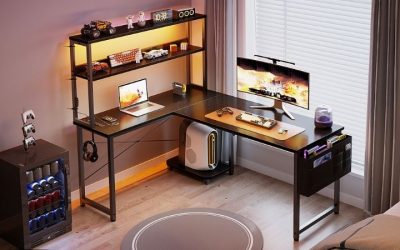
Choosing the best under desk footrests for gamers is primarily about matching the support to your chair, desk height and preferred way of moving your feet. A good footrest can provide contact when your feet would otherwise dangle, but it cannot correct a chair that is the wrong size or replace breaks from long gaming sessions. For a straightforward adjustable platform, the Fellowes Standard 48121 is our most accessible starting point. Players who actively rock their feet may prefer the Humanscale FR300, while the lower-priced Staples ST63336 deserves consideration on a tight budget. We compare seven real U.S. products, describe exactly what their adjustability changes and explain when buying nothing may be the sensible choice.
Quick verdict: choose support, tilt or active movement
Best overall for most seated gamers: Fellowes Standard 48121. Its textured free-floating platform and two-position support design offer an uncomplicated way to bring feet up to a comfortable level. Staples showed a directly orderable $32.99 U.S. listing. The maker’s older specification material calls this a dual-height model; some retailer descriptions inconsistently mention three heights, so do not buy expecting three independently validated settings.
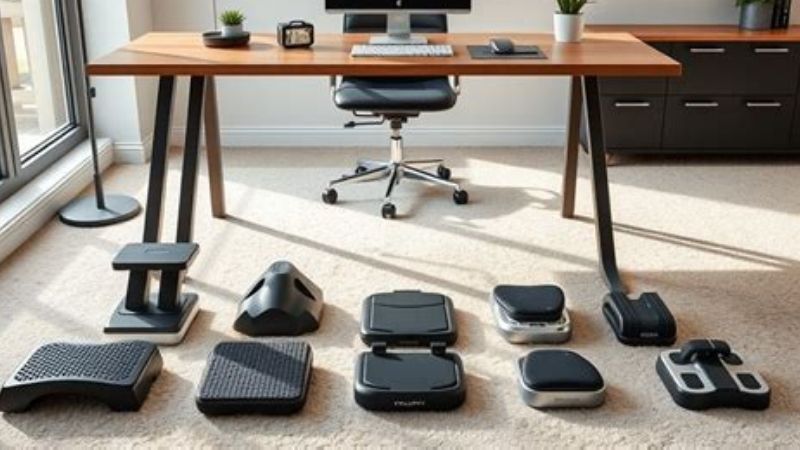
Best low-cost adjustable option: Staples Ergonomic ST63336. Staples’ house-brand unit showed $25.99 with Add to cart and advertised height-and-tilt adjustment. Its one-year warranty is shorter than the Fellowes Standard’s listed five-year coverage. If you need a specific minimum or maximum elevation, verify the currently sold version before checkout rather than assuming all adjustable footrests share a height range.
Best for intentional gentle foot movement: Humanscale FR300. A wood-platform rocker with steel support, a published 3.75-to-6.75-inch height range and a 15-year warranty makes it a premium choice for a user who wants ongoing small position changes. It costs substantially more than a basic plastic tray and will not suit everyone who prefers a completely stationary surface.
Best pedal-style alternative: Mount-It MI-7811. It provides a two-position height choice, a quoted 0-to-25-degree tilt range and a textured platform. The maker’s direct U.S. collection page showed $41.99 and in-stock status. The movement mechanism is different from soft-foam wedges and may not be ideal if the user regularly shifts an office chair toward the footrest.
Additional choices: Fellowes Office Suites 8032201 provides a larger multi-height platform; Fellowes Ultimate 8067001 adds a higher adjustment range; Mind Reader FTREST-BLK offers an adjustable textured surface with a published 3.25-to-6.25-inch height range. These are alternatives for specific fit or surface preferences, not claims of a medical outcome.
Seven under-desk footrests compared
All measurements and adjustment claims are maker- or retailer-published specifications; they have not been measured by Geek Gaming Tricks. U.S. listed prices and ordering signals were checked October 29, 2026. An online Add to cart signal is not a completed purchase or guaranteed local delivery. The Fellowes Standard height descriptions conflict across sources, so this article favors the manufacturer’s two-position designation and does not invent an exact third height.
| Exact product / model | Published support or movement feature | Best gamer use | Observed U.S. price and seller | Listing status | Principal limitation |
|---|---|---|---|---|---|
| Fellowes Standard 48121 | Dual-position height; free-floating textured platform | Balanced everyday foot support | $32.99, Staples | Add to cart; delivery offered | Height-source discrepancy at other retailers |
| Staples Ergonomic ST63336 | Adjustable height and tilt; plastic platform | Budget fixed-desk setup | $25.99, Staples | Add to cart; delivery offered | Exact adjustment range not established |
| Humanscale FR300 | 16 × 11.875 in.; 3.75–6.75-in. height; rocking surface | Premium movement-focused setup | $201.00, Humanscale featured product page; other listings vary | Buy Now at maker; exact checkout unverified | High price and more floor mass |
| Mount-It MI-7811 | 16.8 × 12.6 in.; 4.1 or 5.1-in. setting; 0–25° tilt | Foot-operated angle changes | $41.99, Mount-It direct | In stock on maker collection | Two height choices only |
| Fellowes Office Suites 8032201 | Approx. 17 7/16 × 13-in. platform; three published heights; free tilt | Taller lift needs under fixed desk | $52.99, Staples category listing | Delivery listed; ZIP varies | Larger physical footprint |
| Fellowes Ultimate 8067001 | Approx. 17 3/4 × 13 1/4-in. surface; 4/5 1/4/6 1/2-in. heights | Higher foot elevation | $60.19, Staples category listing | Delivery listed; ZIP varies | Can lift feet too high for some users |
| Mind Reader FTREST-BLK | Approx. 17 × 13-in. textured platform; 3.25–6.25-in. height | Broad adjustment under compact desk | $37.99, Staples | Delivery/pickup listed | Exact adjustment mechanism should be checked |
Detailed reviews: seven footrests for long gaming sessions
Fellowes Standard 48121 — best everyday choice for a fixed gaming desk
The Fellowes Standard has a useful combination of a wide contact surface, modest adjustment and a mechanism designed to let the platform move under foot pressure. Fellowes’ own legacy office-ergonomics documentation identifies product 48121 with a 16 3/4-by-12-inch platform and two height positions, while current Staples measurements describe the unit’s larger overall footprint. Distinguish the foot-contact area from external dimensions when planning whether the footrest will fit between chair legs or beneath a narrow desk. The textured surface may help the feet feel less slippery, but texture preference is personal, particularly if you game in socks.
For a player using a fixed-height desk around the usual office-table height, this model is worth trying when raising the chair to get the forearms level with the keyboard leaves the feet unsupported. Its free-floating design permits small changes in ankle angle without having to remove your feet. That is an advantage over a solid block if you dislike keeping the ankles in one position. It may be a disadvantage for someone who expects a totally motionless raised platform, especially during a fast game when they brace their feet against the floor.
A critical buying caveat is the contradictory listing copy. Staples and Fellowes call it a dual-height footrest, while an Office Depot description for the same 48121 item mentions three heights and a larger tilt setting that resembles a different Fellowes family model. We treat the manufacturer’s documentation as stronger evidence for the two-position claim; confirm the box or updated manual if the exact adjustment travel determines your choice. Buy it if: you want affordable everyday support with a known U.S. retailer. Skip if: three separately calibrated heights are nonnegotiable.
Staples ST63336 — practical budget adjustable platform
The Staples Ergonomic Tilt Adjustable Footrest is identified as model ST63336, item 24635428. Staples’ direct page showed a $25.99 promotional price and a visible Add to cart action when checked. Its design is not an attempt to be a luxury massage accessory; the basic benefit is adding a support surface below a desk when the chair’s ideal height does not allow both feet to rest naturally on the floor. An adjustable tilt is useful because some players naturally plant their heels while others prefer to extend their ankles gently.
The principal advantage is price and relatively simple U.S. availability through a mainstream office-supply seller. The merchant publishes a one-year warranty and a plastic/poly build. That is enough information to make a cautious purchase comparison, but not enough to make a strong claim about mechanism life or stability under dynamic movement. We found no independent long-term cycle test for this exact retailer-house model and cannot say it is as durable as a higher-priced unit.
Measure under-desk space first, especially if your chair has a wide five-spoke base or a low crossbar. Try it near the center of the foot area so it supports both feet without making you extend your knees unnaturally. If your feet already rest comfortably on the floor and the keyboard is at the right height, spending even a small amount may be unnecessary. Buy it if: you want basic support with a current U.S. retail listing. Skip if: a documented exact height range or long manufacturer warranty is your primary requirement.
Humanscale FR300 — premium wooden rocker with adjustable height
The Humanscale FR300 is the most distinctive construction in this group. The maker describes a solid hardwood platform over a steel frame, with non-slip contact and ball-bearing rollers intended for smooth rocking. Its listed usable size is 16 inches wide by 11.875 inches deep; the height range of 3.75 to 6.75 inches provides approximately three inches of adjustment. Humanscale quotes a 15-year warranty. Those specifications establish what makes it different from a flexible foam cushion, not proof that it will improve gaming scores or treat pain.
The appeal is controlled movement. Some gamers unconsciously shift their feet during long queue times or strategy matches; a rocker can provide a designated place to do so without constantly sliding the chair. The counterargument is equally practical: if your preferred seated position involves planting both feet firmly for a racing-wheel or flight-simulator pedal setup, a rocking footrest may be counterproductive. It should not be used in place of an accelerator, brake, rudder or other control pedal, and it must be kept clear of moving chair casters.
Price evidence deserves care. One maker-branded featured-products page displayed $201.00, while the company’s newer shop collection displayed a different category price for FR300 variants. Treat the direct $201.00 as a page observation, not an unchangeable checkout total; verify finish and selected configuration before purchase. Buy it if: material quality, smooth rocking and warranty matter enough to justify a premium. Skip if: your setup benefits from a static platform or a $30 model already meets your height needs.
Mount-It MI-7811 — best for adjustable pedal-style angle
Mount-It’s MI-7811 is a dual-pedal ergonomic footrest with a different approach to movement than a free-swinging office tray. The manufacturer lists two height settings, 4.1 and 5.1 inches, with an adjustable tilt range from 0 to 25 degrees. The published base dimensions are 16.8 by 12.6 inches, and the construction material is high-impact polystyrene. Those measurements make it possible to check whether the device will fit below a compact gaming desk without interfering with chair legs or a PC tower on the floor.
The design is useful for a player who adjusts posture between games rather than keeping the feet rigidly at one angle. The textured surface provides tactile reference and the maker describes anti-skid feet. Yet a tilting platform does not mean every person should continually rock their ankles. Some players will prefer the pedal to remain at a specific angle after adjusting, especially during long seated controller sessions. Try to imagine how your feet move rather than choosing the most moving parts by default.
The U.S. brand collection displayed $41.99 with an in-stock indicator at research time, a stronger immediate availability signal than a manufacturer’s technical brochure alone. Still, warranty and shipment details belong to the selected current offer. Buy it if: two well-spaced heights and a defined tilt range cover your chair adjustment. Skip if: your feet need a lower support height than 4.1 inches or you expect a soft cushioned resting surface.
Fellowes Office Suites 8032201 — multiple height choices for fixed chairs
The Office Suites Adjustable Footrest, identified here specifically as 8032201 without the Microban-labeled 8035001 variant, uses a larger platform than the basic Standard 48121. Fellowes’ published support material lists the height options at roughly 4 1/8, 4 7/8 and 5 5/8 inches; it describes freely tilting operation with a locking option. The contact area is approximately 17 7/16 inches wide by 13 inches deep. That gives more room to vary foot placement when a desk is tall and a chair must be raised for keyboard alignment.
That additional adjustment is meaningful only if you need it. If your feet are just one inch short of a comfortable contact with the floor, a 4-inch lift might be excessive. A larger footrest can also eat into the limited under-desk area beside a desktop tower, cable tray or chair wheelbase. Try to keep your knees and hips in a natural position rather than using a footrest as a platform to stretch the legs straight forward. The maker’s guide and retailer product name should be checked by exact model because 8032201 and 8035001 are easy to conflate.
Staples’ category listing displayed $52.99 and a delivery option for 8032201. That is a listing snapshot rather than a confirmed ZIP-specific checkout. Buy it if: its three listed height settings match your measured support requirement. Skip if: a smaller, cheaper dual-position tray already gives your feet full contact.
Fellowes Ultimate 8067001 — a higher-lift choice for specific users
Fellowes Ultimate Foot Support, model 8067001, is a more specialized option because its published height positions are approximately 4, 5 1/4 and 6 1/2 inches, with tilt up to 25 degrees. Fellowes’ brochure places its contact surface at roughly 17 3/4 by 13 1/4 inches. These are sizable dimensions for the space under a narrow desk. Its strongest case is a chair/desk combination that requires a footrest with substantial elevation after other adjustments have been made.
A higher maximum is not automatically better. Lifting the feet too much may compress the space beneath the thighs or force the knees above a comfortable angle. Start by setting chair height so the keyboard is reachable with relaxed shoulders and near-straight wrists, then choose the footrest height that supports the soles without crowding the legs. Avoid treating marketing promises about massage or circulation as a guaranteed medical benefit; comfort varies with individual posture and available space.
Staples listed the 8067001 at $60.19 with delivery information at the time of review. It is more expensive than Standard 48121, so the buyer should be able to identify the specific higher adjustment that makes the extra cost useful. Buy it if: your measured requirement falls near the upper end of its published positions. Skip if: you mainly want a low, simple place for heels to rest or have very little space under the desk.
Mind Reader FTREST-BLK — adjustable textured surface for shared setups
The Mind Reader FTREST-BLK is an alternative for a shared gaming room where the chair height or user changes frequently. The direct Staples listing describes a textured tilting platform approximately 17 by 13 inches and a published height adjustment range of 3.25 to 6.25 inches. That broad published span is its primary advantage over devices with only a couple of fixed steps. The surface offers a nonslip textured feel, which some people will appreciate while gaming in socks and others may find distracting.
In a shared family PC arrangement, adjustability reduces the pressure to keep one user’s under-desk support at a fixed height for everyone. It can also make sense for a hybrid work-and-gaming desk where you raise the chair for typing and lower it for using a controller. However, the visible retailer description does not establish how easy it is to make every adjustment while seated or how the mechanism feels after years of use. Those would require hands-on or independent longevity testing, which we have not performed.
Staples showed the exact FTREST-BLK at $37.99 with shipping/pickup indications. Be careful not to swap it with the different FTLINE-BLK or FTHEIGHT-BLK versions in a marketplace search; they have different designs and prices. Buy it if: you need a relatively broad published height range at a midrange price. Skip if: a stable fixed block is your preference or precise smooth-motion performance is your priority.
How we selected these under-desk footrests
We compared seven identified models with manufacturer or U.S. retailer pages, then screened them for the requirements that matter in a gaming chair position: supported foot height, stability, available floor clearance, adjustable angle, surface texture and the ability to move naturally without a rolling chair hitting the device. The selection mixes fixed-position tilting trays, a higher-adjustment platform and a premium rocker because there is no universal best mechanism. The cited numbers are published specifications, not foot-pressure or fatigue measurements performed for this article.
Retail prices were recorded October 29, 2026, from U.S. pages where available. Four clearly orderable or in-stock direct offers were found among Staples, Mount-It and other sellers, while category listings and variant-priced manufacturer pages require the buyer’s final delivery ZIP code. We also checked OSHA’s computer-workstation guidance rather than treating footrest brand language as clinical evidence.
Buying guide: adjust the chair first, then choose the footrest
Check whether your feet actually need raising
OSHA recommends that feet be fully supported by the floor or a footrest when desk and chair geometry requires one. Sit with your back supported and shoulders relaxed, set the chair so the keyboard does not force wrists upward, then see whether the soles reach the floor comfortably. If they do, a footrest may be optional. If your heels hang or you slide forward to make contact, measure the approximate gap rather than buying the tallest platform available. A footrest addresses support; it does not compensate for a chair with an unsuitable seat depth or a desk that is much too high.
Match minimum height before maximum height
Product descriptions tend to highlight their largest height setting, but the lowest setting is often the limiting factor. If you only need a small rise, a platform that begins at four inches can lift your knees too far. Conversely, a taller user at a high desk may need a greater range, making Office Suites or Ultimate worth considering. Compare the desired foot position with the published range, remembering that foam may compress under weight and a tilting tray changes effective height as your feet move. No single height is correct for every user.
Choose movement based on your gaming style
A free-floating platform lets your ankles change angle subtly, while a rocker such as FR300 provides continuous controlled motion. That can feel comfortable during long sessions but may be distracting in a game that depends on exact leg positioning. Fixed racing and flight pedals should remain on stable, manufacturer-approved mounts rather than on a wobbling ergonomic footrest. For regular keyboard-and-mouse or controller gaming, choose the movement that feels natural; if you habitually brace your feet when concentrating, a relatively stationary support may suit you better than a rocker.
Account for floor material, chair wheels and desk furniture
A footrest that stays put on a carpet may slide on a smooth laminate floor, and the reverse can happen if a grip surface catches pile. Inspect the maker’s anti-skid feature and leave enough space for chair casters to roll without hitting the platform. A PC tower under the desk may restrict lateral leg motion; do not wedge a footrest in front of air intakes or a cable bundle. The width of a foot-contact surface is not always the same as the outer chassis width, so use the full footprint when measuring clearance.
Think about shoes, socks and surface cleaning
Texture can provide feedback and grip, but a sharply ridged platform may be uncomfortable against bare feet or thin socks. Soft foam feels different from smooth plastic or a wood rocker and often needs a removable or cleanable cover. Consider how frequently you plan to share the gaming station and whether liquid spills or pets are realistic concerns. Check the manufacturer’s care instructions; do not wash electrical heated footrests as if they were ordinary foam or plastic trays. We excluded heated models from the core selection because they introduce power and maintenance variables unrelated to basic foot support.
Set expectations about comfort and medical claims
The useful outcome to assess is whether your feet are supported without forcing awkward knee or ankle angles. No footrest in this roundup was clinically assessed by us or demonstrated to prevent injury, cure back pain or increase circulation for every gamer. Take breaks, vary posture and follow medical advice if you have persistent symptoms or a diagnosed circulation problem. OSHA’s recommendations describe work-station positioning, not proof that one brand’s footrest is medically superior. Avoid buying extra gadgets to solve discomfort caused by an incorrectly adjusted chair.
Verify the exact SKU, retailer terms and stock
Footrest families can contain similar names with materially different heights. Fellowes 48121 is not 8032201; Mind Reader FTREST-BLK is not FTLINE-BLK. Check product codes, dimensions, shipping, return policies and any exchange conditions. Some sellers present location-based delivery dates in search snippets; those are not guarantees for every U.S. buyer. Price snapshots in this guide reflect the checked seller pages and may change with promotions or variant selection.
Frequent mistakes when building a comfortable gaming station
Buying without checking chair height: this can create a device that raises your knees unnecessarily. Treating movement as inherently better: rocking can be pleasant for one person and disruptive for another. Ignoring the PC tower or racing pedals: a footrest must not interfere with essential equipment or access routes. Believing a single comfort claim: footrest texture, range and durability must be evaluated separately from broad wellness language. Failing to measure the rolling-chair footprint: casters can collide with a platform long before the user notices a posture benefit.
Frequently asked questions
Do gamers actually need an under-desk footrest?
Not always. If your feet already rest flat on the floor while your chair, keyboard and screen are appropriately positioned, a separate support may add little value. A footrest is most useful when an otherwise sensible chair height leaves the feet unsupported, which OSHA identifies as a reason to provide one.
Is a rocking footrest better than a fixed one?
It depends on how you prefer to move your legs. The Humanscale FR300 encourages controlled rocking, while trays such as Fellowes Standard can tilt under foot pressure. A user who wants consistent leverage or uses foot-operated game controls may prefer a fixed support. Neither mechanism has been tested here as a universal comfort winner.
Which footrest is best for a short gamer?
Choose according to measured distance between your feet and the floor after adjusting the chair, rather than height alone. A model’s lowest usable setting is important; 4-inch minimum elevation can be too high for a person who only needs an inch of support. Confirm the chair also supports the back and thighs appropriately.
Can a footrest improve FPS or aiming accuracy?
No published evidence in this roundup establishes an FPS or aiming benefit. A more comfortable position may make a long session easier to manage, but graphics performance and online latency are determined by other factors. Buy a footrest for physical support, not as a competitive performance upgrade.
Can I use one with a racing wheel or flight-sim pedals?
Do not place load-bearing pedals on a tilting or moving footrest. These controls require secure mounting and stable braking or rudder forces. You can keep a separate footrest to use when the controls are moved away, provided it does not block an emergency exit from the chair.
How high should my footrest be?
High enough for full, relaxed contact without compressing the thighs against the seat or pulling the knees into an awkward position. There is no fixed universal number. Adjust the chair for proper keyboard position first, then use the lowest comfortable footrest setting and reassess after a short session.
Is foam more ergonomic than a plastic footrest?
Not inherently. Foam changes feel and may compress; plastic or wood often offers a more defined platform and movement mechanism. The better option is the one that matches your preferred foot position, cleaning needs and available space. The material by itself does not establish a therapeutic effect.
Final thoughts
Start with the Fellowes Standard 48121 when you need uncomplicated everyday support under a fixed gaming desk, or the lower-priced Staples ST63336 if a budget footrest is enough. Choose the Humanscale FR300 specifically for its adjustable wood-and-steel rocker and long listed warranty; compare Mount-It MI-7811 for a simpler defined tilt range. Buy only after measuring the foot-to-floor gap and checking under-desk clearance. A correctly adjusted chair with feet already supported may be more valuable than adding another accessory.