Key takeaways
- For everyday speed: An SSD transforms boot times and load screens, making it the top pick for your main drive.
- For massive cheap storage: A hard disc delivers the most capacity per dollar for archives and media collections.
- For laptops: An SSD like the WD Blue SA510 is more shock-resistant and power-efficient, extending battery life and durability.
- For outfitting multiple PCs: A value multi-pack such as the INLAND Pro lets you upgrade several machines affordably at once.
- For travel: A portable SSD like the SSK or Lexar ES3 offers fast, rugged storage you can toss in a bag.
What's inside
If your computer takes an age to boot or your games seem to spend forever on loading screens, the type of storage inside is almost certainly the culprit. The hard disc versus SSD question is one of the most important decisions you can make when upgrading a PC or laptop, because it directly shapes how fast and responsive the whole system feels. A spinning hard disc is cheap and roomy, but a solid state drive rewrites the experience with instant loads and near-silent operation.
Rather than talk in abstractions, we ground this comparison in genuine upgrade picks like the Samsung 870 EVO, the WD Blue SA510, the value-focused PNY CS900, and the multi-pack INLAND Pro for outfitting several machines at once. These are the drives real buyers reach for, and lining them up against a traditional hard disc shows why the flash revolution took over.
As an Amazon Associate we earn from qualifying purchases at no extra cost to you. Product prices and availability are accurate as of the date shown and are subject to change.


🎮 Get More From Your Setup — Free
Prime Gaming gives you free PC games every month, in-game loot, and a free Twitch channel sub — plus fast free shipping on all the gear above. New members get a 30-day free trial.
Watch: Hard Disc Vs Ssd: Full Comparison — Video Review
Quick Verdict
An SSD is the right choice for your operating system, applications, and games thanks to its huge speed advantage. A hard disc still earns its keep as inexpensive high-capacity storage for files you rarely open. Pairing a fast SSD with a large hard disc gives you the best of both worlds.
Hard Disc Drives
Hard discs rely on magnetic platters that spin at high speed while a mechanical head reads and writes data. This proven design delivers the lowest cost per terabyte of any storage, making it the go-to for backups, video archives, and sprawling game libraries where instant access is not essential.
The trade-off is performance. Because a physical arm has to move to find data, hard discs feel slow next to flash storage, with longer boot and load times. The moving mechanism is also more fragile if dropped and can generate audible noise during heavy activity.
Solid State Drives
An SSD such as the Samsung 870 EVO stores data in flash memory chips with zero moving parts, reaching read speeds around 560MB/s on a SATA connection. That translates into snappy boot-ups, quick app launches, and far shorter game loads, all while running silently and drawing less power.
Because they contain no delicate moving arm, drives like the WD Blue SA510 and PNY CS900 handle bumps without flinching, which is a real advantage in laptops. Portable models like the Lexar ES3 and SSK external SSDs extend that speed and durability to storage you carry with you, offering rapid transfers on the go.
Head-to-Head: Which Should You Buy?
- For everyday speed: An SSD transforms boot times and load screens, making it the top pick for your main drive.
- For massive cheap storage: A hard disc delivers the most capacity per dollar for archives and media collections.
- For laptops: An SSD like the WD Blue SA510 is more shock-resistant and power-efficient, extending battery life and durability.
- For outfitting multiple PCs: A value multi-pack such as the INLAND Pro lets you upgrade several machines affordably at once.
- For travel: A portable SSD like the SSK or Lexar ES3 offers fast, rugged storage you can toss in a bag.
Frequently Asked Questions
How much faster is an SSD than a hard disc?
In real use, an SSD can boot Windows and load games several times faster than a hard disc. The difference is immediately obvious the moment you power on the machine.
Should I replace my hard disc entirely?
Not necessarily. Many users move their OS and games to an SSD while keeping the hard disc as a secondary drive for backups and large files, getting speed and capacity together.
Is it hard to install an SSD?
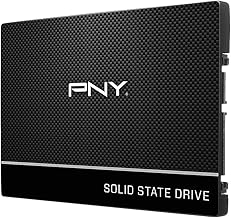
A 2.5-inch SATA SSD like the PNY CS900 installs much like a hard disc, connecting with the same power and data cables. Cloning your old drive or doing a fresh install completes the swap.
Do SSDs wear out?
SSDs have a finite number of write cycles, but modern drives last many years under normal use and include warranties. For typical gaming and everyday tasks, wear is rarely a concern.
Final Verdict
For the machine you use every day, the solid state drive is the clear winner. Drives like the Samsung 870 EVO, WD Blue SA510, and PNY CS900 deliver a speed leap that no hard disc can match, and the difference shows up in every boot and load. Reserve a traditional hard disc for cheap bulk storage, and let the SSD handle the workload you actually notice.