Key takeaways
- Performance: The RTX 5080 pulls ahead by roughly 10 to 15 percent in demanding 4K titles thanks to more CUDA cores and higher clocks, a gap that grows in raster-heavy workloads but shrinks once DLSS and frame generation are enabled on both.
- Price: The 5070 Ti launches at a lower MSRP, and that saving is the single biggest reason buyers pick it; the 5080 commands a premium that only makes sense if you truly need every last frame.
- Power and efficiency: The 5080 draws more power and expects a beefier PSU and airflow, while the 5070 Ti runs a little cooler and cheaper to feed, making it friendlier for compact or quieter builds.
- Memory: Both cards carry 16GB of GDDR7, so neither holds a VRAM advantage; the 5080 pairs it with slightly more bandwidth, which helps at 4K but is not decisive for most games.
- Features: DLSS 4, Multi Frame Generation, and Blackwell’s ray tracing improvements are present on both, meaning the feature set is identical and only raw throughput separates them.
- Value: For pure frames per dollar the 5070 Ti wins clearly, whereas the 5080 is about buying peak performance and longevity rather than efficiency of spend.
What's inside
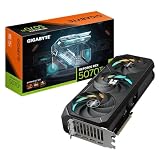
The RTX 5080 and RTX 5070 Ti sit right next to each other in Nvidia’s Blackwell lineup, and for anyone building a high-end 1440p or 4K gaming rig in 2026 they are the two cards that spark the most agonizing debate. Both share the same generation of architecture, DLSS 4 with Multi Frame Generation, and 16GB of fast GDDR7, which makes the gap between them narrower than the names might suggest.
The real question is whether the RTX 5080’s extra cores and higher clocks justify a meaningful price premium over the 5070 Ti, or whether the cheaper card delivers most of the experience for less money. Getting this choice right matters because the difference can fund a better monitor, more storage, or a stronger CPU, so it pays to understand exactly what you gain by stepping up.
As an Amazon Associate we earn from qualifying purchases at no extra cost to you. Product prices and availability are accurate as of the date shown and are subject to change.



⚡ Save on Your Next PC — Amazon Prime
Prime members get fast free shipping on the systems above, plus early access to Prime Day & Black Friday PC deals. New members get a 30-day free trial.
Watch: RTX 5080 vs 5070 Ti: Worth It in 2026? — Video Review
Quick Verdict
Buy the RTX 5080 if you want the highest frame rates at 4K and plan to keep the card for years without compromise; choose the RTX 5070 Ti if you game mostly at 1440p or high-refresh 4K and want the best performance-per-dollar, since it delivers the large majority of the 5080’s experience for noticeably less.
Key Differences
- Performance: The RTX 5080 pulls ahead by roughly 10 to 15 percent in demanding 4K titles thanks to more CUDA cores and higher clocks, a gap that grows in raster-heavy workloads but shrinks once DLSS and frame generation are enabled on both.
- Price: The 5070 Ti launches at a lower MSRP, and that saving is the single biggest reason buyers pick it; the 5080 commands a premium that only makes sense if you truly need every last frame.
- Power and efficiency: The 5080 draws more power and expects a beefier PSU and airflow, while the 5070 Ti runs a little cooler and cheaper to feed, making it friendlier for compact or quieter builds.
- Memory: Both cards carry 16GB of GDDR7, so neither holds a VRAM advantage; the 5080 pairs it with slightly more bandwidth, which helps at 4K but is not decisive for most games.
- Features: DLSS 4, Multi Frame Generation, and Blackwell’s ray tracing improvements are present on both, meaning the feature set is identical and only raw throughput separates them.
- Value: For pure frames per dollar the 5070 Ti wins clearly, whereas the 5080 is about buying peak performance and longevity rather than efficiency of spend.
RTX 5080: Peak Performance for Uncompromising 4K
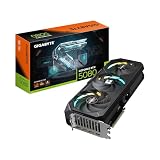
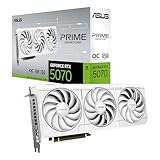
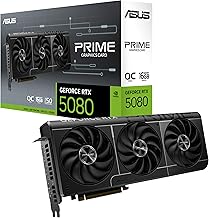
The RTX 5080 is the card to buy when you want to run everything at 4K with the settings maxed and refuse to leave performance on the table. Partner models like the ASUS TUF Gaming RTX 5080, the ROG Astral RTX 5080, and the Gigabyte RTX 5080 Gaming OC pair its extra cores with serious cooling, so the GPU can hold high boost clocks through long sessions without throttling. That headroom translates into the smoothest experience available short of the flagship tier.
It also makes the most sense for players chasing high-refresh 4K, where the 5080’s raw throughput combined with Multi Frame Generation can push well past 120 frames per second in supported titles. If you own a 4K 240Hz display, do heavy content creation on the side, or simply want a card that will stay comfortable for several years, the 5080 is the safer long-term investment despite its higher cost.
RTX 5070 Ti: The Value Champion of the Blackwell Range
The RTX 5070 Ti is arguably the smarter buy for the vast majority of gamers because it delivers most of the 5080’s real-world performance at a distinctly lower price. At 1440p it is effectively overkill, sailing past high refresh targets, and at 4K it remains highly capable, especially once DLSS 4 upscaling and frame generation do their work. For many players the frames they lose versus a 5080 are ones they would never notice in motion.
Its lower power draw and reduced cooling demands also make it easier to build around, fitting comfortably into mid-tower cases with modest airflow and less expensive power supplies. When you factor in that the money saved can go toward a faster CPU or a better monitor, the 5070 Ti often delivers a more balanced, sensible high-end build than stretching for the 5080.
Which Should You Buy?
- For maxed-out 4K gaming: pick the RTX 5080 because its extra cores and bandwidth keep frame rates highest where the workload is heaviest.
- For the best value at 1440p: pick the RTX 5070 Ti because it already exceeds high-refresh targets and saves you a substantial amount of money.
- For high-refresh 4K esports: either works well, but the 5080 gives more headroom if you own a 4K 240Hz panel and want to feed it consistently.
- For compact or quiet builds: pick the RTX 5070 Ti since its lower power draw and cooling needs suit smaller cases and quieter fan curves.
- For long-term future-proofing: pick the RTX 5080 if you want to avoid upgrading for as long as possible and value peak performance over efficiency of spend.
Frequently Asked Questions
Is the RTX 5080 worth the extra money over the 5070 Ti?
It depends on your resolution and budget. At 4K with maxed settings the 5080’s 10 to 15 percent lead is meaningful, but at 1440p the 5070 Ti is so capable that most players will not notice the difference, making the cheaper card the better value.
Do both cards have the same amount of VRAM?
Yes, both the RTX 5080 and RTX 5070 Ti ship with 16GB of GDDR7, so neither has a memory-capacity advantage. The 5080 has slightly more bandwidth, which helps marginally at 4K.
Will the RTX 5070 Ti handle 4K gaming?
Absolutely. The 5070 Ti is a strong 4K card, particularly with DLSS 4 upscaling and Multi Frame Generation enabled, though the 5080 gives more raw headroom for the most demanding titles at native resolution.
Do I need a bigger power supply for the RTX 5080?
The 5080 draws more power than the 5070 Ti, so it is wise to budget for a higher-wattage, quality PSU and good case airflow. The 5070 Ti is more forgiving and works comfortably with more modest supplies.
Final Verdict
Both cards are excellent, but the decision comes down to priorities. The RTX 5080 is the choice for players who want the absolute best 4K performance and longevity and are willing to pay for it, while the RTX 5070 Ti is the value pick that gives you the large majority of that experience for less, freeing budget for the rest of your build. For most people in 2026, the 5070 Ti is the smarter buy, with the 5080 reserved for those who genuinely need every frame.