Our Top Picks
 HP 14 Inch Everyday Laptop16GB RAM | 512GB PCIe SSD12.76 x 8.86 x 0.71 inches3.24 PoundsCheck on Amazon
 HP Everyday Laptop • Microsoft Office 365 Included8GB RAM12.7 x 8.8 x 0.7 inches3.24 PoundsCheck on Amazon
 Apple 2026 MacBook Neo 13-inch Laptop with A18256GB8.12 x 11.71 x 0.5 inches2.7 PoundsCheck on Amazon
An everyday laptop is the one that lives on the kitchen counter, the couch arm, or the corner of a desk, and gets opened a dozen times before dinner. It checks email, streams a show, fills out a form, joins a video call, and holds the family photos. The decision is not about peak performance. It is about avoiding the three things that make a daily laptop miserable: too little memory, too little storage, and a dim screen you squint at every afternoon.
This guide is for households, retirees, students on a budget, and anyone replacing an aging machine in 2026 who wants something that simply works without a premium price. The seven models below range from small, entry-level Windows laptops to a Mac and two Dell notebooks with stronger memory and storage. Each is judged only on what its listing states, so where a title leaves out a detail such as screen brightness or port count, the advice is to check the listing before you buy.
Quick Picks
HP 14 Inch Everyday Laptop, 2027 Edition, Intel N150 CPU, 128GB SSD | 1TB Cloud Storage, Microsoft 365 Included, Windows 11, Copilot AI, Long Battery Life, Thin & Portable
One of the consumer electronics options compared in this guide.
View on Amazon
HP 2027 Everyday Laptop, Intel CPU, 128GB Storage, Copilot AI, Office 365 | 1TB Cloud Storage, Windows 11, Fast Charge, WiFi 6, Long Battery Life, Lightweight & Portable, Study & Work, Willow Green
One of the consumer electronics options compared in this guide.
View on Amazon
HP 2027 Everyday Laptop, Intel CPU, 128GB Storage, Copilot AI, Office 365 | 1TB Cloud Storage, Windows 11, Fast Charge, WiFi 6, Long Battery Life, Lightweight & Portable, Study & Work, Modern Silver
One of the consumer electronics options compared in this guide.
View on Amazon
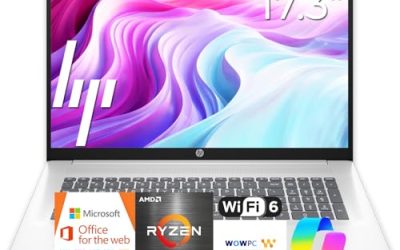
HP New Everyday Slim Laptop, 2026 Edition, AMD High Performance Processor, 4GB DDR5 RAM, 128GB SSD,1TB Cloud Storage, Long Battery Life, Windows 11
One of the consumer electronics options compared in this guide.
View on Amazon
Dell 15.6 Laptop, FHD, Intel Core 3 100U, 8GB RAM, Windows 11 Home | 300 nits Anti-Glare WVA, Intel UHD Graphics, DDR5, 512GB SSD, Wi‑Fi 6, Bluetooth, Carbon Black, 3‑Cell 41WHr Battery, DC15250
One of the consumer electronics options compared in this guide.
View on AmazonHP Everyday Laptop • Microsoft Office 365 Included • Intel Processor • 8GB RAM • 128GB SSD • 1TB Cloud Storage • Windows 11 • Fast Charge and Long Battery Life
One of the consumer electronics options compared in this guide.
View on AmazonApple 2026 MacBook Neo 13-inch Laptop with A18 Pro chip: Built for AI and Apple Intelligence, Liquid Retina Display, 8GB Unified Memory, 256GB SSD Storage, 1080p FaceTime HD Camera; Blush
One of the consumer electronics options compared in this guide.
View on Amazon| Product | Best for | Key spec from the title |
|---|---|---|
| HP 14-Inch Everyday Laptop | Small, simple family laptop | 14 inch, Intel N150, 128GB SSD, Microsoft 365 included |
| HP Everyday Slim Laptop (AMD) | Light browsing on an AMD processor | AMD processor, 4GB DDR5 RAM, 128GB SSD |
| Dell 15.6-Inch Laptop (DDR5, 300 nits) | The roomiest storage and a brighter screen | Core 3 100U, 8GB DDR5, 512GB SSD, 300 nits |
| HP Everyday Laptop with 8GB | Households that open many tabs | 8GB RAM, 128GB SSD, 1TB cloud storage, fast charge |
| Apple MacBook Neo 13-Inch | Mac users who want a light, simple machine | A18 Pro chip, 8GB unified memory, 256GB SSD |
| HP Everyday Slim Laptop (N150, 4GB DDR5) | Casual use and portability | Intel N150, 4GB DDR5 RAM, 128GB SSD |
| Dell 15.6-Inch Laptop (DDR4, 250 nits) | A large, plain Windows laptop | Core 3 100U, 8GB DDR4, 512GB SSD, 250 nits |
How to Choose
Memory is the quiet dealbreaker
Windows 11 and a modern browser use a surprising amount of RAM. With 4GB, a handful of tabs and a video call can make the system pause, while 8GB gives breathing room for streaming, documents, and a few apps at once. If your habits include many tabs, choose 8GB. Also note the memory type: DDR5 is newer than DDR4, though for everyday use the quantity matters far more than the generation.
Storage: SSD size and the cloud trap
A 128GB SSD is enough for Windows, a few apps, and light files, but photo libraries and downloads can fill it within a year. A 256GB drive is more comfortable, and 512GB removes most storage worries for a household laptop. Several listings advertise 1TB of cloud storage, which helps with backups but is usually a limited-time offer and does not replace local space. Look at the SSD number, not the cloud one.
Screen size, brightness, and portability
A 14-inch screen is easier to carry from room to room, while a 15.6-inch panel is easier to read for long documents and spreadsheets. Brightness is rated in nits: around 250 to 300 is acceptable for indoor use, but anything dimmer struggles near a window. Anti-glare coatings help in bright rooms. A full HD resolution is the standard to look for; lower resolutions look soft for text.
Battery, charging, and what to ignore
Phrases like long battery life and fast charge appear in nearly every entry-level title, but they rarely come with hours or wattage, so treat them as marketing until the listing gives a number. Also look past bundled office subscriptions, which expire after a year, and Copilot or AI branding, which does not change daily speed. Focus on RAM, SSD size, screen, and a processor class that matches your tasks.
The 7 Best Options
HP 14-Inch Everyday Laptop (Intel N150)
This compact 14-inch HP pairs an Intel N150 processor with a 128GB SSD and a 1TB cloud storage allowance, and it ships with Microsoft 365 and Windows 11. It targets simple tasks such as email, schoolwork, and streaming, and its smaller size makes it easy to move around the house. Buyers who want more screen than a phone or tablet but less bulk than a 15.6-inch laptop tend to land in this size class.
- Strength: a 14-inch body is light and easy to carry between rooms.
- Strength: Microsoft 365 is included, which saves a separate purchase for the first period.
- Trade-off: the title does not list RAM, so check the listing before assuming it can handle heavy multitasking.
Skip it if you need a large screen for long documents or a lot of local storage.
HP Everyday Slim Laptop (AMD Processor)
The listing describes an AMD high-performance processor, 4GB of DDR5 RAM, a 128GB SSD, and a long battery claim, all in a slim body running Windows 11. It is geared toward light browsing and homework, with AMD silicon as the differentiator from the Intel-heavy HP lineup. The title does not name the exact AMD model, so check the listing if processor details matter to you.
- Strength: DDR5 memory is a newer standard than the DDR4 found on some budget models.
- Strength: a slim design suits a shared family laptop that gets carried around.
- Trade-off: 4GB of RAM is tight for modern browsers with many tabs open.
Skip it if you juggle many windows, video calls, and downloads at the same time.
Dell 15.6-Inch Laptop with Core 3 100U (DDR5, 300 Nits)
This Dell stands apart from the HP group with 8GB of DDR5 memory, a 512GB SSD, Wi-Fi 6, and a 300-nit anti-glare screen. It is a strong fit for a household that wants a single laptop to carry the family files, photos, and schoolwork for several years. It is the closest thing in this group to a buy-once household machine.
- Strength: 512GB of storage and 8GB of RAM give far more headroom than the 128GB models.
- Strength: a 300-nit anti-glare panel is easier to read in bright rooms.
- Trade-off: a 15.6-inch body is bulkier than the 14-inch HP models.
Skip it if you prefer a very light laptop that slips into any bag.
HP Everyday Laptop with 8GB RAM and Office 365
This HP lists an Intel processor, 8GB of RAM, a 128GB SSD, 1TB of cloud storage, Windows 11, and fast charging with a long-battery claim. It is a practical pick for a home that keeps many tabs open but does not store a large file collection locally. The listing says Intel without naming a model, which is common for this tier, so expectations should stay modest.
- Strength: 8GB of RAM handles browsing and streaming more comfortably than 4GB.
- Strength: fast charging is useful for a laptop that gets plugged in only when needed.
- Trade-off: 128GB of storage fills quickly, so photos and downloads need a cloud or external drive.
Skip it if you want a particular processor named in the title, since it only says Intel.
Apple MacBook Neo 13-Inch
The only Mac in this group lists a 13-inch Liquid Retina display, an A18 Pro chip, 8GB of unified memory, and a 256GB SSD, with Apple Intelligence features. It suits someone already in the Apple ecosystem who wants a compact, simple machine for everyday web, mail, and media. Pricing tiers differ sharply from the Windows models, so it sits closer to the premium end of this list.
- Strength: a Liquid Retina display and Apple silicon are a clear step up in feel from entry-level Windows laptops.
- Strength: 256GB of storage is double the entry-level HP models.
- Trade-off: it runs macOS, so Windows-only programs will not work natively, and the title is truncated, so check the listing for ports.
Skip it if you depend on Windows-only software or want the lowest possible cost.
HP Everyday Slim Laptop (Intel N150, 4GB DDR5)
Another slim HP, this one lists an Intel N150 processor, 4GB of DDR5 RAM, a 128GB SSD, 1TB of cloud storage, Microsoft 365, and a portable design. It is aimed at casual use such as video streaming, homework, and email. With the same processor class as the 14-inch HP, the real difference is the slim body and memory type.
- Strength: a portable build and included Microsoft 365 suit a student or occasional user.
- Strength: DDR5 memory is a newer standard for a budget machine.
- Trade-off: only 4GB of RAM limits how many tabs and apps stay responsive.
Skip it if you plan to use it as your only computer for work and multitasking.
Dell 15.6-Inch Laptop with Core 3 100U (DDR4, 250 Nits)
This Dell shares the Core 3 100U processor, 8GB of RAM, and 512GB SSD of its sibling but lists DDR4 memory and a 250-nit anti-glare IPS panel. It makes sense when you want the generous storage and a large screen but can accept a slightly dimmer display. Many buyers will never notice the 50-nit gap indoors, and the savings can go toward a case or a mouse.
- Strength: 512GB of SSD storage is generous for a household laptop.
- Strength: an IPS panel offers wide viewing angles for sharing a screen.
- Trade-off: DDR4 and 250 nits are a small step behind the DDR5, 300-nit sibling.
Skip it if you work near bright windows, where the higher-brightness model is a better fit.
Which One Fits Your Situation
A shared family laptop
Pick the Dell with DDR5 and 300 nits. The 512GB drive holds the photo library, and 8GB of memory handles multiple accounts.
A laptop for an older relative
The HP 14-inch with Microsoft 365 is light, simple, and ready for email and video calls. Add a larger external monitor later if reading comfort becomes an issue.
A student on a budget
The HP Everyday laptop with 8GB gives enough memory for browser-based homework, and the cloud storage allowance helps with school files.
An Apple household
The MacBook Neo fits when iPhones and iPads are already in the home, since photos, messages, and files move across without extra setup.
Common Mistakes
- Choosing 4GB of RAM for a laptop that will run many browser tabs.
- Counting cloud storage as local space and then running out of room on a 128GB drive.
- Ignoring screen brightness and ending up with a panel unreadable near a window.
- Treating bundled Microsoft 365 as permanent when the included term is limited.
- Paying extra for AI branding that does not change everyday speed.
Related guides
- Aio Liquid Coolers For High Performance Gaming
- How To Overclock A Gpu Safely With Msi Afterburner
- Which Motherboards Support Rtx 4090 And Rtx 5090
Frequently Asked Questions
Is 128GB enough for an everyday laptop?
It works for light use, but photos, downloads, and updates can fill it within a year. A 256GB or 512GB drive is more comfortable for a primary household machine.
How much RAM does an everyday laptop need?
8GB is the practical target today because browsers and Windows both use memory heavily. A 4GB laptop can work for very light use but will feel slow with many tabs.
Do I need a touchscreen?
No. None of these listings advertise one, and for email, documents, and streaming a standard screen is fine. Spend on memory and storage first.
Is a MacBook a good everyday laptop?
It can be, especially if you already use an iPhone. Check that the programs you need run on macOS, and read the listing for port details because the title is shortened.