Key takeaways
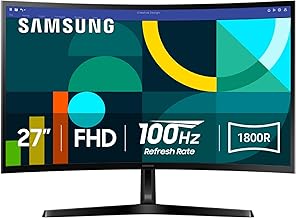
- 60-100Hz: Fine for casual gaming, story-driven titles, and budget builds — a step up from standard displays, like the Samsung Essential S3 at 100Hz.
- 120-165Hz: The sweet spot for most gamers, balancing smoothness with affordability. The KTC H27S5C’s 120Hz QHD panel fits here nicely.
- 200Hz+: Built for competitive shooters and esports titles, where every millisecond counts — the Gawfolk 250Hz and Amzfast 240Hz monitors target this crowd directly.
What's inside
- Watch: Gaming Monitor Buying Guide: Everything You Need to Know — Video Review
- Refresh Rate: How Smooth Do You Need It?
- Resolution vs. Frame Rate: Finding the Right Balance
- Panel Type and Curve: Comfort and Color
- Response Time and Adaptive Sync
- Connectivity and Extras
- Tips
- Related Guides
- Frequently Asked Questions
- Conclusion
- Related Articles
- Related Guides
A great gaming monitor can matter more than your next GPU upgrade. Refresh rate, response time, and panel quality directly affect how smooth and responsive your games feel — and unlike a graphics card, a good display stays relevant for years across multiple PC builds. Choosing the wrong one, though, means dealing with motion blur, screen tearing, or washed-out colors that no amount of in-game settings can fix.
- Watch: Gaming Monitor Buying Guide: Everything You Need to Know — Video Review
- Refresh Rate: How Smooth Do You Need It?
- Resolution vs. Frame Rate: Finding the Right Balance
- Panel Type and Curve: Comfort and Color
- Response Time and Adaptive Sync
- Connectivity and Extras
- Tips
- Related Guides
- Frequently Asked Questions
- Conclusion
- Related Articles
- Related Guides
In this guide, we’ll break down the specs that actually matter, help you match a monitor to your GPU and game genres, and point you toward a few standout options at different price points and feature sets. By the end, you’ll know exactly what to look for instead of guessing based on marketing buzzwords.
As an Amazon Associate we earn from qualifying purchases at no extra cost to you. Product prices and availability are accurate as of the date shown and are subject to change.



🎮 Get More From Your Setup — Free
Prime Gaming gives you free PC games every month, in-game loot, and a free Twitch channel sub — plus fast free shipping on all the gear above. New members get a 30-day free trial.
Watch: Gaming Monitor Buying Guide: Everything You Need to Know — Video Review
Refresh Rate: How Smooth Do You Need It?
Refresh rate, measured in Hz, determines how many times per second your monitor updates the image. Higher refresh rates make motion look smoother and give competitive players a real edge in fast-paced titles.
- 60-100Hz: Fine for casual gaming, story-driven titles, and budget builds — a step up from standard displays, like the Samsung Essential S3 at 100Hz.
- 120-165Hz: The sweet spot for most gamers, balancing smoothness with affordability. The KTC H27S5C’s 120Hz QHD panel fits here nicely.
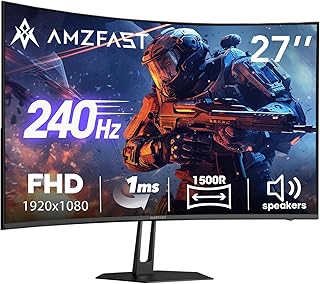
- 200Hz+: Built for competitive shooters and esports titles, where every millisecond counts — the Gawfolk 250Hz and Amzfast 240Hz monitors target this crowd directly.
Resolution vs. Frame Rate: Finding the Right Balance
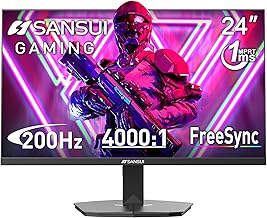
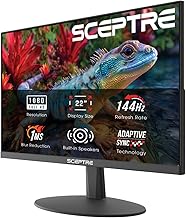
Higher resolution means sharper detail, but it also demands more from your GPU. A 1080p monitor like the Sceptre 22-Inch lets budget and mid-range graphics cards hit high frame rates easily, while a 1440p option like the KTC H27S5C delivers noticeably crisper visuals for gamers with more powerful hardware. If you’re unsure, match your resolution choice to your GPU’s real-world performance in the games you play most — a 240Hz panel is wasted if your card can only push 90 frames per second.
Panel Type and Curve: Comfort and Color
Curved monitors, like the Samsung S3, Amzfast AMZG27C1 Pro, and Gawfolk models, wrap the edges of the screen slightly toward you, which can reduce eye strain and add immersion during long sessions. Flat panels, like the ZZA 24-Inch, tend to be better for content creation or multi-monitor setups where straight edges matter. Also check color coverage (sRGB percentage) — monitors advertising 98-130% sRGB, like the Gawfolk and KTC, will show noticeably richer colors than base-spec panels.
Response Time and Adaptive Sync
Response time (measured in milliseconds) indicates how quickly pixels change color — lower is better for eliminating ghosting in fast motion. Most gaming monitors now advertise 1ms MPRT, including the Amzfast and Gawfolk models here. Equally important is adaptive sync technology (FreeSync or G-Sync), which matches your monitor’s refresh rate to your GPU’s output in real time, eliminating screen tearing. Confirm your GPU brand is compatible with the sync technology listed before buying.
Connectivity and Extras
Check that the monitor has the ports your setup needs. Most modern gaming monitors, including every option in this guide, include both HDMI and DisplayPort, but older systems may need the D-sub port found on the Samsung S3. Built-in speakers (Sceptre, Amzfast, Gawfolk) are convenient for casual setups, while VESA mount compatibility (KTC, Gawfolk, ZZA) matters if you plan to use a monitor arm to save desk space.
Tips
- Match your monitor’s refresh rate to your GPU’s realistic frame output — buying beyond your hardware’s capability wastes money.
- If you play competitive shooters, prioritize refresh rate and response time over resolution.
- Test curved displays in person if possible; some users adjust instantly, while others prefer flat panels for design work.
- Always verify FreeSync/G-Sync compatibility with your specific GPU model before purchasing.
Frequently Asked Questions
Do I need 1440p or is 1080p enough?
1080p is still excellent for competitive gaming and budget builds, especially paired with high refresh rates like the Sceptre or Amzfast offer. 1440p provides sharper detail and is worth it if your GPU can consistently hit 100+ fps at that resolution.
Is a curved monitor better than a flat one for gaming?
Neither is objectively better — curved monitors like the Samsung S3 or Gawfolk enhance immersion and can ease eye strain over long sessions, while flat monitors like the ZZA offer more accurate straight-line viewing for design or multi-monitor use. It comes down to personal preference.
What’s the difference between FreeSync and G-Sync?
Both eliminate screen tearing by syncing your monitor’s refresh rate to your GPU’s frame output. FreeSync (found on the Amzfast, KTC, Gawfolk, and ZZA) is AMD’s open standard and generally more affordable, while G-Sync is Nvidia’s proprietary technology, often found on premium panels.
Does screen size matter for gaming?
Yes — 24-inch monitors like the ZZA are ideal for competitive players who want the whole screen in their peripheral vision without head movement, while 27-inch options like the KTC or Amzfast offer more immersive visuals for single-player and open-world games.
Conclusion
The best gaming monitor isn’t necessarily the one with the highest specs on paper — it’s the one that matches your GPU’s capabilities, your favorite genres, and your desk setup. Whether you prioritize blistering refresh rates for competitive play or richer colors and curves for immersive single-player sessions, the options above cover every budget and playstyle worth considering.