Key takeaways
- Size your PSU so normal gaming load lands near 50 to 70 percent of its rating for the best efficiency and headroom.
- Prefer an ATX 3.1, PCIe 5.1 ready unit with a native 12V-2×6 cable if you run a modern GPU.
- Choose 80 PLUS Gold as the default; step up to Platinum only for high-wattage or always-on rigs.
- Favor a long warranty from a reputable brand, since a failing PSU can take other components with it.
What's inside
- Watch: What PSU Do I Need for Gaming? (2026 Guide) — Video Review
- Calculate the Wattage You Actually Need
- Understand 80 PLUS Efficiency Ratings
- Get the Right Standard and Connectors
- Modular vs. Non-Modular Cables
- Don’t Overlook Warranty and Build Quality
- Tips
- Related Guides
- Frequently Asked Questions
- Conclusion
- Related Articles
- Related Guides
The power supply is the least glamorous part of a gaming PC and the one people are most tempted to cheap out on, yet it quietly determines whether your expensive components run reliably or crash under load. Get the wattage, efficiency, and connectors right and you will never think about it again; get them wrong and you invite instability, shutdowns, and in the worst case, damaged hardware.
- Watch: What PSU Do I Need for Gaming? (2026 Guide) — Video Review
- Calculate the Wattage You Actually Need
- Understand 80 PLUS Efficiency Ratings
- Get the Right Standard and Connectors
- Modular vs. Non-Modular Cables
- Don’t Overlook Warranty and Build Quality
- Tips
- Related Guides
- Frequently Asked Questions
- Conclusion
- Related Articles
- Related Guides
This guide explains how to calculate the wattage you actually need, what the efficiency ratings mean, and why the new ATX 3.1 standard matters for modern graphics cards. By the end you will be able to pick a PSU with confidence, whether you want a compact 750W unit or a 1000W platform with headroom to spare.
As an Amazon Associate we earn from qualifying purchases at no extra cost to you. Product prices and availability are accurate as of the date shown and are subject to change.




⚡ Save on Your Next PC — Amazon Prime
Prime members get fast free shipping on the systems above, plus early access to Prime Day & Black Friday PC deals. New members get a 30-day free trial.
Watch: What PSU Do I Need for Gaming? (2026 Guide) — Video Review
Calculate the Wattage You Actually Need
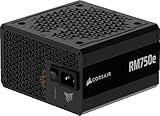
Start by adding up the power draw of your CPU and GPU, since those dominate consumption, then add a margin for the rest of the system and future upgrades. A common rule is to size the PSU so your typical load sits around 50 to 70 percent of its rating, which is both the efficiency sweet spot and comfortable headroom. For most single-GPU builds a 750W unit like the MSI MAG A750GL or CORSAIR RM750e is plenty, while high-end cards pair better with an 850W or 1000W model such as the be quiet! Pure Power 13 M 1000W.
Understand 80 PLUS Efficiency Ratings
The 80 PLUS badge (Bronze, Gold, Platinum, and up) tells you how much wall power actually reaches your components versus being lost as heat. Gold is the practical sweet spot for gaming builds, balancing cost against efficiency and cooler, quieter operation. Platinum units like the ASUS ROG Strix 1000W Platinum cost more and make sense for high-wattage or always-on systems, while a Bronze unit is best reserved for budget builds with modest power needs.
Get the Right Standard and Connectors
Modern graphics cards draw power in fast spikes, and the ATX 3.1 standard with the 12V-2×6 connector is designed to handle them safely. If you are buying a current or recent GPU, choosing an ATX 3.1 and PCIe 5.1 ready PSU with a native 12V-2×6 cable, as MSI, CORSAIR, and ASUS now offer, avoids adapters and reduces the risk of connection issues. Confirm the unit includes the exact cables your components require.
Modular vs. Non-Modular Cables
A fully modular PSU lets you connect only the cables you need, which makes building cleaner and improves airflow, and it is standard on most quality units today. Non-modular supplies, like some budget Bronze models, hardwire every cable, leaving unused leads to tuck away. For a tidy build the small premium for full modularity is usually worth it, though a well-managed non-modular unit works perfectly fine.
Don’t Overlook Warranty and Build Quality
A PSU is the one part you want to outlast several upgrades, so treat the warranty as a signal of the manufacturer’s confidence. Reputable units carry long warranties, often ten years, and use higher-grade capacitors rated for sustained heat. Buying a known-good model from a trusted brand protects everything else in your system and is not the place to chase the lowest possible price.
Tips
- Size your PSU so normal gaming load lands near 50 to 70 percent of its rating for the best efficiency and headroom.
- Prefer an ATX 3.1, PCIe 5.1 ready unit with a native 12V-2×6 cable if you run a modern GPU.
- Choose 80 PLUS Gold as the default; step up to Platinum only for high-wattage or always-on rigs.
- Favor a long warranty from a reputable brand, since a failing PSU can take other components with it.
Frequently Asked Questions
How many watts do I need for a gaming PC?
Most single-GPU gaming builds are well served by 750W to 850W. High-end cards or heavily overclocked systems benefit from 1000W. Add up your CPU and GPU draw, then leave comfortable headroom.
Does a higher-wattage PSU use more electricity?
No. A PSU only delivers what your components request, so a 1000W unit running a modest load draws roughly the same as a smaller one. It simply gives you more headroom.
Do I need an ATX 3.1 power supply?
If you own a current-generation GPU, an ATX 3.1 unit with the 12V-2×6 connector handles its power spikes natively and avoids adapters. For older cards a quality ATX 3.0 unit is still fine.
Is a fully modular PSU worth it?
For a clean build with good airflow, yes, and it is standard on most quality units. Non-modular supplies work well too; you just manage a few extra attached cables.
Conclusion
Choosing a gaming power supply comes down to enough wattage for your components plus headroom, an 80 PLUS Gold or better efficiency rating, the ATX 3.1 standard with the right connectors for a modern GPU, and a reputable brand with a long warranty. Nail those and the PSU disappears into the background, quietly and reliably powering every upgrade you make for years.