Key takeaways
- Bulk archival storage: HDDs offer far more capacity per dollar, ideal for storing media, backups, and games you rarely touch.
- Large libraries on a budget: pairing a fast SSD for active games with a big HDD for your back catalog stretches your money.
- Not for your OS or current games: Windows and the titles you actively play belong on the SSD, where their speed benefit is greatest.
What's inside
Storage is one of the least glamorous parts of a gaming PC, but it has a bigger day-to-day impact than people expect. The choice between a solid-state drive (SSD) and a mechanical hard drive (HDD) shapes how long you stare at loading screens, how quickly games install and update, and whether open-world titles stream in textures smoothly or pop in a beat late. In 2026, with games routinely topping 100GB, getting your storage strategy right saves both time and frustration.
This guide explains how SSDs and HDDs actually differ, why NVMe drives have become the default for gaming, and when a hard drive still earns a place in your build. You will learn how to read speed ratings, how much storage you realistically need, and how to split your money between fast and cheap storage so you get the best of both worlds.
As an Amazon Associate we earn from qualifying purchases at no extra cost to you. Product prices and availability are accurate as of the date shown and are subject to change.


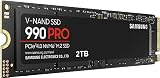
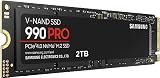
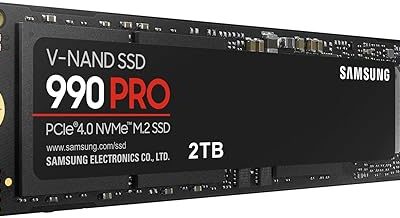
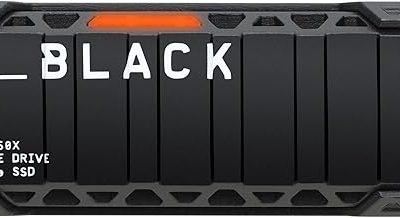
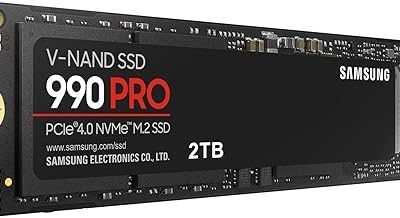
For a gaming boot and library drive, NVMe SSDs are the clear pick, and our recommended gear reflects that with fast, reliable options like the Samsung 990 PRO, the value-focused Kingston NV3, and the WD_Black SN7100, plus cutting-edge PCIe 5.0 drives such as the Samsung 9100 PRO for those who want maximum throughput. Any of these will transform load times compared with a mechanical drive.
⚡ Save on Your Next PC — Amazon Prime
Prime members get fast free shipping on the systems above, plus early access to Prime Day & Black Friday PC deals. New members get a 30-day free trial.
Watch: SSD vs HDD for Gaming: Which Do You Need? — Video Review
How SSDs and HDDs Work Differently
A hard drive stores data on spinning magnetic platters read by a moving mechanical arm, so accessing files means physically waiting for the disk to rotate into place. An SSD uses flash memory chips with no moving parts, retrieving any piece of data almost instantly. That fundamental difference is why an SSD feels dramatically snappier: there is no seek time, no spin-up, just near-immediate access. It also makes SSDs quieter, cooler, more shock-resistant, and far less prone to mechanical failure.
The Speed Gap in Real Terms
A typical gaming hard drive reads at around 150MB/s. A PCIe 4.0 NVMe SSD like the 990 PRO reads at up to 7,450MB/s, and PCIe 5.0 drives push past 14,000MB/s. In practice this means game load screens that took 40 seconds on an HDD can drop to a handful of seconds on NVMe. Level transitions, fast-travel, and asset streaming in modern open-world games all lean heavily on storage speed, so the SSD advantage is felt constantly, not just when launching a game.
SATA vs NVMe SSDs
Not all SSDs are equal. SATA SSDs use the older SATA interface and cap out around 550MB/s, still a huge leap over a hard drive but far slower than NVMe. NVMe drives connect via the much faster PCIe bus through an M.2 slot on your motherboard, unlocking the multi-thousand-MB/s speeds above. For a new gaming build in 2026 an NVMe SSD is the right default; SATA SSDs mainly make sense as cheap secondary storage or in older systems without an M.2 slot.
When an HDD Still Makes Sense
- Bulk archival storage: HDDs offer far more capacity per dollar, ideal for storing media, backups, and games you rarely touch.
- Large libraries on a budget: pairing a fast SSD for active games with a big HDD for your back catalog stretches your money.
- Not for your OS or current games: Windows and the titles you actively play belong on the SSD, where their speed benefit is greatest.
How Much Storage You Need
Aim for at least a 1TB NVMe SSD as your primary drive in 2026. Windows plus a handful of modern AAA games can easily consume 500GB, and update sizes keep growing. A 1TB drive like the Kingston NV3 or WD_Black SN7100 gives comfortable room for your rotation of active games, while 2TB is worth it if you keep many large titles installed at once. Add a hard drive later only if your library outgrows the SSD and you need cheap overflow space.
Tips
- Install your operating system and your current favorite games on the fastest SSD you own for the biggest, most noticeable speed gains.
- Check your motherboard manual for the number and speed of M.2 slots before buying an NVMe drive, especially for PCIe 5.0 models.
- Leave roughly 10-15% of an SSD free; drives slow down when packed completely full.
- Use a large HDD purely as an archive for finished or rarely played games rather than as your main gaming drive.
Frequently Asked Questions
Will an SSD make my games run at higher FPS?
Not directly; frame rate is governed by your GPU and CPU. What an SSD dramatically improves is load times, level streaming, and how quickly textures pop in, which makes the whole experience feel faster and smoother even if the raw FPS number is unchanged.
Is PCIe 5.0 worth it over PCIe 4.0 for gaming?
For most gamers the real-world difference in load times between a good PCIe 4.0 drive and a PCIe 5.0 drive is small today. PCIe 4.0 remains the value sweet spot; choose 5.0 only if you also do heavy content creation or want to future-proof.
Can I use both an SSD and an HDD together?
Yes, and it is a smart, economical setup. Run your OS and active games from the SSD for speed, and use the HDD as cheap bulk storage for media and games you play infrequently.
Do I still need an HDD in 2026?
Only if you need a lot of cheap capacity for archives or huge media collections. Many gamers now run SSD-only builds because NVMe prices have fallen enough that a 1TB or 2TB drive covers a typical library comfortably.
Conclusion
For gaming, an SSD is no longer optional; an NVMe drive is the single upgrade that makes an entire PC feel faster through shorter loads and smoother streaming. Put your OS and current games on a 1TB or larger NVMe SSD, and reserve a hard drive, if you use one at all, for cheap archival storage of titles you rarely open. That split gives you speed where it counts and capacity where it doesn’t, which is exactly how a well-balanced gaming rig should be built.