Key takeaways
- Capacity over raw speed: At this budget, 1TB is the sweet spot. A single AAA title can consume 100–150GB, so a 500GB drive fills up after three or four installs. Choose the larger capacity before you chase headline throughput numbers.
- PCIe 4.0 is the value tier: PCIe 5.0 drives deliver enormous sequential figures but almost never fit under $100, and games rarely benefit. A good Gen 4 drive at 5,000–7,000 MB/s is indistinguishable in real-world load times for a fraction of the cost.
- Check DRAM and HMB: Budget drives typically omit an onboard DRAM cache and rely on Host Memory Buffer instead. That’s fine for gaming, but sustained large file writes will slow noticeably once the SLC cache is exhausted — worth knowing if you also edit video.
- Form factor and heatsink clearance: Nearly every option here is M.2 2280. Confirm your motherboard has a free Gen 4 slot, and check whether your board’s built-in heatsink leaves room for a drive that ships with its own.
- Endurance and warranty: Look for a five-year warranty and a TBW rating of at least 600TB per terabyte of capacity. It’s the clearest signal of NAND quality when the spec sheets otherwise look identical.
What's inside
Storage prices have finally started behaving again, but shopping for a gaming SSD under $100 is still a minefield. Drive makers now sell PCIe 3.0, 4.0, and 5.0 models under nearly identical names, capacities swing wildly in price week to week, and the sequential read numbers plastered on the box tell you almost nothing about how quickly a modern open-world game will actually stream textures. Spend carelessly and you end up with a DRAM-less 500GB drive that fills up in three installs.
This guide focuses on drives that genuinely land at or under the $100 mark in 2026 — realistically that means 1TB PCIe 4.0 NVMe drives, with 500GB options for secondary storage and 2TB flagship models included as context for anyone whose budget can stretch a little further. Below you’ll find what actually matters when choosing a budget gaming SSD, followed by concise reviews of the drives worth your money.
As an Amazon Associate we earn from qualifying purchases at no extra cost to you. Product prices and availability are accurate as of the date shown and are subject to change.

Check Price on Amazon →


⚡ Save on Your Next PC — Amazon Prime
Prime members get fast free shipping on the systems above, plus early access to Prime Day & Black Friday PC deals. New members get a 30-day free trial.
Watch: Best SSD Under $100 — Video Review
How to Choose SSD Under $100
- Capacity over raw speed: At this budget, 1TB is the sweet spot. A single AAA title can consume 100–150GB, so a 500GB drive fills up after three or four installs. Choose the larger capacity before you chase headline throughput numbers.
- PCIe 4.0 is the value tier: PCIe 5.0 drives deliver enormous sequential figures but almost never fit under $100, and games rarely benefit. A good Gen 4 drive at 5,000–7,000 MB/s is indistinguishable in real-world load times for a fraction of the cost.
- Check DRAM and HMB: Budget drives typically omit an onboard DRAM cache and rely on Host Memory Buffer instead. That’s fine for gaming, but sustained large file writes will slow noticeably once the SLC cache is exhausted — worth knowing if you also edit video.
- Form factor and heatsink clearance: Nearly every option here is M.2 2280. Confirm your motherboard has a free Gen 4 slot, and check whether your board’s built-in heatsink leaves room for a drive that ships with its own.
- Endurance and warranty: Look for a five-year warranty and a TBW rating of at least 600TB per terabyte of capacity. It’s the clearest signal of NAND quality when the spec sheets otherwise look identical.
The Best Picks Reviewed
Kingston NV3 1TB
This is the drive most gamers on a strict budget should buy: a full terabyte of PCIe 4.0 storage with up to 6,000 MB/s reads, comfortably inside the $100 ceiling. It’s DRAM-less and sustained write speeds drop under heavy sequential loads, but for installing and launching games it performs within a few percent of drives costing considerably more.
SanDisk Optimus 5100 500GB
At 500GB this won’t be your primary library drive, but as a fast secondary or a boot drive for a compact build it’s excellent value, with up to 6,600 MB/s reads over PCIe 4.0 x4. Treat it as the drive you install your three or four most-played titles on rather than your whole Steam catalogue.
Samsung 990 PRO 1TB
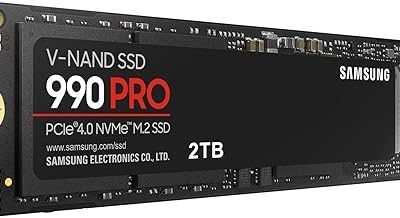
Samsung’s 990 PRO remains the benchmark for Gen 4 performance at up to 7,450 MB/s, with genuinely strong random read performance and a controller that handles DirectStorage workloads better than anything else in its class. It typically sits just above $100, so it’s the drive to watch during sales — at the right price nothing else in this roundup touches it.
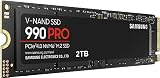
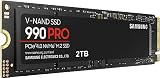
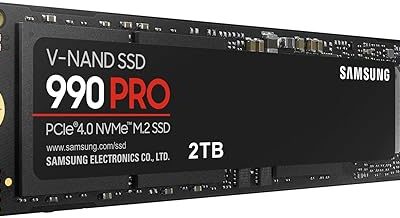
Samsung 990 PRO 2TB
The 2TB model is the enthusiast pick for anyone who can stretch past this guide’s budget, offering the same class-leading Gen 4 speeds with room for a genuinely large game library. It sits well over $100 at normal retail, but the per-gigabyte cost is far better than the 1TB version if you can absorb the upfront hit.
Samsung 9100 PRO 1TB
The 9100 PRO is a PCIe 5.0 drive rated at up to 14,700 MB/s, and it’s included here purely as a reference point for what the top of the market looks like in 2026. It’s well outside a $100 budget and, crucially, delivers almost no measurable gaming advantage over a good Gen 4 drive — buy it only if you have Gen 5 workloads that justify the premium.
Frequently Asked Questions
Is 1TB enough for gaming in 2026?
For most people, yes. A 1TB drive holds roughly six to eight modern AAA titles alongside Windows, which suits players who rotate through a handful of games. If you keep twenty installs live at once, plan on adding a second drive later rather than overspending now.
Will a PCIe 5.0 SSD make my games load faster?
Barely. Independent testing consistently shows load-time differences of well under a second between good Gen 4 and Gen 5 drives, because game loading is bottlenecked by decompression and CPU work rather than raw sequential bandwidth. Under $100, your money is far better spent on capacity.
Does a DRAM-less SSD hurt gaming performance?
Not meaningfully. Host Memory Buffer borrows a small slice of system RAM to serve the same purpose, and gaming workloads are read-heavy with modest queue depths. The compromise shows up in sustained large file writes — copying a 200GB library between drives, for example — not in gameplay.
Do I need a heatsink on a budget NVMe drive?
Most Gen 4 drives in this price range run cool enough without one, though airflow helps. If your motherboard includes an M.2 heatsink, use it; if not, a bare drive is generally fine unless you’re pushing sustained writes in a cramped small-form-factor case.
Final Thoughts
For genuine value under $100, the Kingston NV3 1TB is the drive to buy — a full terabyte of Gen 4 storage with performance that’s indistinguishable from premium drives in real gaming use. If you need a fast secondary drive or are building something compact, the SanDisk Optimus 5100 500GB does the job well for less. And if you can catch the Samsung 990 PRO 1TB on sale near the $100 mark, take it: it’s the best-performing Gen 4 drive here and comfortably outlasts the alternatives.