Key takeaways
- For VRAM headroom: the RX 9060 XT’s 16GB better handles 1440p and texture-heavy games.
- For ray tracing: the RTX 5060 delivers stronger ray-traced performance.
- For upscaling: NVIDIA’s DLSS remains more mature than AMD’s FSR.
- For raster value: the 9060 XT often offers more traditional performance per dollar.
- For future-proofing: AMD’s larger frame buffer ages more gracefully in newer titles.
What's inside
The mainstream GPU battle for 1080p and 1440p gamers has come down to two compelling cards: AMD’s Radeon RX 9060 XT and NVIDIA’s GeForce RTX 5060. Both target the sweet spot where most players actually live, and choosing between them means weighing VRAM, ray tracing, upscaling, and price rather than chasing flagship bragging rights.
This comparison breaks down how the RX 9060 XT, available from ASUS, PowerColor, XFX, and ASRock, stacks up against the RTX 5060, so you can pick the right card for your rig. Here is the head-to-head.
As an Amazon Associate we earn from qualifying purchases at no extra cost to you. Product prices and availability are accurate as of the date shown and are subject to change.


🎮 Get More From Your Setup — Free
Prime Gaming gives you free PC games every month, in-game loot, and a free Twitch channel sub — plus fast free shipping on all the gear above. New members get a 30-day free trial.
Watch: Amd Radeon Rx 9060 Xt Vs Rtx 5060: Full Comparison — Video Review
Quick Verdict
The Radeon RX 9060 XT’s 16GB of GDDR6 gives it a meaningful edge in VRAM-hungry titles and higher-resolution textures, making it the value-forward pick for 1440p. The RTX 5060 counters with stronger ray-tracing performance and DLSS, which remains the more mature upscaling tech. For raster gaming and future-proof memory, AMD leads; for ray tracing and NVIDIA’s software ecosystem, the 5060 holds its ground.
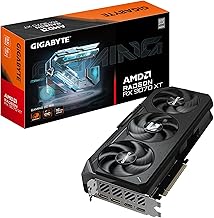
AMD Radeon RX 9060 XT
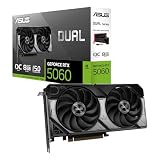
Built on RDNA 4, the RX 9060 XT ships in 16GB configurations across board partners like the ASUS Dual, PowerColor Reaper, XFX Swift, and ASRock Challenger. That generous frame buffer is its headline advantage, letting it handle texture-heavy games and 1440p resolutions with room to spare where 8GB cards start to choke.
Cooling and design vary by partner, with triple-fan XFX Swift models and dual-fan ASRock and ASUS options offering quiet operation. Raster performance is strong, and RDNA 4 improved ray tracing over prior AMD generations, narrowing the traditional gap with NVIDIA.
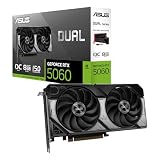
NVIDIA GeForce RTX 5060
The RTX 5060 leans on NVIDIA’s strengths: more refined ray-tracing hardware and DLSS upscaling with frame generation, which can significantly boost frame rates in supported titles. For gamers who prioritize ray-traced visuals or play many DLSS-enabled games, that ecosystem advantage is real.
The trade-off is typically less VRAM than the 9060 XT’s 16GB, which can constrain the 5060 at higher resolutions and in future texture-heavy releases. In pure rasterization, the two trade blows depending on the title.
Head-to-Head: Which Should You Buy?
- For VRAM headroom: the RX 9060 XT’s 16GB better handles 1440p and texture-heavy games.
- For ray tracing: the RTX 5060 delivers stronger ray-traced performance.
- For upscaling: NVIDIA’s DLSS remains more mature than AMD’s FSR.
- For raster value: the 9060 XT often offers more traditional performance per dollar.
- For future-proofing: AMD’s larger frame buffer ages more gracefully in newer titles.
Frequently Asked Questions
Is 16GB of VRAM worth it?
Increasingly, yes. At 1440p and in modern texture-heavy games, the RX 9060 XT’s 16GB provides real headroom over 8GB cards.
Which is better for ray tracing?
The RTX 5060 holds the edge in ray-tracing performance and pairs it with mature DLSS upscaling.
Do these cards need a beefy power supply?
Both are efficient mainstream cards, but check each partner model’s recommended PSU wattage before buying.
Which offers better value?
For raster gaming and VRAM, the RX 9060 XT often wins on value; for ray tracing and software features, the 5060 justifies its price.
Final Verdict
Choose the Radeon RX 9060 XT, such as the XFX Swift or ASUS Dual, if you want maximum VRAM and raster value for 1440p gaming that ages well. Choose the RTX 5060 if ray-traced visuals and DLSS matter most to you and your favorite games support NVIDIA’s upscaling ecosystem.